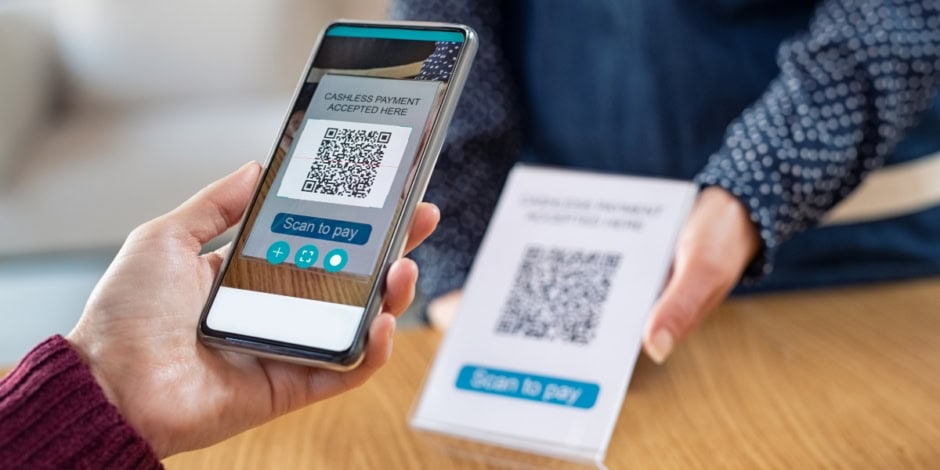
The days of “cash only” retail are numbered. The Finance Division has drafted a major legal amendment to the “Payment Systems and Electronic Fund Transfers Act, 2007”. This move mandates at least one digital payment mode, specifically including Raast QR Codes, for businesses.
The draft is currently with the Prime Minister’s Office for in-principle approval. Once cleared, it heads to the Cabinet Committee for Disposal of Legislative Cases (CCLC). Significantly, the amendment empowers local governments to enforce these digital requirements. This ensures adoption happens at the grassroots level, not just in high-end malls.
Raast Connect: “Central Nerve Centre” for Digitisation
To oversee this massive shift, the Ministry of Finance has established the Government Payments and Receipts Transformation Unit (GPRTU). This new unit acts as the “central nerve centre” for digitising all Government-to-Person (G2P) and Person-to-Government (P2G) payments.
The GPRTU will drive the adoption of Raast Connect, the government-facing interface for instant payments. Its mandate is clearly to standardise digitisation across the public sector, onboard departments to payment aggregators, and re-engineer outdated business processes. It will also secure technical backing from the National Information Technology Board (NITB) and provincial IT boards.
Ambitious Targets for 2026
Under the “Cashless Pakistan” initiative, the government has set hard targets for December 2026. The roadmap is aggressive:
- Active Digital Merchants: Increase to 2 million.
- Digital Banking Users: Expand to 120 million.
- Annual Digital Transactions: Scale to 15 billion.
- Non-Tax P2G Payments: 100% digitization.
- Digital Remittances: Over 80% credited directly into bank accounts.
- Financial Inclusion: Reach 70% (currently 67% as of Nov 2025).
Momentum is already building. As of November 2025, Pakistan recorded 3.3 billion digital transactions. Furthermore, 89% of specific P2G streams are now fully digital.
Major federal entities are ditching paper. The Power Division, Petroleum Division, Pakistan Railways, NADRA, and Pakistan Post Office are transitioning to full Raast-based integration by 2026.
On the disbursement side, the Benazir Income Support Programme (BISP), Pakistan Military Accounts Department, and Central Directorate of National Savings have set a 100% digitisation deadline between March and June 2026. Additionally, interoperable Social Protection Wallets under the SBP-BISP framework will roll out by June 2026.
Provincially, Punjab, Sindh, Khyber Pakhtunkhwa, Balochistan, and Gilgit-Baltistan are digitising education, healthcare, and revenue departments. They are moving salary, pension, and vendor payments onto digital rails.
Islamabad Leads the Way
The Islamabad Capital Territory (ICT) is the testing ground for these reforms. The administration has already issued bylaws mandating digital payment solutions at retail outlets.
Key tech milestones in the capital include:
- Islamabad City App: Integrated with the NITB’s Pakistan Asan Khidmat App. It features single sign-on and Raast payments. Downloads crossed 1.6 million in November 2025.
- e-Stamp Solution: A fully paperless system integrated with SBP’s 1-Link is ready for launch.
- Connectivity: Internet access is now live in 178 schools and 10 Basic Health Units. Free public Wi-Fi is available at 28 major locations, including parks and hospitals.
The shift is tangible. Federal and provincial governments have processed over Rs. 1 trillion through Raast for payrolls and pensions up to November 30, 2025. With legal frameworks tightening and infrastructure expanding, Pakistan’s economy is rapidly moving toward a transparent, cashless future.