YouTube is taking a firmer stance on how young users spend time online as global concern over child safety keeps growing. The Google-owned video platform said on Wednesday it will roll out new tools that give parents tighter control over how their children and teens use YouTube, with a strong focus on short-form videos.
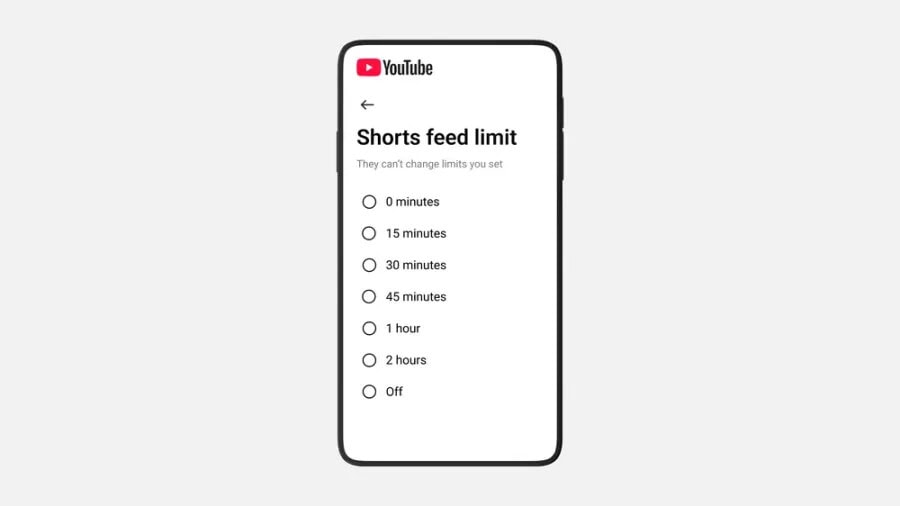
At the center of the update is YouTube Shorts, the company’s answer to TikTok and Instagram Reels. Parents can now set a timer that limits how long a child’s linked account can watch Shorts each day. This change aims to reduce long sessions of endless scrolling that often eat up hours without notice.
Parents can also go further and block Shorts completely. They can do this either for a set time or without any limit. For example, a parent can turn off Shorts when a child needs to watch study videos for an exam instead of short clips.
At the same time, YouTube is adding more ways to manage screen time through reminders. Parents will be able to set custom bedtime and take a break alerts. These messages nudge users to stop watching and step away. Adults can use these same tools on their own accounts if they want better control of their viewing habits.
Switching between a parent’s account and a child’s account has often been a hassle. Many parents avoid it because they do not want their own feed filled with kids’ content like Bluey. To fix this, YouTube plans to update its sign-up flow inside the app. In the coming weeks, parents and kids will be able to move between accounts with just a few taps. Still, the change only works if users remember to switch profiles.
These updates build on YouTube’s current teen safety tools. Parents already have the option to watch a teen’s channel activity when that teen uploads videos. This type of oversight has become common across the industry. TikTok, Snapchat, Instagram, and Facebook all offer similar features for families.
Last year, YouTube also introduced age estimation technology. This system tries to guess whether an account belongs to a teen. Based on that, the platform can offer a more suitable experience for younger users. With the latest changes, YouTube is adding another layer to its effort to keep kids safer online while giving parents more say in how their children use the platform.