On March 20, 1886, history quietly lit up Main Street in Great Barrington, Massachusetts. For the first time, an alternating current (AC) power system supplied electric illumination to a community. Gas lamps flickered out, replaced by the steady glow of electricity; a new era had begun.
Fast forward 140 years, and electricity is no longer just a source of light. It powers almost every aspect of modern life, from homes and offices to transportation and the digital world. The launch of that first AC system marked the start of a technological revolution that continues to shape the world today.
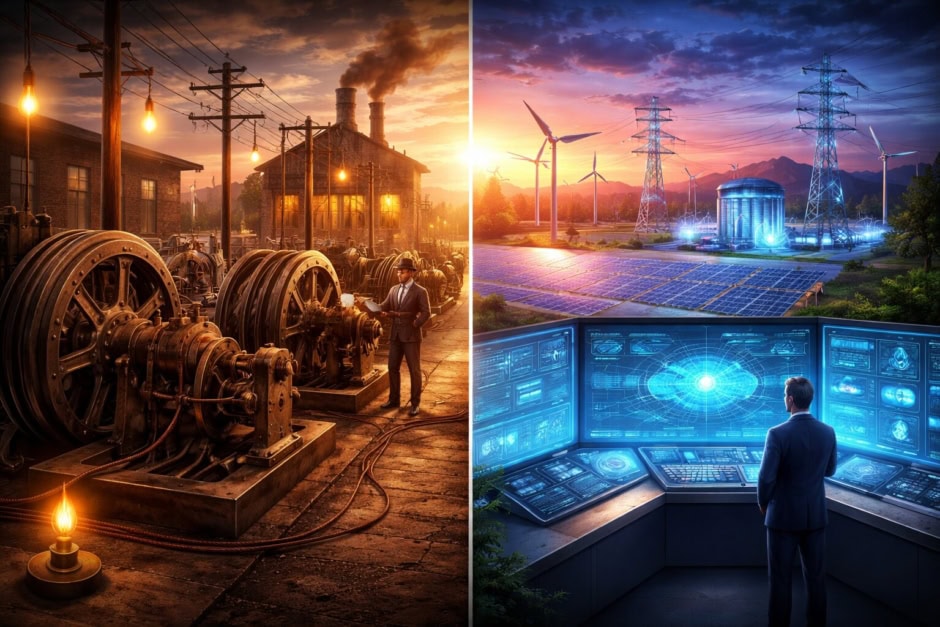
Then: Lighting the Streets
In 1886, electricity was still an experimental technology. Thomas Edison had popularized direct current (DC) systems, but their limitations were clear: DC power could only travel short distances efficiently. Communities needed a better way to distribute electricity over longer areas.
Enter alternating current (AC). Its ability to transmit power over long distances without losing strength made it ideal for expanding electrical networks. On that March day, the system in Great Barrington powered streetlights, businesses, and a few homes, proving that AC electricity could safely and reliably light entire communities.
Though modest by today’s standards, the system represented a major shift. It showed that electricity could go beyond factories and wealthy households and become a part of everyday life.
Now: Power Everywhere
In 2026, the electricity that once lit a single street stretches across continents. Modern power grids carry millions of kilowatts to cities, towns, and even remote villages. Homes are equipped with smart meters, automated systems, and renewable energy sources like solar and wind.
AC power remains the backbone of energy distribution, but technology has transformed how it is generated, managed, and used. From centralized power plants to microgrids and rooftop solar panels, electricity has become cleaner, smarter, and more adaptable.
Devices that were unimaginable in 1886, such as computers, smartphones, electric vehicles, and AI systems, now rely on the same principles first proven in Great Barrington. The power that once lit a street now fuels global communication, transportation, and entertainment.
Then & Now: How Electricity Changed Life
The launch of the first AC system did more than light streets. It set in motion a chain of innovation:
- Accessibility: Electricity moved from exclusive neighborhoods to widespread public access.
- Safety & Efficiency: AC transmission reduced energy losses and allowed long-distance delivery.
- Technological Growth: Industries, transportation, and communication systems flourished, powered by reliable electricity.
Today, we take electricity for granted. We rarely think about how power flows from a distant generator to our homes. But the first AC system was the seed of everything we now rely on: lighting, heating, cooling, and even the internet itself.
Looking Ahead: The Future of Power
Even in 2026, the story of electricity is evolving. Smart grids, energy storage, and renewable integration are making power distribution more efficient and environmentally friendly. Electric vehicles are reshaping transportation, and new technologies promise to further reduce reliance on fossil fuels.
What started as a single AC system in a small Massachusetts town has grown into a global network connecting billions of people. The journey from a few streetlights to an entire planet powered by electricity shows how innovation can transform everyday life.
On March 20, 1886, Great Barrington’s Main Street became a symbol of possibility. A single system of alternating current electricity proved that communities could be powered more efficiently and safely.
In 2026, that achievement reminds us how far technology has come. From lighting streets to powering digital lives, AC electricity remains at the heart of modern society. The humble beginnings of that first system illustrate a simple truth: even small innovations can ignite revolutions that last centuries.