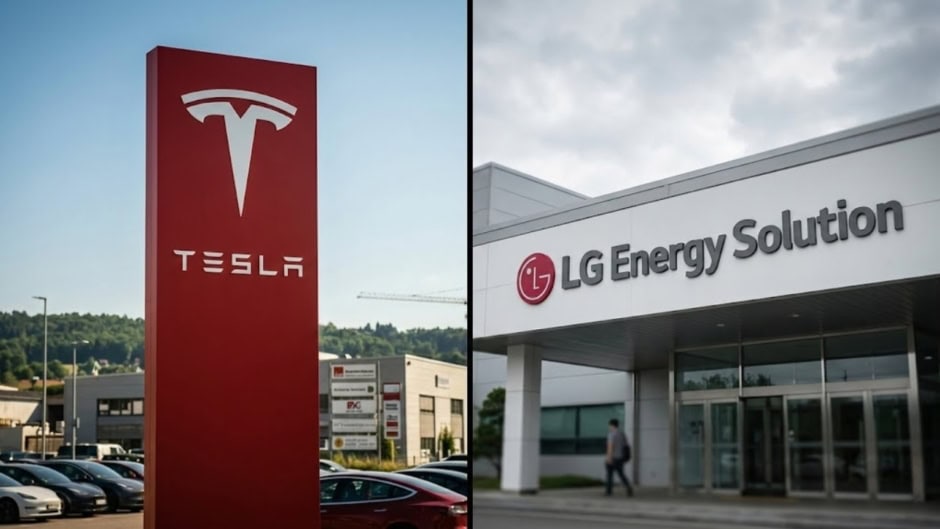
Tesla has signed a $4.3 billion supply agreement with LG Energy Solution to secure battery cells for its expanding energy storage operations, marking one of the largest battery procurement deals in the industry and a significant step toward localising the US battery supply chain.
Under the agreement, LG will produce lithium iron phosphate prismatic cells at a facility in Lansing, Michigan. The plant was originally developed as a joint venture between LG and General Motors before GM exited the project. It has since been retooled for LFP cell production, and LG says it will install dedicated production lines to fulfil the Tesla order.
The cells will power Tesla’s Megapack 3 energy storage systems, which are manufactured in Houston and used for large-scale grid storage. Megapacks store electricity generated from renewable sources like solar and wind and release it during periods of peak demand, helping utilities manage supply fluctuations.
The deal was announced as part of a broader set of private sector commitments at an Indo-Pacific Energy Security Summit in Japan, where the US Department of the Interior highlighted the agreement as evidence of a strengthening domestic battery supply chain.
According to Bloomberg, this deal highlights LG’s push into energy storage systems, especially as the demand for electric vehicles slows down and competition from Chinese manufacturers heats up.
On the other hand, Tesla is also working to diversify its supply chain and lessen its reliance on tariffs. The company has been heavily dependent on LFP batteries made in China but is now making strides toward producing more locally in the U.S.
Tesla’s energy division has become one of the company’s fastest-growing segments. The division generated $12.8 billion in revenue last year, accounting for 13% of Tesla’s total revenue, even as the automotive segment declined. The growth reflects surging demand for grid-scale storage driven by renewable energy expansion and the rapid build-out of AI data centres, which are consuming vast amounts of electricity. US data centre power demand is expected to more than double by 2035.
The deal also reflects Tesla’s effort to reduce its dependence on Chinese-made LFP batteries and lower its exposure to tariffs. The company has relied heavily on Chinese suppliers but is increasingly shifting toward domestic production. Sourcing cells from a US facility aligns with that strategy while also positioning Tesla to benefit from federal incentives for domestically manufactured clean energy components.
For LG Energy Solution, the agreement represents a pivot toward the energy storage market at a time when electric vehicle demand has softened and competition from Chinese battery manufacturers has intensified. The broader battery industry is seeing a similar pattern, with manufacturers repurposing EV production capacity to meet rising demand for stationary storage systems.
LG expects the Lansing facility to begin production soon, though a specific timeline has not been disclosed.