
Bitcoin saw a decline in network activity and price momentum in March, as geopolitical tensions and rising bond yields weighed on investor sentiment.
According to recent analysis, Bitcoin’s hashrate fell by nearly 6% following a joint military operation by the United States and Israel targeting Iran. The country is estimated to contribute 6–8% of global Bitcoin mining, with a significant portion linked to military-backed operations. Disruptions to energy infrastructure and shifting priorities toward defense have impacted mining output.
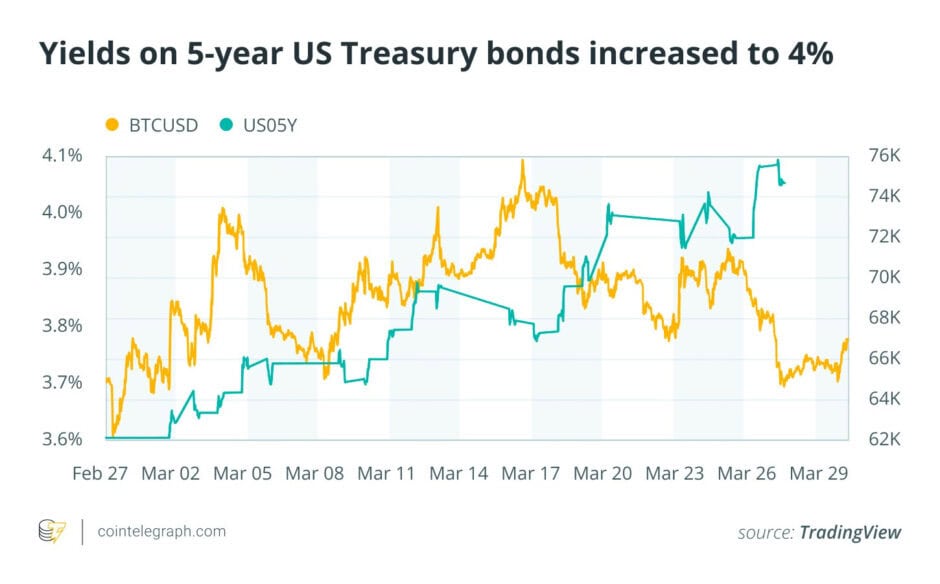
Meanwhile, Bitcoin’s price remained largely flat, ending the month near $67,000. Analysts attribute the lack of momentum to rising yields on five-year US Treasury bonds, which reached around 4%, prompting investors to shift toward safer assets amid ongoing geopolitical uncertainty.
The broader crypto market also reflected reduced activity. Robinhood saw its stock decline by 16% March, amid falling crypto trading volumes and regulatory concerns. The company has announced a $1.5 billion share buyback program to stabilize its position.
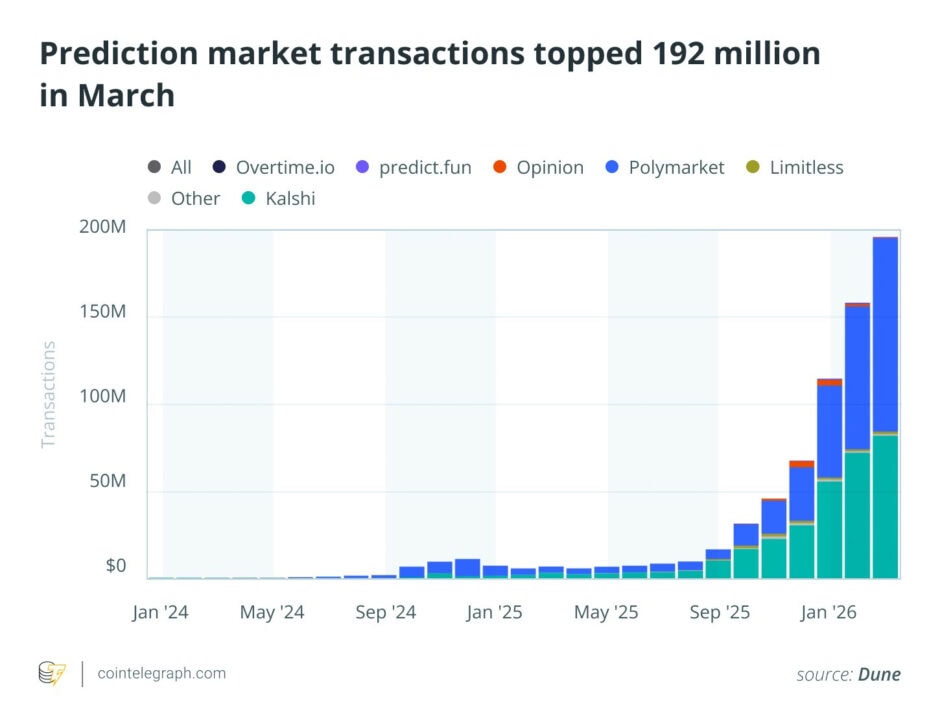
In contrast, prediction markets witnessed significant growth. Platforms like Polymarket and Kalshi recorded over 192 million transactions, marking a 2,800% increase year-over-year, according to analytics data. However, these platforms continue to face regulatory scrutiny across multiple US states.
Additionally, euro-denominated stablecoins gained traction, accounting for 85% of non-dollar stablecoin volume, driven by increased institutional confidence and regulatory clarity under Europe’s evolving crypto framework.
Despite subdued prices, firms like MicroStrategy continued accumulating Bitcoin. The company’s holdings remain about 11% in loss, with an average purchase price significantly above current market levels.
Market participants remain cautious as macroeconomic pressures and geopolitical risks continue to influence crypto performance heading into the next quarter.