
On April 7, 2026, as the clock ticked toward an 8 PM ET (5 AM Pakistan Standard Time, April 8) deadline that threatened to escalate the US-Iran war beyond recovery, Pakistan’s Prime Minister Shehbaz Sharif posted on X:
Diplomatic efforts for peaceful settlement of the ongoing war in the Middle East are progressing steadily, strongly and powerfully with the potential to lead to substantive results in near future. To allow diplomacy to run its course, I earnestly request President Trump to extend…
— Shehbaz Sharif (@CMShehbaz) April 7, 2026
Sharif urged both sides to observe a two-week ceasefire. He asked Iran to reopen the Strait of Hormuz as a goodwill gesture. He tagged U.S. and Iranian officials and negotiators directly. It was a public plea from the leader of a country that had spent weeks quietly building the diplomatic framework behind the scenes, now putting it on the record for the world to see.
Hours earlier, President Trump had posted on Truth Social that “a whole civilization will die tonight” if Iran did not agree to a deal before his deadline. In the days prior, the U.S. had struck more than 13,000 targets in Iran since the war began on February 28.
Gulf countries including the UAE, Qatar and Bahrain were actively intercepting incoming missiles and drones that same day, with Bahrain activating civilian air raid sirens. Iran struck a petrochemical complex in Mahshahr, starting a fire. A synagogue in Tehran was destroyed by US-Israeli strikes, with Israel expressing regret for the “collateral damage.”
Sharif’s tweet came in lieu of a series of diplomatic efforts that had been running all night. Field Marshal Asim Munir, Pakistan’s army chief, was reportedly in contact with American officials “all night long.” Pakistan’s Foreign Minister Ishaq Dar was still making calls past 3 AM in Islamabad, reaching the foreign ministers of Egypt, Saudi Arabia, Turkey and Morocco.
Trump had also praised Sharif and Munir, and told Fox News that Sharif is “a highly respected man, all over” while confirming he was about to be fully briefed on the Pakistani proposal. The White House confirmed Trump was aware, stating “a response will come.”
The response came roughly 90 minutes before the deadline. Trump posted on Truth Social that he had agreed to suspend all attacks on Iran for two weeks.
He credited the decision explicitly: “Based on conversations with Prime Minister Shehbaz Sharif and Field Marshal Asim Munir, of Pakistan, and wherein they requested that I hold off the destructive force being sent tonight to Iran.”
Oil prices dropped sharply, falling around 7-9% intraday to around $103 per barrel after trading as high as $117 earlier that day. West Texas Intermediate crude futures fell more than 10% in after-hours trading. S&P 500 futures surged over 1.6%. Nasdaq futures rose 1.68%. Dow futures rose 725 points.
Reports also poured in that Iran has also accepted the framework. Foreign Minister Abbas Araghchi confirmed that safe passage through the Strait of Hormuz would be possible “via coordination with Iran’s Armed Forces and with due consideration of technical limitations.” Araghchi expressed gratitude to PM Sharif and Field Marshal Munir for urging Trump to implement the ceasefire.
Trump called Iran’s 10-point proposal “workable” and said nearly all points of past contention had been agreed upon. Israel also agreed to suspend its bombing campaign while negotiations continue, according to a senior White House official. The Trump administration is now preparing for in-person talks in Islamabad, with special envoy Steve Witkoff, Jared Kushner and Vice President JD Vance expected to attend.
However, was there any other motive here? Experts think U.S. had a solid one to pull out, at least for now.
Why America Needed An Exit Ramp
Five weeks of sustained combat operations were costing an estimated $1 billion per day, according to some analysts, though no official figure has been confirmed. The reported hardware losses alone were staggering for the U.S., leading many to believe that this can be the only reason Trump even thought about a ceasefire.
According to multiple reports, nearly 20 U.S. Air Force aircraft were damaged or destroyed. An F-35 stealth fighter, the most advanced combat aircraft in the world at upwards of $100 million per unit, was struck by Iranian ground fire on March 19 (March 20 Pakistan Standard Time), marking what would be the first confirmed combat hit on the platform in its history. An F-15E Strike Eagle, worth roughly $90 million, was reportedly shot down over western Iran on April 3 (April 4 Pakistan Standard Time), triggering a 36-hour rescue operation that according to reports cost two MC-130J special operations aircraft, each valued at over $100 million.
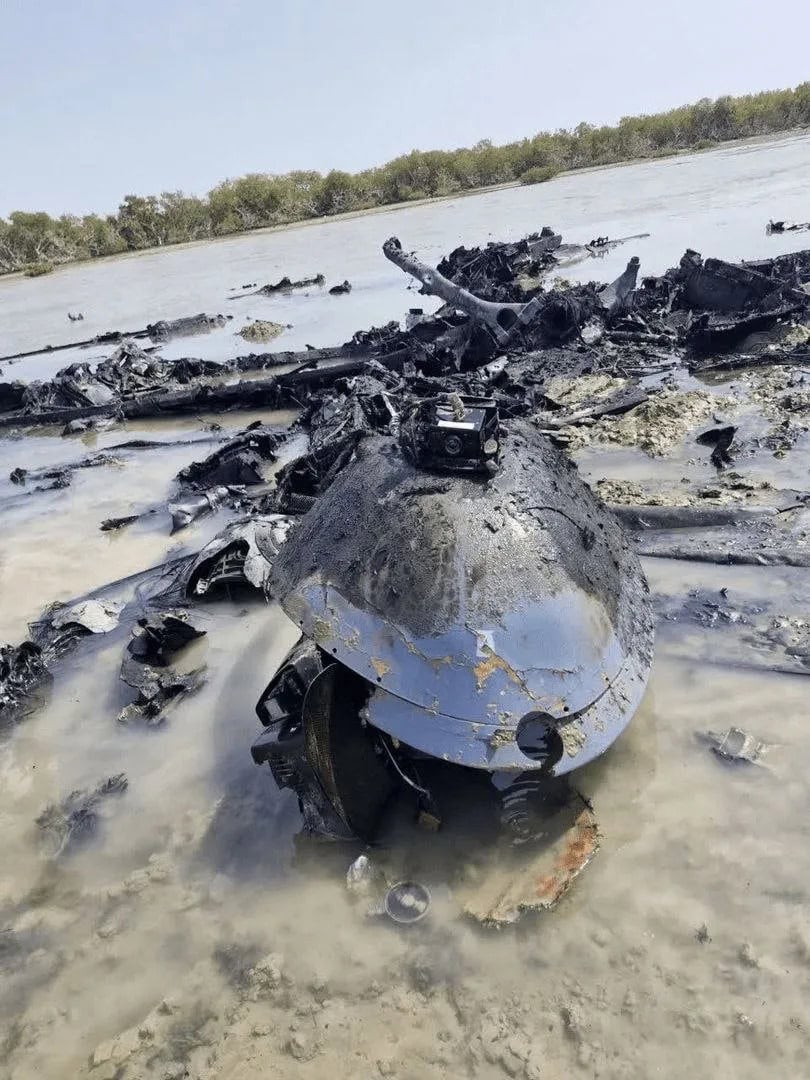
Three F-15Es were reportedly destroyed in a friendly fire incident over Kuwait in the opening days. Over 12 MQ-9 Reaper drones were reported lost. According to some accounts, five KC-135 refuelling tankers were damaged in a single Iranian missile strike at a base in Saudi Arabia. Six U.S. personnel were killed when a KC-135 crashed in Iraq after a reported mid-air collision. At least 13 U.S. service members were killed in combat operations, with roughly 200 wounded.
Financial Juggernaut
The financial arithmetic was turning against the U.S. fast. Each Patriot missile fired to intercept an Iranian drone costs between $3 million and $5 million. Each Iranian Shahed drone it intercepts costs roughly $20,000 to $50,000 to build. Iran was bleeding America’s defense budget through sheer asymmetry. The war was also destroying domestic economic confidence.
U.S. gas prices hit $4 per gallon by March 31, a 30% spike. The 10-year bond yield jumped to 4.46% on March 27, its highest since July 2025. The 30-year mortgage rate climbed to 6.38%. With midterm elections approaching, a prolonged conflict with rising fuel prices, inflation and a potential recession was becoming a political liability the administration could not afford.
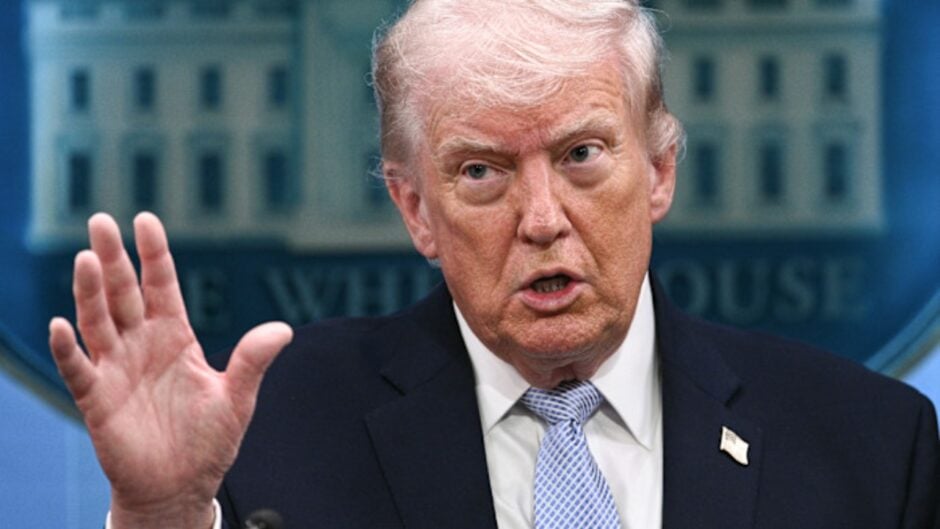
Trump framed the ceasefire as a victory, claiming the U.S. had “met and exceeded all military objectives.” But the reality is that the war had reached a point where continuing it was more expensive than stopping it.
Israel has also agreed to the ceasefire deal between the United States and Iran, a White House official confirmed.
According to a statement issued by Israeli Prime Minister Benjamin Netanyahu, Israel supported Trump’s decision, but it maintained that the ceasefire “does not include Lebanon.”
The Global Economic Toll
The five weeks of conflict had inflicted damage on the global economy at a scale not seen since the 1973 oil crisis. The International Energy Agency called the Strait of Hormuz closure the “largest supply disruption in the history of the global oil market.” The strait carries 20% of the world’s seaborne crude oil and a major share of global LNG trade.
When Iran effectively shut it down in early March, roughly 10 million barrels per day of oil production was shut in. Brent crude surged to $126 per barrel at its peak. U.S. gas prices hit $4 per gallon by March 31, a 30% spike. In Europe, diesel prices more than doubled. Jet fuel costs surged across every major aviation market, forcing airlines to add fuel surcharges and cancel routes.
Global Impact
The impact on everyday life was immediate. Petrol prices surged across Asia, Africa and South America as supply chains buckled under the pressure. Cooking gas, heating fuel and diesel for transport all climbed sharply. Grocery prices followed as transportation and fertilizer costs fed into the price of basic food items like flour, rice, cooking oil and vegetables. For import-dependent economies, the cost of living crisis was not theoretical. It was showing up at the pump, the utility bill and the kitchen table within days.
Effect in Pakistan
Pakistan felt the squeeze harder than most. The country imports roughly 90% of its oil through the Gulf, and roughly 60% of its liquefied petroleum gas (LPG) is sourced from the same route. When the Strait of Hormuz closed, Pakistan’s fuel supply was immediately at risk.
The Pakistan Navy launched Operation Muhafiz-ul-Bahr on March 9 to escort oil tankers safely to Karachi, but the underlying supply shortage drove prices up regardless. The government announced emergency austerity measures on the same day, cutting fuel allowances for government departments by 50%, shortening the work week to four days for government offices and requiring all offices to operate with 50% staff physically present.
The Ordinary Pakistani and the U.S.-Iran War
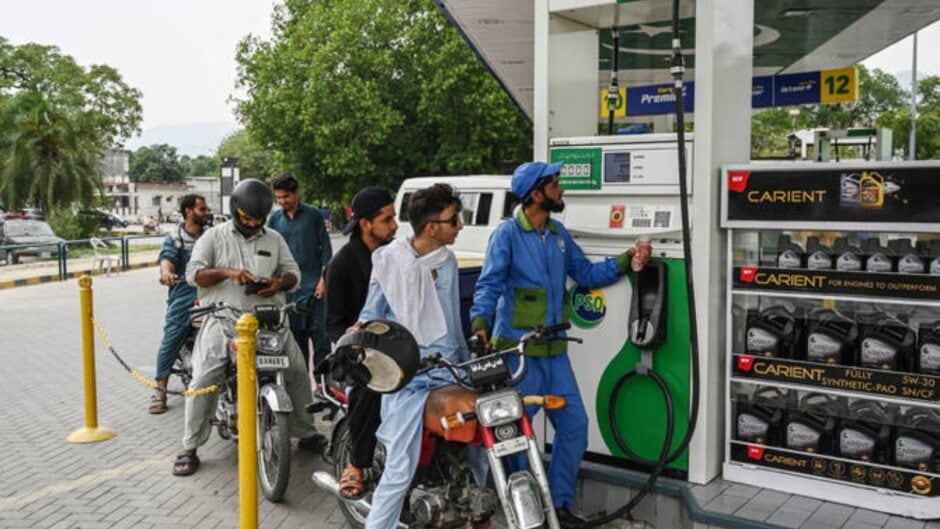
For ordinary Pakistanis, the war meant longer queues at petrol stations, higher CNG and LPG prices, rising electricity costs and sharply more expensive groceries. Flour, sugar, cooking oil and transport fares all climbed. Inflation, which had been stabilizing in early 2026 after years of economic turbulence, reversed course. The Pakistan Super League, the country’s flagship cricket tournament, was moved behind closed doors to reduce fuel consumption from crowds and logistics. Citizens called on the government to subsidize essential items. Remittances from millions of Pakistani workers in Saudi Arabia, the UAE and other Gulf states were also at risk as those economies contracted under the weight of the crisis.
The Spill Beyond Oil
Analysts warned that if the strait stayed closed deep into Q2, oil would hit $170 or $200 per barrel, a level Bloomberg Economics estimated would double the inflation and GDP impact across major economies and trigger a full stagflationary shock. For Pakistan, that scenario would have meant a return to the kind of economic emergency the country spent the previous three years trying to escape.
The destruction went well beyond oil. Over 30% of globally traded urea fertilizer transits the Strait of Hormuz. Fertilizer costs spiked worldwide, threatening food production across Asia, Africa and South America. Global sulfur supply collapsed, hitting copper mining and industrial production. Aviation rerouted around the entire Middle East, adding hours to flights and doubling jet fuel prices. QatarEnergy declared force majeure on all exports.
Damage to parts of the world’s largest LNG plant was projected to take five years to repair. The Philippines declared a national energy emergency on March 24, the first country to do so. Japan, which sources 90% of its crude from the Middle East, faced acute supply risk. South Korea activated a $68 billion stabilization program. India’s ceramics industry in Gujarat shut down entirely. Sri Lanka moved to a four-day working week.
As soon as the tensions escalated, crypto markets saw major dips. Bitcoin saw a brief drop to $98,460, marking a 6.3% weekly decline. Ethereum (ETH) slumped approximately 10% to near $2,180, while XRP slid 8% to $1.93, adding to a broader slump across riskier digital assets. Analysts reported nearly $950 million in crypto liquidations, with BTC alone seeing massive volume and emotional sell-offs.
Understanding the Geopolitical Chessboard
China’s Role
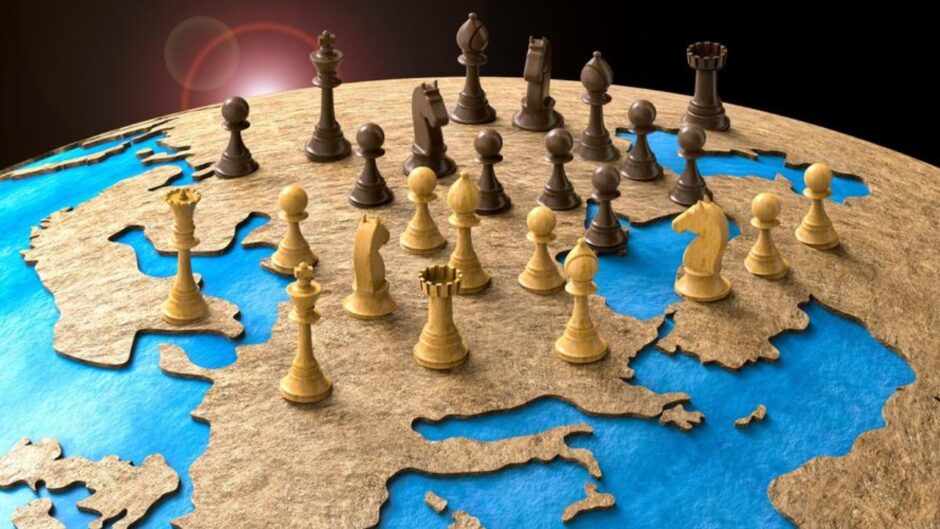
In addition to Pakistan’s tireless efforts to let sanity prevail, China played a calculated role throughout. Beijing declared neutrality but reportedly provided indirect support to Iran, including spare missile parts. Chinese satellite platforms publicly tracked U.S. military assets during the conflict.
On March 31, China and Pakistan jointly announced a five-point ceasefire proposal. Beijing’s economic exposure was direct: China receives a third of its oil through the strait. Chinese ships were reportedly passing through only via direct coordination with Iranian forces. Beijing framed its involvement as constructive diplomacy, but the war was costing its economy every day the strait stayed closed. For China, the ceasefire served a dual purpose: it protected its energy supply while allowing Beijing to position itself as a responsible global actor in contrast to Washington.
Saudi Arabi-Iran Rivalry
Saudi Arabia, despite being hit by Iranian missile and drone strikes on its energy facilities, showed restraint that proved critical. Riyadh intercepted incoming projectiles, condemned the attacks and reaffirmed its position, but did not escalate militarily.
The kingdom rerouted some oil through the East-West pipeline to the Red Sea, maintaining partial supply to global markets. Had Saudi Arabia struck back, the conflict would have widened beyond any ceasefire framework. Riyadh’s patience gave diplomacy the space it needed. Pakistan’s stakes were among the highest at the table.
Islamabad signed a Strategic Mutual Defence Agreement with Saudi Arabia in September 2025, under which both parties treat aggression against one as aggression against both. Each Iranian strike on Saudi soil raised questions about whether Pakistan would be obligated to provide military support for Pakistan imports roughly 90% of its oil through the Gulf.
Millions of its citizens work in Gulf states whose economies were under direct threat. It was simultaneously fighting operations in Afghanistan. A wider war would have forced Pakistan into a military commitment it was not prepared for, on top of an energy and economic crisis it was already struggling to manage.
Two Weeks of Calm or Waiting for the Storm?
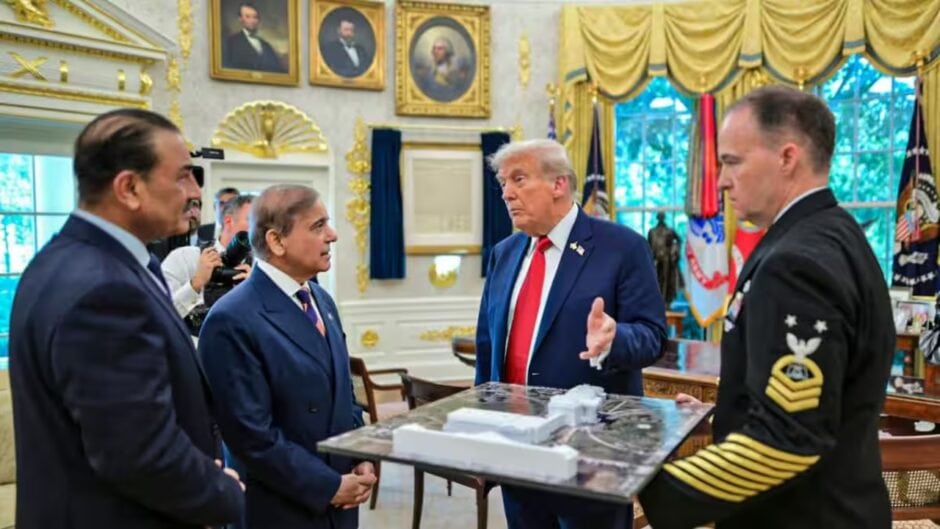
The Strait of Hormuz is now open for coordinated passage. Negotiations will begin in Islamabad on Friday, April 11 PKT (April 10 ET). The two-week window is tight, and the issues on the table are enormous, from the future of Iran’s nuclear program to the withdrawal of U.S. forces from regional bases.
If talks stall or either side breaches the ceasefire, oil markets will reprice overnight and the economic damage of the past five weeks will resume at a scale the global system is not prepared to absorb again. The most likely outcome is an extension of the ceasefire while negotiations continue, because neither side, particularly the United States, has the financial or political appetite to restart what it has paused.
The economic reality of April 7 is worth sitting with. The global economy was hours away from damage that would have taken years to undo. The United States was burning through billions with no clear endgame. It took two phone calls from Islamabad, a framework built on Pakistani diplomacy and a tweet that stopped the clock.
The so-called “World War3” and the global energy crises in decades was paused not by a treaty or a summit, but by a prime minister’s tweet to urge peace and a field marshal who convinced war-raging enemies to give that peace a chance.