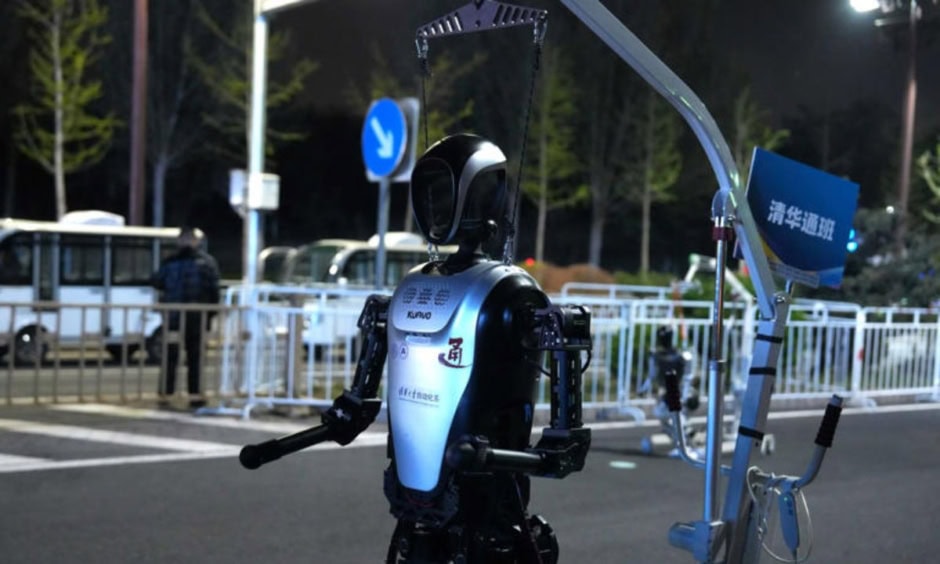
China has deployed embodied AI robots designed to replace human workers in dangerous industrial settings, including chemical tanks, ships, and energy facilities.
One robot features humanoid dual arms, magnetic wall-climbing capability, and an advanced AI model built on over 100,000 hours of accumulated operational data.
The robot performs hazardous tasks such as welding, flaw detection, and rust removal in environments considered too risky for human workers to enter.
It is powered by cable rather than battery, allowing it to operate continuously without interruption during long industrial tasks in the field.
The AI model behind the robot was trained using data gathered across a total working distance of 22,500 kilometres by its predecessors.
That distance represents more than half of the equatorial circumference of the Earth, according to the robot’s research and development team in China.
The robots have also operated across a cumulative area of over 5,000 square kilometres, generating extensive data to improve machine intelligence over time.
A second robot, designed for land-based inspection, has also been deployed alongside the wall-climbing model for industrial use across China.
It is equipped with a six-axis robotic arm capable of performing tasks such as shutting off switches and turning valves remotely.
The robot is built to operate in dangerous scenarios including fires and toxic gas leaks, removing the need for human workers to intervene.
It can detect fires or equipment faults within a range of 2,000 metres and issue timely warnings to operators monitoring from a safe distance.