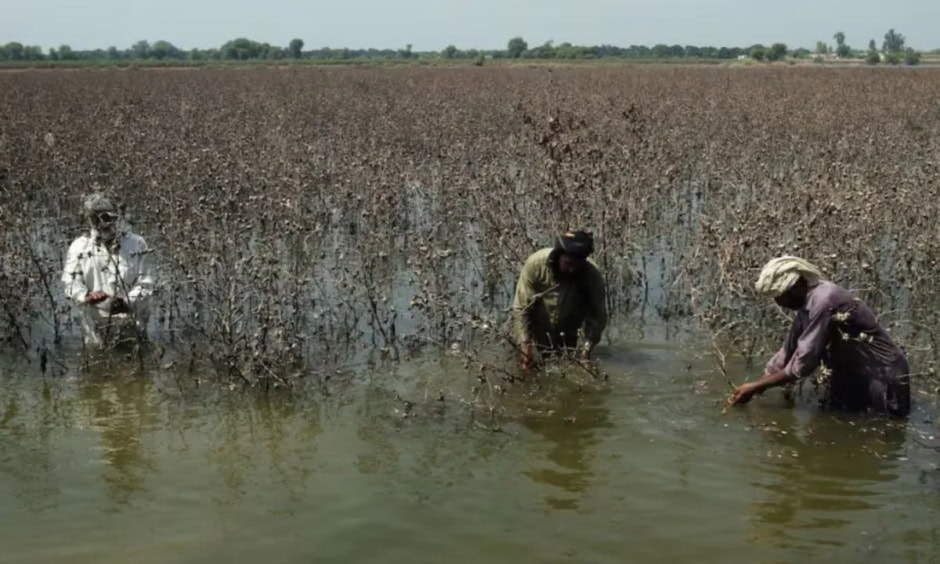
The 2025 Pakistan floods have disrupted or eliminated around 3.3 million jobs, according to a new International Labour Organisation (ILO) employment and livelihoods loss assessment.
The ILO assessed fourteen of the most severely affected districts across Punjab and Khyber Pakhtunkhwa, the two provinces that suffered the worst flood damage during 2025.
Nine flood-hit districts in Punjab accounted for the largest share of total employment disruptions recorded across both provinces during the assessment period.
Rural areas bore approximately 78 per cent of all employment losses, with agriculture identified as the hardest-hit sector, followed by services and then industry.
The assessment was conducted in support of the Preliminary Assessment of 2025 Flood Damages, a joint exercise involving the United Nations, Asian Development Bank, European Union, and World Bank.
The United Nations Development Programme served as the overall technical coordination lead for the broader multi-agency flood damage review and validation process.
Provincial compensation measures provided some immediate relief, but the ILO said more comprehensive support was still needed to fully restore livelihoods and income activities.
The ILO recommended cash-for-work programmes, skills training, and subsidised credit to help households restart both small-scale farming and non-farm economic activities.
Overseas Pakistanis and Human Resource Development Minister Chaudhry Salik Hussain said the floods had caused serious damage, especially for self-employed workers and small farmers.
Hussain said daily wage earners and vulnerable rural households were among the groups most severely affected by the disruption caused by the flooding.
He called for targeted employment recovery and livelihood restoration programmes to help affected communities rebuild their incomes and economic stability.
Hussain said his ministry would collaborate with provincial governments, social partners, and development organisations to support employment-intensive recovery efforts.
ILO Country Director Geir Tonstol stressed that restoring employment and livelihoods must remain a central priority within the broader national flood recovery response.
Tonstol also called for revival of the World of Work Crisis Response Strategy developed after the 2022 floods, to improve coordination in future disaster responses.
The ministry and the ILO jointly reaffirmed their commitment to working with employers, workers’ organisations, and stakeholders to support sustainable livelihood recovery.