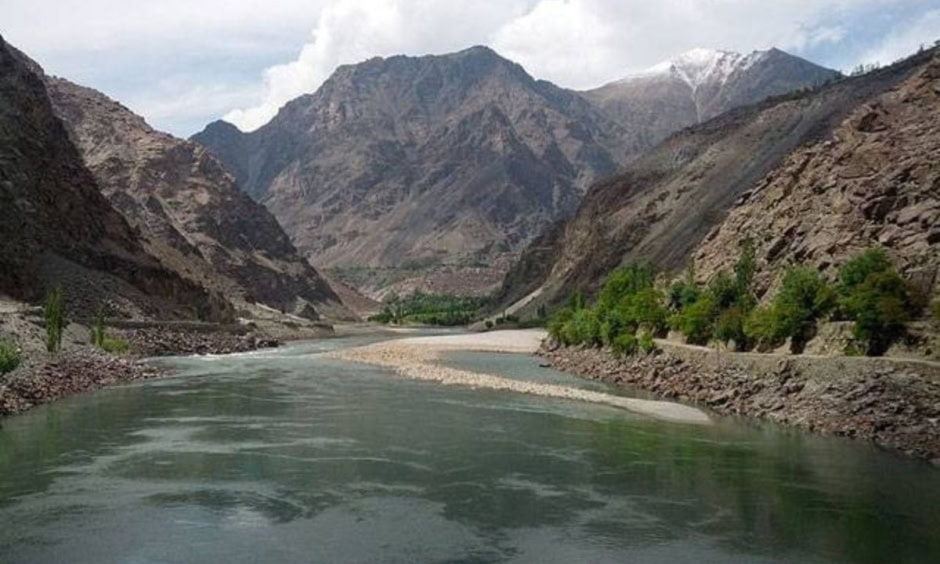
The Permanent Court of Arbitration in The Hague has ruled that the Indus Waters Treaty remains legally binding and cannot be suspended or withdrawn unilaterally by either country.
The tribunal confirmed that neither India nor Pakistan may exit or suspend the 1960 treaty without the mutual consent of both governments under international law.
The court stated that the legal framework governing the shared use of the Indus river system continues to bind both nations, making any unilateral withdrawal from the treaty entirely invalid.
The ruling centres on long-running disputes over Indian hydroelectric developments built along the western rivers assigned to Pakistan under the treaty’s original allocation provisions.
Pakistan has consistently argued that Indian run-of-river hydroelectric projects reduce downstream water flows, threatening agricultural output relied upon by millions of Pakistani farmers.
In a binding award issued on 8 August 2025, the court ruled that western river waters must continue to flow freely for Pakistan’s unrestricted use, reinforcing Islamabad’s treaty interpretation.
“Hydroelectric plant exceptions must strictly conform to treaty requirements, not to what India might consider an ideal or best-practices approach,” the court stated.
The case was originally brought by Pakistan in 2016, and the tribunal confirmed that its awards and decisions are final and legally binding on both parties without exception.
India’s Ministry of External Affairs spokesperson Randhir Jaiswal dismissed the proceedings, calling the tribunal an illegally constituted body whose awards are entirely null and void.
Jaiswal said India’s position on holding the treaty in abeyance remains unchanged, signalling New Delhi has no intention of complying with the court’s binding ruling.
Political and diplomatic experts in Pakistan strongly condemned India’s rejection of the ruling, describing New Delhi’s stance as a serious violation of international law.
Former ambassador Manzoorul Haq said India’s rejection of the court’s authority reflected a broader disregard for international legal institutions under the current government.
He noted that India had previously rejected UN Security Council resolutions on Kashmir and was now similarly ignoring a binding international ruling on the Indus Waters Treaty.
Haq added that India had neither accepted the court’s establishment nor recognised its rulings, which he said directly undermined the World Bank’s original guarantee of the treaty.
He warned that India’s decision to hold the treaty in abeyance could jeopardise peace across the subcontinent and endanger relations between two nuclear-armed neighbours sharing vital water resources.
Any conflict between two nuclear-armed states over shared water resources, he cautioned, could produce consequences extending far beyond the borders of the immediate region.