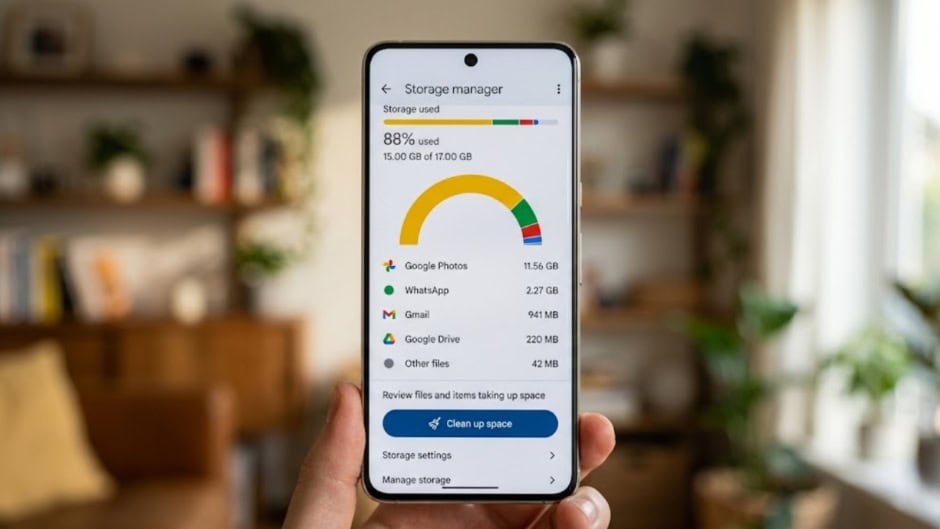
Google confirmed it is testing a new storage policy reducing free cloud storage from 15GB to 5GB for new accounts in select regions unless users provide phone numbers. The company stated the test helps provide high-quality storage service while encouraging users to improve account security and data recovery.
As per Google in clarifying statement to the media:
“We’re testing a new storage policy for new accounts created in select regions that will help us continue to provide a high-quality storage service to our users, while encouraging users to improve their account security and data recovery.”
Reddit users first spotted the change when creating new Google accounts receiving notifications they would only get 5GB of free storage. The notice mentioned that linking and verifying a phone number with their account would grant access to the full 15GB. Meanwhile, Google quietly updated its support page in March 2026 changing language from “15GB free” to “up to 15GB” of free storage.
Reports suggest the test is most active in African markets with some exceptions allowing signup without verification under specific conditions. During signup, affected users see a choice between “Keep 5GB storage” or “Unlock 15GB storage at no cost by using your phone number” according to multiple user reports.
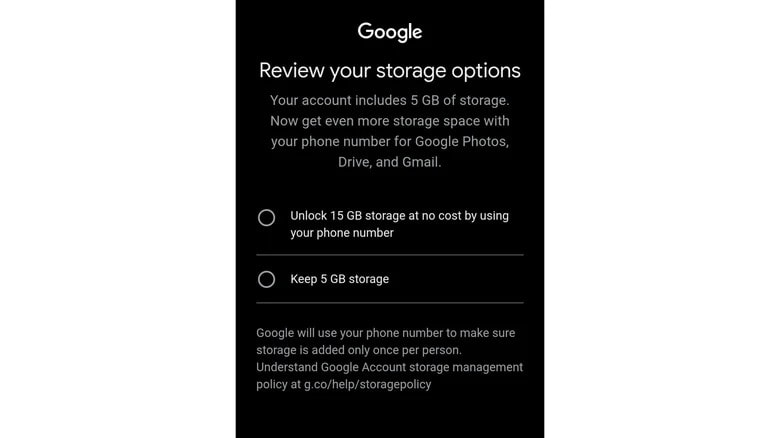
The storage allocation applies across Gmail, Google Drive, and Google Photos services. Google states the phone number ensures free storage bonus applies only once per person preventing users from creating multiple free accounts for extra storage. Furthermore, requiring verified phone numbers helps Google reduce fake or disposable accounts used for malicious activities.
Existing users remain unaffected by the test with their current 15GB storage intact. The change represents a significant departure from Google’s decade-old promise of unconditional 15GB free storage. Google has not made public announcements regarding the storage reduction though the company gave official statements to tech publications confirming the regional test.
Privacy advocates warn the shift reflects broader industry trends toward conditional “free” services requiring personal data in exchange for benefits.