Iran has announced plans to impose fees on the world’s largest technology companies for using subsea internet cables running beneath the Strait of Hormuz, according to CNN.
Iranian military spokesperson Ebrahim Zolfaghari posted on X last week, stating that Iran would enforce fees on internet cables passing through waters it claims to control in the region.
Tehran’s parliament discussed a formal plan last week that could directly target submarine cables currently linking Arab countries with Europe and Asia through the strategically critical Persian Gulf corridor.
Media linked to Iran’s Revolutionary Guards reported that companies such as Google, Microsoft, Meta, and Amazon would be required to comply with Iranian law under the proposed policy framework.
Licensing and control
Under the proposed plan, submarine cable companies would be required to pay licensing fees for cable passage through the strait, with repair and maintenance rights reserved exclusively for Iranian firms.
Some of the targeted technology companies have previously invested in cables that run through the Strait of Hormuz and the Persian Gulf, though it remains unclear which pass through Iranian waters.
“We will impose fees on internet cables,” Ebrahim Zolfaghari, Iranian military spokesperson write on X.
It also remains unclear how Iranian authorities could realistically compel major international technology companies to comply with any fees or licensing requirements they choose to impose on cable operators.
Strict US sanctions currently prohibit these companies from making any financial payments to Iran, meaning Tehran’s proposals may be viewed as political posturing rather than a serious enforceable policy.
Strategic leverage
Dina Esfandiary, Middle East lead at Bloomberg Economics, told CNN that Iran’s threats are designed to demonstrate leverage over the Strait of Hormuz and to protect the regime from attack.
She explained that Iran aims to impose such high costs on the global economy that no country would risk launching any military strike against Iranian territory or infrastructure assets.
State-affiliated media outlets have issued indirect warnings about possible damage to cables, with any disruption potentially affecting trillions of dollars in global data transmission and weakening internet connectivity worldwide.
Risk to global infrastructure
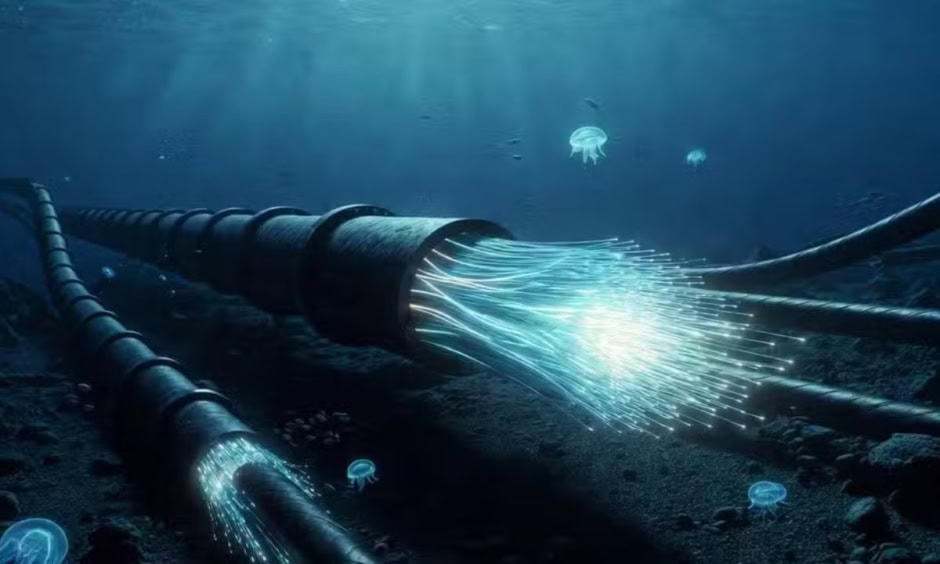
The subsea cables carry major internet and financial traffic between Europe, Asia, and the Persian Gulf, meaning any disruption would affect far more than internet speeds for ordinary users globally.
A disruption could threaten banking systems, military communications, AI cloud infrastructure, remote work operations, online gaming platforms, and streaming services across multiple continents.
Mostafa Ahmed, a senior researcher at the UAE-based Habtoor Research Center, warned that Iran’s Revolutionary Guard Corps could target underwater cables using combat divers, small submarines, and underwater drones.
Ahmed said any deliberate attack on these cables could trigger a cascading digital catastrophe spanning several continents, causing severe damage to critical communications, financial systems, and digital services worldwide.
Regional and global impact
Iran’s neighbours across the Persian Gulf could face serious internet disruptions, while critical oil and gas exports and regional banking operations could also be significantly affected by any cable damage.
India could see a large share of its internet traffic disrupted, potentially putting its outsourcing industry at risk of losses worth billions of dollars if cables in the region were targeted.
A cable disruption could also slow financial trading and cross-border transactions between Europe and Asia, while parts of East Africa could face prolonged internet blackouts affecting businesses and communities there.
Ahmed added that the overall damage could be significantly worse if Iran’s proxy forces deployed similar tactics against undersea cables located in the strategically important Red Sea shipping corridor.