A new generation of lightweight, joint-specific wearable exoskeletons is entering the consumer market, aimed at those who want to walk farther and more comfortably as they age.
Full exoskeletons have existed for decades for military, workplace, and medical rehabilitation purposes, but companies are now developing more affordable, daily-wear versions targeting general aging populations rather than acute disability.
Skip, a wearable robotics company, is taking pre-orders for $5,000 “powered trousers” as part of a “movewear” collection that integrates exoskeleton technology into everyday consumer products. Co-founder Anna Roumiantseva frames the company’s mission around the gap between lifespan and healthspan.
“Living longer is a biology problem, but living well is a design problem,” she says, noting that medical advances have extended life by decades without a corresponding redesign of the products and systems people use daily. The company specifically targets users who remain mobile but want to preserve and extend that mobility, rather than those already experiencing significant decline.
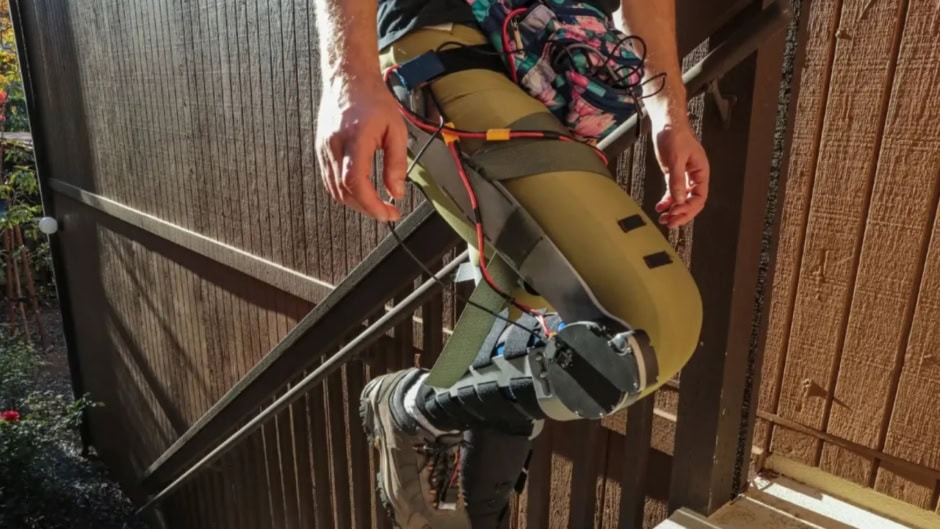
Dephy, the company behind the Sidekick ankle-assist powered orthotic, takes a similar approach. CEO Luke Mooney describes the target market as “freedom reclaimers,” people actively working to regain lost mobility rather than passive users.
“We tell people, we can help you but we can’t help you get off the couch,” he says.
The device straps around the calf and clips into a modified sport shoe, with software that learns an individual’s gait and adjusts accordingly, delivering a battery-powered spring with each step.
However, adoption will not be universal. Some users who rely on assistive devices during recovery from injury or illness prefer to use them only for a defined purpose rather than indefinitely. Industry voices frame the technology’s broader value around dignity and autonomy rather than mobility alone, arguing that independence remains a defining human need regardless of age.