xAI has significantly expanded Grok Voice with a major update released July 6, 2026. The company is releasing 21 new flagship voices for Grok Voice, joining the original five. All voices are natively multilingual, supporting 25+ languages including English, Hindi, Gujarati, Bengali, Kannada, Spanish, French, German, Italian, Portuguese, Russian, Indonesian, Japanese, Korean, and Thai.
Each voice has a specific use case. Carina provides soft, empathetic support tones for customer service interactions. Luna offers warm and friendly characteristics for general conversation. Support, characters, commentary, advertising, and education voices are all available, each optimized for its domain. Developers can use speech tags like [pause], [whisper], and [emphasis] to control delivery with precision.
With improved pacing, phrasing, and emphasis for greater naturalness in real conversation, these models retrained the original five Grok voices, Ara, Eve, Leo, Rex, and Sal.
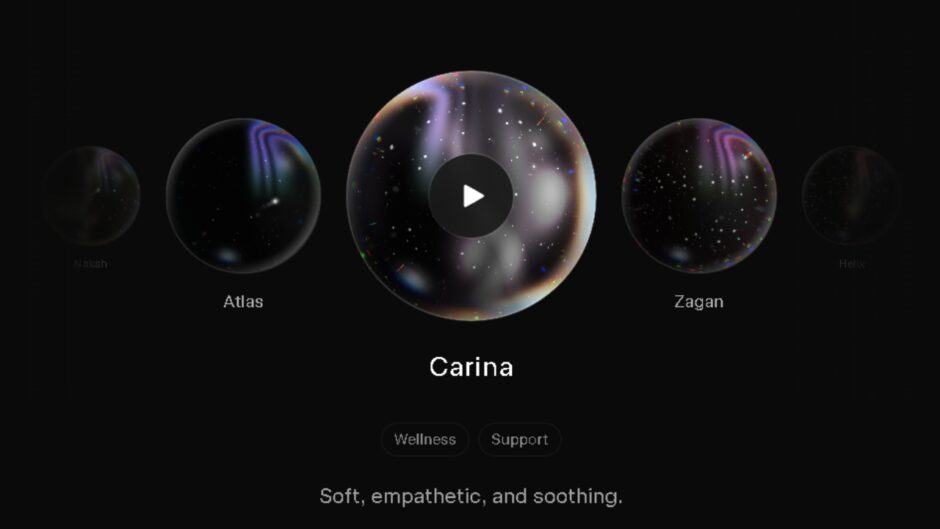
All 21 new voices are immediately available across Grok Voice infrastructure. The Text to Speech API allows developers to integrate voices into applications. The Voice Agent API powers real-time, speech-to-speech conversations with sub-second latency. The newly launched Grok Voice Agent Builder provides a no-code platform for creating production voice agents without API integration work.
The Voice Agent Builder launched July 1, 2026, priced at 0.05 dollars per minute with voices included. It collapses the traditional three-API voice stack into a single speech-to-speech model, eliminating handoff latency and operational complexity. Users can build custom voice agents in approximately two minutes by writing plain-language descriptions of call flows and attaching knowledge bases and tools.
xAI also offers voice cloning from as little as one minute of audio, allowing custom voices to be replicated across Text to Speech and Voice Agent APIs. The platform ranks first on Big Bench Audio, the leading audio reasoning benchmark for voice agent capabilities, with average time-to-first-audio under one second.