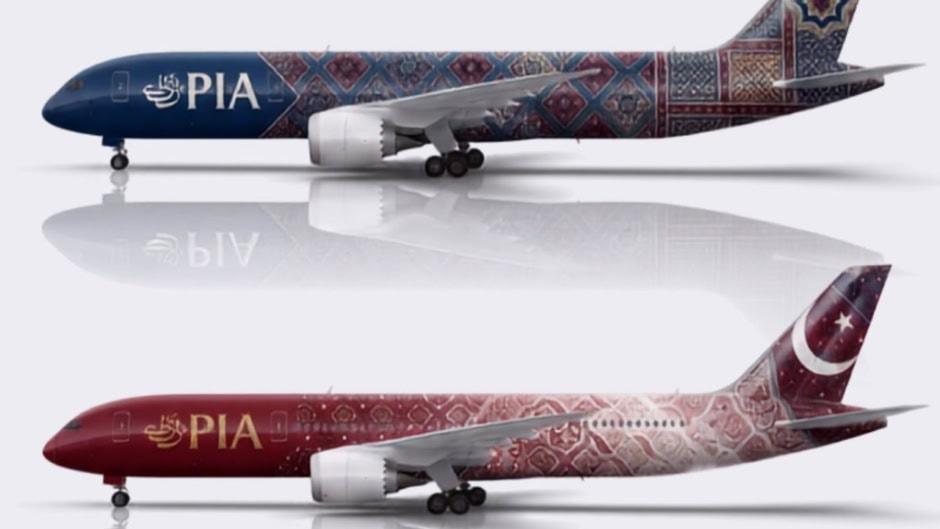
Canva has floated an idea that is equal parts patriotic and provocative. The design platform proposed organizing and funding a nationwide competition to rebrand Pakistan International Airlines, inviting ordinary Pakistanis to shape the national carrier’s new identity under its new ownership. The pitch is simple and stirring, namely a fresh look designed by the public rather than an agency.
The proposal came through a LinkedIn post on Monday. Ahmed Iqbal, Canva’s general manager for the Middle East, North Africa, Afghanistan, and Pakistan, said the company wants to connect with PIA’s leadership to discuss it. He framed the effort as a chance to rebuild public trust in an airline whose reputation has taken years of battering.
Iqbal said the competition would cover PIA’s logo, brand guidelines, aircraft livery, and relaunch marketing campaign. He wrote “designed by Pakistanis, for Pakistan,” adding that Canva was ready to invest big prize money to draw talent nationwide. So this is pitched as a genuine open contest, not a token gesture.
Iqbal recalled PIA’s history as a regional aviation pioneer, arguing that public involvement could revive Pakistan’s design heritage and national pride. To make the point, he shared two mockups of PIA aircraft wrapped in rich Ajrak patterns, noting they were made by a non-designer using Canva and its Affinity suite. His line landed neatly, since he asked readers to imagine what a whole country could do.
The proposal sparked lively debate, with several LinkedIn users questioning the practicality of elaborate aircraft designs. Some noted that heavy paint adds weight, which raises fuel and operating costs. Others pointed out that darker colors absorb more heat, pushing up cooling demands, which is precisely why most aircraft stay white.
One comment read:
This design may be liked by some however it’s completely unpractical to put so much paint on an aircraft, specially PIA . The heavier the aircraft the costlier it is to fly. That’s why I always preach design with sense and practicality.
While another said:
I’m not sure if you know this, but there’s a reason you don’t see commercial planes painted entirely in dark colors. It’s not that it can’t be done, but it’s generally avoided because dark paint adds unnecessary weight, absorbs much more heat from the sun, increases cooling requirements and thermal stress on the aircraft, and makes cracks, leaks, and other maintenance issues harder to spot. That’s why airlines usually keep most of the fuselage white and limit darker colors to the tail or small sections of the aircraft.
Supporters pushed back warmly, and many have welcomed the idea as a way to tap Pakistan’s growing cultural revival and spotlight young designers working with indigenous art. For example, this comment set the clear boundaries in a very professional way:
Ahmad, I love this idea! I hope you find some innovators in the PIA to collaborate with. BUT, as a product marketer, I want to bring your attention to a few things.
Pros:
1. As you said, PIA is a beloved brand for Pakistan. You don’t need any brand awareness here. I love that you’re disrupting the top-down, corporate approach and changing it into a national participation by Pakistanis.
2. The core use-case of Canva x PIA. As you said, people already use Canva, gamifying it would be a solid demo of what Canva can do for PIA andddd Pakistan. Not the mention the engagement and goodwill it will generate for PIA.
Now the Risks:
1. The timing: Fixing the branding/ positioning BEFORE fixing operations would be like putting the cart before the horse. An airline rebranding is a massive undertaking and needs to be “earned”. This should be planned for 6-12 months in the future.
2. Airline livery is also an engineering problem. There are safety standards and while an awesome designer can collaborate with an airline engineer and make it happen – I don’t think crowdsourcing will get you that finished design.
The sensible middle ground emerged quickly, namely that any redesign should balance beauty against the hard realities of operating an airline.