
A German startup has brought sodium-ion batteries out of the lab and onto the side of your house. Revolta launched a high-voltage residential storage system built on sodium-ion technology rather than the lithium that dominates home batteries today. It signals that the cheaper, more abundant chemistry is finally reaching real consumer products.
Each battery module holds 2.0 kWh, and homeowners can connect up to 10 in parallel for a total of 20 kWh. That range suits everything from a modest apartment to a large solar home, and the configuration can be adjusted freely as needs grow.
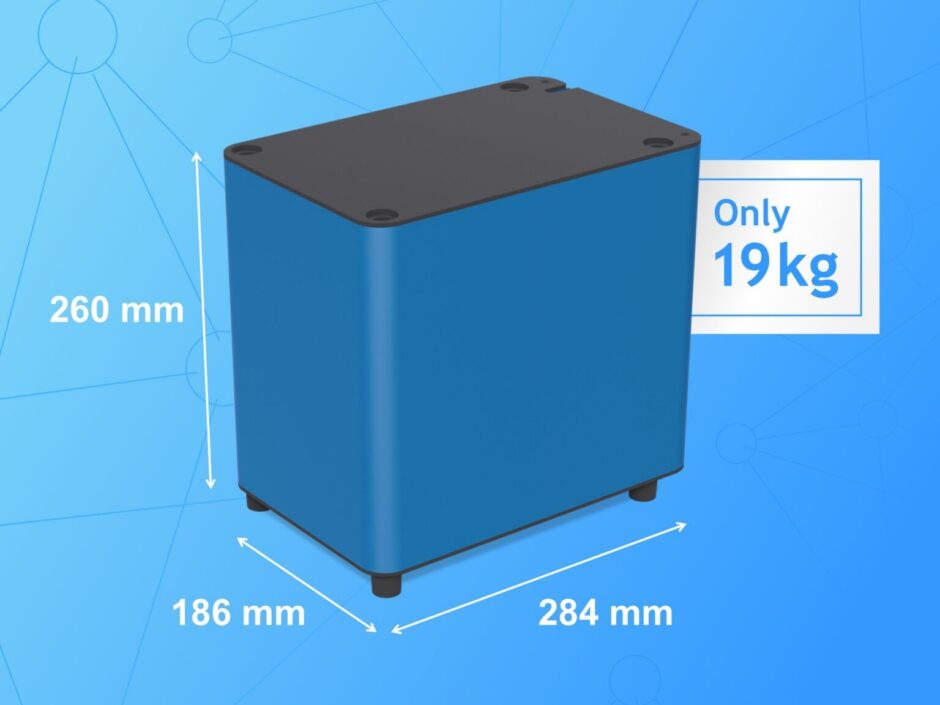
The specifications are respectable for a first-generation product. The system runs at 450 volts DC, delivers over 95% round-trip efficiency, and carries an IP65 rating for dust and water resistance. Its energy density sits at 105 Wh/kg, which trails lithium yet matters less for a stationary home unit than it would in a car. Each compact module weighs 19 kilograms.
Revolta says the battery can sit in standby for more than a year without needing a recharge, with very low standby losses and quiet operation under 40 decibels. For holiday homes or backup use, that kind of shelf stability is genuinely useful.
Revolta Sodium-Ion Battery at a Glance
| Spec | Detail |
|---|---|
| Chemistry | Sodium-ion (no lithium, no cobalt) |
| Module capacity | 2.0 kWh each |
| Max system | 20 kWh (up to 10 modules) |
| Nominal voltage | 450 V DC |
| Efficiency | Over 95% |
| Energy density | 105 Wh/kg |
| Protection | IP65 |
| Standby | Over 1 year without recharge |
| Noise | Under 40 dB |
| Market launch | September 2026, Germany first |
Commissioning runs through a plug-and-play over-the-air process, handled via the company’s smartphone app or a Bluetooth connection. Revolta says it keeps expanding its list of compatible inverters as manufacturers grant approvals, since the unit connects to the inverter rather than directly to the grid.
Revolta showed the system at Munich’s The smarter E trade fair, with an official market launch set for September and pilot projects already planned. The company will focus on Germany first, then expand across Europe, building a wholesaler-to-installer sales network it expects to complete by 2027.
“We are targeting the traditional three-tier distribution model, moving from wholesalers to installers, and are already in initial discussions with distributors,” the spokesperson said.
Sodium-ion uses no lithium and no cobalt, so it sidesteps the expensive, geopolitically tangled supply chains behind most home batteries.
For a country wrestling with load-shedding and rapid rooftop solar growth, an affordable, lithium-free storage option reaching real markets abroad is a preview of what could eventually ease energy costs here.