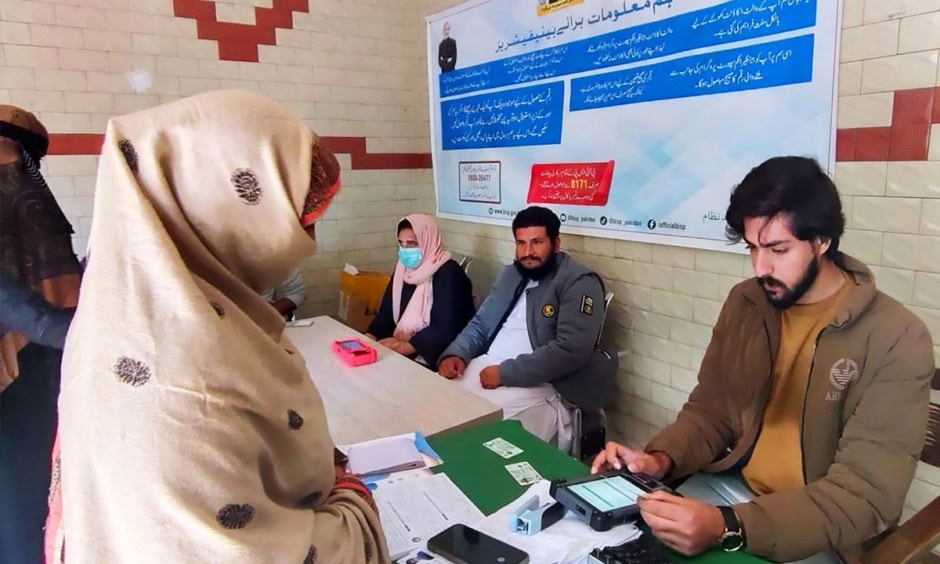
The Supreme Court has ruled that a Point-of-Sale (PoS) agent cannot invoke consumer protection law to challenge the blocking of his retailer ID by the Benazir Income Support Programme (BISP), as the relationship between the two did not qualify as a consumer service arrangement.
A two-judge bench headed by Justice Muhammad Ali Mazhar issued the ruling on Saturday while deciding an appeal filed by BISP Deputy Director Muhammad Ishaq against a November 6, 2025 order of the Peshawar High Court (PHC) Bannu bench. The apex court set aside earlier rulings by the Consumer Protection Court, Bannu, and the PHC, both of which had directed BISP and Bank Alfalah to restore the agents ID.
In a 14-page order, Justice Mazhar stated that the complaint filed under Section 13 of the Khyber Pakhtunkhwa Consumer Protection Act 1997 was not maintainable, since the complainant, Fardayaz Khan, was himself a service provider rather than a service acquirer entitled to protection under the BISP Act 2010. The court noted that no contract or consumer relationship existed between Khan and BISP, making the complaint defective from its inception.
The judgement further pointed out that Khan name did not appear in BISPs official list of PoS agents for Bannu district, contradicting his claim to the position.
Despite dismissing the complaint on maintainability grounds, the Supreme Court directed the BISP Director General (Cash Transfer), Islamabad, to conduct a formal inquiry into the matter. The authority has been instructed to give Khan a full hearing, confront him with any complaints received against him, and issue a final order within 45 days, allowing him to pursue appropriate legal remedy if required.
According to case details, Khan had claimed to operate as a PoS retailer under a franchise agreement for distributing BISP payments. His ID was deactivated by Bank Alfalah in May 2021. After his complaint to the Wafaqi Mohtasib was dismissed, he approached the Consumer Protection Court under the KP Consumer Protection Act nearly two years later.
On July 1, 2025, the Consumer Court had directed BISP and Bank Alfalah to either restore his ID or provide written justification for the blockage, despite the absence of proof that BISP had taken any such action.
In its detailed observations, the Supreme Court reiterated the broader purpose of consumer protection laws, stating that such legislation exists to safeguard consumers from unscrupulous and deceptive business practices.
The court noted that these laws ensure product safety, prevent the sale of defective goods, prohibit misleading advertising and unfair contracts, and provide consumers a forum to seek refunds, replacements or redressal against fraudulent business conduct.
The judgement added that consumer protection frameworks worldwide now extend to e-commerce and digital transactions, offering the same standards of fairness and transparency applicable to traditional retail.