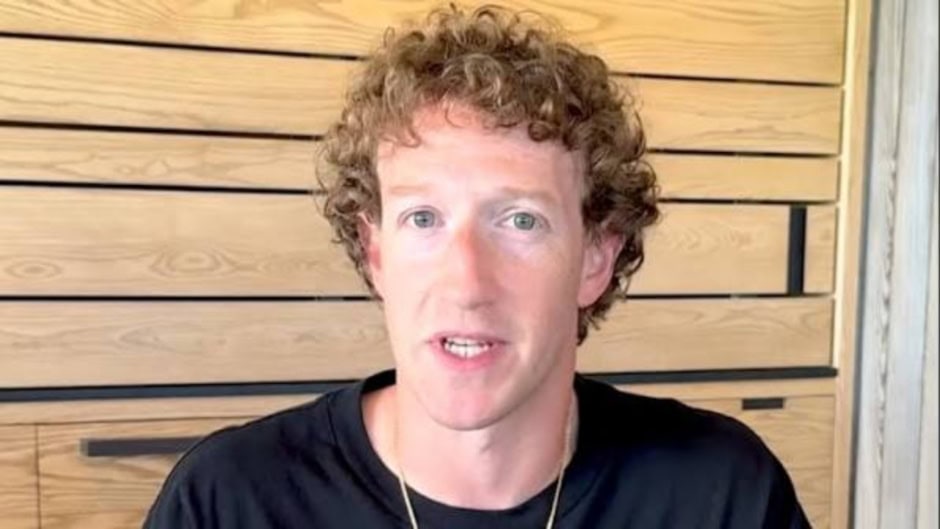
Mark Zuckerberg published a 6,500-word manifesto titled “The Future is for Everyone” on August 10, outlining his vision for universal access to personal superintelligence and calling for regulatory frameworks that prioritize speed over caution. The essay arrives as Meta approaches approximately $1 trillion in cumulative AI infrastructure investment and faces mounting legal, political, and public pressure over the social costs of its platforms.
Zuckerberg’s central argument frames superintelligence as one of the most important technological developments in human history, one that should belong to everyone rather than remaining under the control of corporations or government bodies. He envisions a future where every person has an “exceptionally capable personal agent” that understands their goals, works 24/7 on their behalf, and improves their relationships, health, career, finances, and daily routines. He described his own experience with these tools already: his AI agent flags interesting information, helps him prototype ideas, monitors his sleep and training, and plans personalized baking recipes for him and his daughter each weekend.
Zuckerberg writes:
Humanity has witnessed many transformative advances. Each time there is fear that people will be left behind. But each time humanity has come out with more people sharing greater prosperity, health, and freedom. We believe this will be true with AI as well, and the abundance of the future can be shared by everyone. We also believe that the values that got us to this point — like liberty, open inquiry, free enterprise, and equal opportunity — are also the right values to build a positive future.
The essay reads as equal parts philosophical treatise and regulatory lobbying document, and separating the two reveals the tension at its core. Zuckerberg argues that AI development needs to remain open and accessible, that regulatory approaches should avoid slowing American model releases “even by a month,” and that no centralized body should control AI progress. Each of these positions aligns precisely with what benefits Meta as the company with the largest open-source AI distribution (Llama), the most aggressive infrastructure spending, and the scale to absorb competitive pressure that smaller developers cannot survive.
Earlier this year, the company cut 20% of its employees earlier in 2026 and has publicly stated that AI will replace human staff across moderation and support functions. Zuckerberg explicitly wrote that AI is “not about automation or replacing human labor with machines,” while simultaneously running a company that is doing exactly that at scale.
The manifesto also sidesteps Meta’s well-documented history with user data and trust. Zuckerberg’s vision requires people to grant AI agents access to deeply personal information covering health, finances, relationships, and daily routines. Given Meta’s track record on data handling, including the Cambridge Analytica scandal, the $5 billion FTC privacy settlement, and the ongoing $942 million New Mexico child safety judgment, asking users to hand over even more intimate data requires a level of institutional trust that Meta has not earned.
Zuckerberg has published similar strategic essays before, each positioned as an intellectual framework but functionally designed to shape regulatory outcomes in Meta’s favor. He released manifestos on child safety in 2024, freedom of speech in early 2025, election integrity during congressional testimony, and the metaverse pivot in 2021. The AI manifesto follows the same formula: articulate a compelling, idealistic vision of technology’s potential, then embed specific policy prescriptions that conveniently reduce regulatory oversight of the author’s own company.
In his words:
This is an incredible moment to live through. Developing superintelligence will be the most profound technological advance we will see in our lifetimes.
As we get closer to this, it is increasingly important to have a clear philosophy and values for how superintelligence will benefit humanity. Meta is committed to building with the principles of individual empowerment as the source of prosperity, invention as AI’s purpose, and a balance of power favoring people as the foundation for addressing safety risks.
If these values lead the way, then I am optimistic that the coming decades will be some of the most amazing in history. The arc of human civilization has bent towards putting more power in people’s hands to live and shape the world in the ways we believe are best. Superintelligence holds the promise of giving everyone that power, and building a positive future for everyone.
The essay does make valid observations about AI’s potential to democratize education, healthcare, and creative expression across economic boundaries. However, it feels more like a defendant’s plea in court than an uplifting message about what lies ahead.