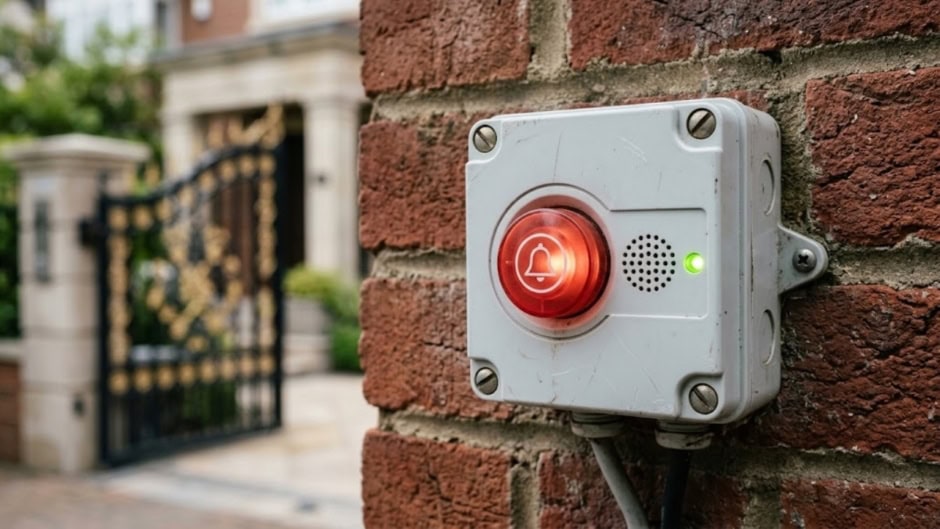
Over 40,000 QR panic buttons are now operational across Lahore’s public transit network. It includes rickshaws, taxis, and ride-hailing vehicles. Built completely internally by the Punjab Safe Cities Authority, this digital security grid cost nothing extra to deploy for either the government or transit drivers.
Syed Abdul Rahim Shirazi, Lahore’s Chief Traffic Officer, noted that traffic personnel are currently outfitting vehicles at 45 city spots, with a dozen squads focusing exclusively on auto-rickshaws.
Before heading off, riders scan a QR code inside the cabin. This quick scan pulls up official data regarding the vehicle’s registration, its legal owner, and the driver’s background, ensuring riders can verify their transport before moving. Additionally, travelers can relay the QR data or live trip tracking to loved ones via the Public Safety App, enabling remote monitoring of the route.
Should an emergency arise, the button links riders straight to the Emergency 15 hotline and the PSCA command center via three distinct pathways: phone call, video link, or text chat. Activating the alert immediately sends the user’s real-time coordinates and car details to authorities. The PSCA’s control center then taps into urban CCTV cameras to watch the event unfold live and send the closest patrol unit.
Twelve core protection tools are bundled into this single framework to link commuters with police during transit crises. These capabilities encompass emergency dialing, video links, text chat, position tracking, vehicle authentication, driver checks, trip sharing, rapid police response, incident logging, CCTV observation, route tracking, and automated evidence archiving for future inquiries.
The PSCA integrated the buttons directly with official vehicle databases, which is a security measure surpassing similar large-scale projects in Bangalore and Chennai in India. Whenever a vehicle is sold, its existing QR tag is instantly disabled, and a fresh code is generated only after new owner and driver credentials undergo vetting. This stops stale data from compromising the security grid as vehicles trade hands throughout Lahore.
Following a June 8 rollout at Liberty Chowk where the initial 100 rickshaws received buttons from CTO Shirazi, traffic authorities began strict enforcement on July 1. Uncompliant taxis, cabs, and rickshaws face fines and impoundment. The rollout has since scaled up to include InDrive and Yango fleets, plus all Metro, Speedo, and electric buses running through Lahore, Rawalpindi, and Multan.
Getting the QR system is entirely free via the Safe City portal and Public Safety App, ensuring low-income operators face no financial hurdles. To further support the city’s informal transit backbone, four new driver licensing hubs were recently inaugurated in Lahore following appeals from local rickshaw associations.