
Pakistan’s cellular market posted marginal shifts in July 2026 with Jazz losing competitive ground while Zong and Ufone captured gains. The Pakistan Telecommunication Authority released July market share data showing the country’s telecom sector remains intensely competitive despite Jazz’s continued leadership position.
Jazz’s dominant market share declined slightly to 36.09% in July from 36.25% in June, representing a 0.16 percentage point loss. The decline reflects modest subscriber migration across Pakistan’s four major carriers. Zong strengthened its position to 26.83% from 26.72% during the same period, posting a 0.11 percentage point gain that demonstrates its competitive strategy gaining traction with Pakistani consumers.
Telenor, the sector’s third-largest operator, experienced minor headwinds declining to 21.06% from 21.17% in June. The 0.11 percentage point decrease mirrors competitive pressures facing established players. Ufone emerged as the strongest performer, advancing to 14.97% from 14.81%, representing a 0.16 percentage point gain that signals momentum in its market-building efforts.
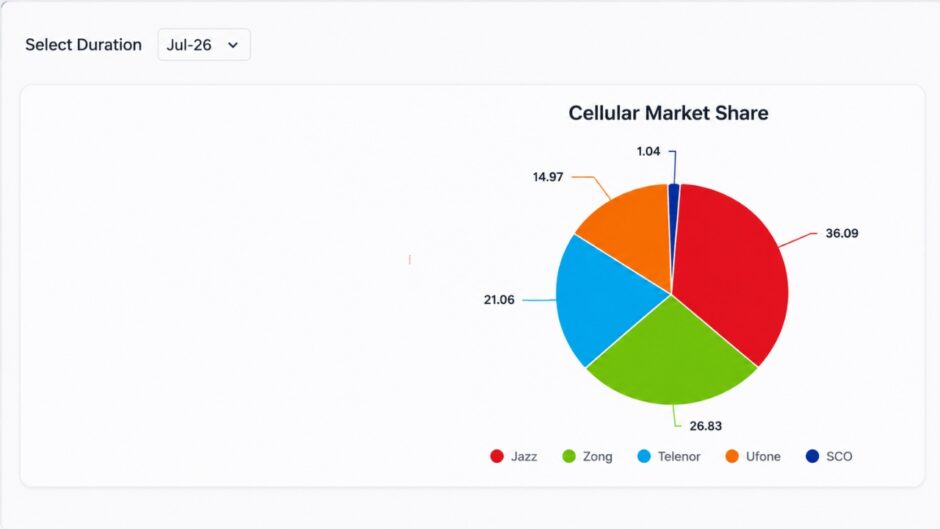
Smaller competitor SCO maintained its marginal position at 1.04% in July, down slightly from 1.05% in June. The collective data underscores Pakistan’s highly fragmented telecom landscape where competitive dynamics continuously reshape market position.
These July figures reflect ongoing subscriber volatility across Pakistan’s cellular sector. While the monthly shifts remain modest, they demonstrate sustained competition among carriers vying for subscriber loyalty. Jazz retains commanding market leadership despite July’s modest erosion, while Zong and Ufone’s gains suggest both carriers are successfully executing competitive strategies.
Industry analysts expect continued market fluctuations throughout 2026. Pakistan’s estimated 200+ million mobile subscribers provide ample growth opportunities for all carriers. The ongoing competition benefits consumers through improved service quality and competitive pricing structures across urban and rural Pakistan.