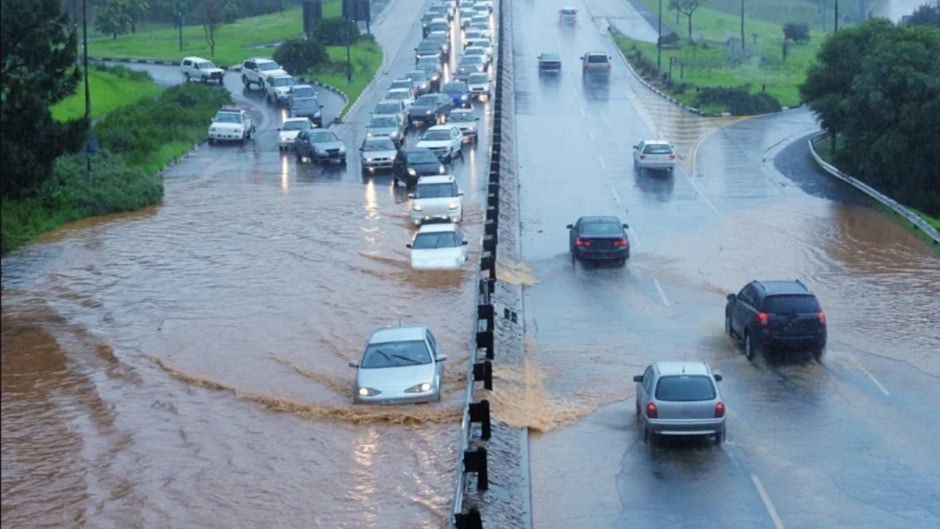
On the morning of September 1, 2026, Pakistan’s twin cities drowned once again. Torrential rain began pounding Islamabad and Rawalpindi around 3:20 am Pakistan Standard Time (UTC+5) and continued relentlessly until 8 am, submerging roads, flooding basements, and pushing Rawalpindi’s notorious Nullah Lai toward dangerous flood levels within hours.
Rawalpindi’s Shamsabad recorded 197 millimeters of rainfall, while New Katarian received 185 millimeters and Golra measured 157 millimeters, according to the Pakistan Meteorological Department. Overall, Rawalpindi received nearly 200 millimeters of rain, marking its heaviest downpour in three years. Meanwhile, Islamabad’s E-11 sector recorded 150 millimeters, where an overflowing drain sent water pouring into homes and streets.
As water levels in Nullah Lai climbed to 29 feet at Kattarian and 23.5 feet at Gawalmandi, authorities scrambled into emergency mode. The Water and Sanitation Agency declared a rain emergency across the nullah’s catchment areas, deploying heavy machinery to low-lying neighborhoods including Liaquat Bagh, Committee Chowk, Murree Road, and Sadiqabad. Rescue 1122 personnel positioned themselves along the swelling channel, while the district administration ordered residents near Nullah Lai to evacuate immediately.
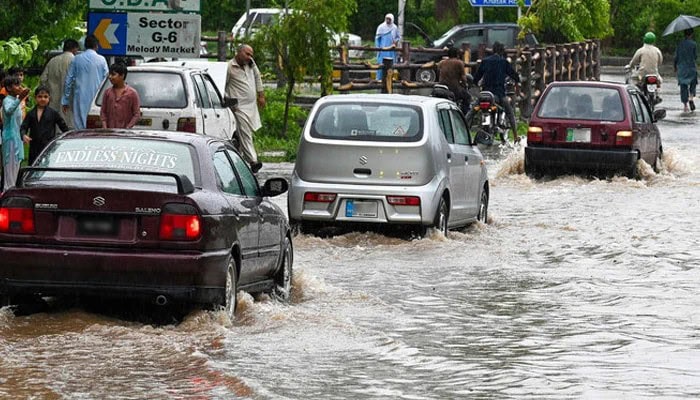
The Rawalpindi district administration eventually sought assistance from the Pakistan Army as a major flood surge passed through Nullah Lai, with more water threatening to flow in from Islamabad. Both cities closed all public and private educational institutions for the day, while traffic police warned motorists about waterlogged roads across the expressway, F-10, and I-8 sectors. Several areas including Safdarabad, Dhoke Khaba, Pirwadhai, Fauji Colony, and Arya Mohalla reported significant inundation.
A Deadly Season, Not an Isolated Day
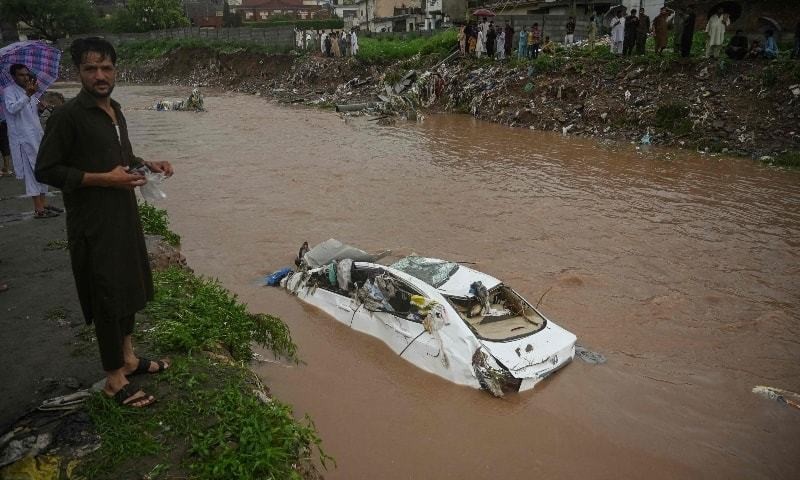
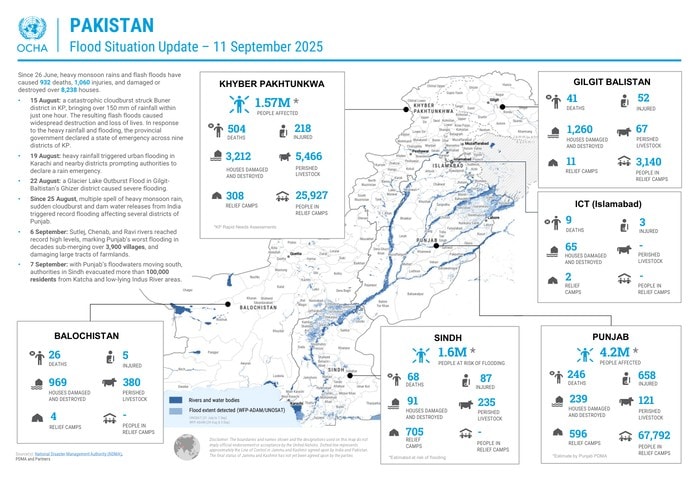
This latest deluge arrives during an already devastating monsoon. National Disaster Management Authority data covering June 26 to August 31 showed 175 people killed and 500 injured nationwide in rain-related incidents. Khyber Pakhtunkhwa recorded the highest death toll at 70, followed by Punjab with 61 and Sindh with 17. Alarmingly, house collapses accounted for 48.6% of these deaths, while drowning and flash floods ranked among the other leading causes.
Yet for all the emergency sirens and evacuation orders, one uncomfortable truth remains: this destruction was entirely predictable. Pakistan’s cities drown every monsoon not because the rain is unforeseeable, but because the country has repeatedly failed to build systems capable of predicting, draining, and preventing these floods. The historical numbers reveal a devastating pattern.
The 2022 floods killed 1,760 people and caused roughly $40 billion in damage, while the 2025 monsoon killed over 1,000 people and affected more than 4 million. According to the World Bank, Pakistan suffers average annual losses of around $2 billion from floods and earthquakes. Because major floods struck in 2010, 2011, 2014, 2022, and 2025, the disaster has become cyclical rather than exceptional.
The Forecasting Blind Spot
One central reason cities keep getting caught off guard is Pakistan’s limited weather prediction capacity. Accurate rainfall forecasting depends heavily on weather surveillance radars, yet Pakistan operates only a handful. The Pakistan Meteorological Department maintains advanced radar systems in just Islamabad, Karachi, Mardan, and Sialkot, alongside a Doppler radar in Lahore serving reservoir catchments. This sparse coverage leaves enormous geographic gaps where sudden cloudbursts develop undetected.
By comparison, neighboring India operates Doppler radars in 39 locations and plans 34 more, which helped raise its heavy-rainfall forecasting accuracy from 60% to 80% over a decade. Because Pakistan lacks comparable density, forecasters often cannot track fast-moving storm cells until rain is already falling. This gap explains why forecasts frequently seem wrong, since the underlying infrastructure cannot capture localized extreme weather in real time.
The government has finally begun addressing this shortfall, though slowly. Under the Annual Plan 2026-27, authorities allocated Rs1.6 billion to strengthen forecasting, including Rs195 million for a new Multan radar and Rs5 million for a Sukkur project. Another Rs1 billion targets modernizing Hydromet Services. A new radar is being installed in Multan with Japan International Cooperation Agency support, which also funded the radar towers at Islamabad and Karachi headquarters. However, these upgrades remain years from full deployment.
Man-Made Disasters Wearing Natural Masks
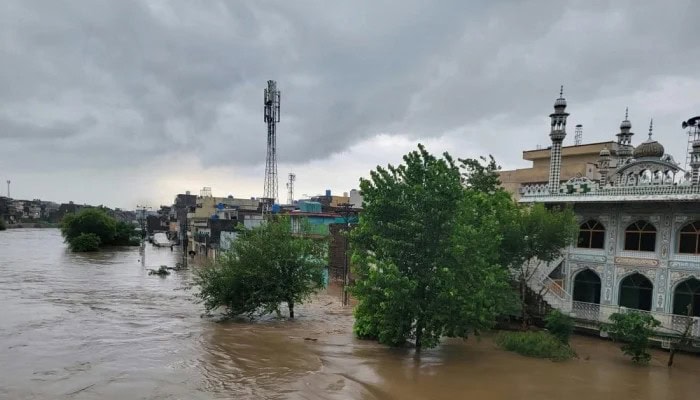
Even accurate forecasts cannot help when cities physically cannot drain water. A core driver of urban flooding is drainage systems failing to keep pace with explosive urbanization. Karachi’s sewerage network, much of it dating to the British colonial era, was designed for a population of 2 to 3 million. Today the city holds over 20 million residents, yet its drainage capacity never expanded proportionately. Its nullahs remain chronically clogged with plastic waste, debris, and sewage, overflowing the moment monsoon rains arrive.
Official investigations increasingly confirm that human negligence amplifies rainfall into catastrophe. An internal Punjab Irrigation Department report on recent Lahore and Gujranwala flooding found devastation was not simply an unavoidable act of nature. Instead, the closure of old culverts, obstruction of natural waterways, unauthorized cuts in drains, and ill-planned development all contributed significantly. Because Sindh’s Provincial Disaster Management Authority already provides free Hazard and Risk Atlases, these failures reflect ignored planning tools rather than missing knowledge.
Beyond physical infrastructure, delayed administrative response repeatedly worsens outcomes. Today’s Rawalpindi flooding followed the familiar script: emergency teams and evacuation orders arrived only after Nullah Lai had already breached dangerous thresholds.
Federal ministers themselves have labeled such episodes governance failures, questioning why stronger preventive action never materializes despite predictable seasonal patterns. Pakistan’s flooding crisis ultimately stems from three compounding failures: insufficient radar and forecasting capacity, decayed drainage infrastructure, and weak institutional preparation.
As climate change intensifies monsoon intensity, the gap between what Pakistan can predict and what it can prevent grows more dangerous each year. Closing that gap requires not just Japanese-funded radars, but the political will to enforce planning laws, clear drainage networks, and finally treat these disasters as the man-made emergencies they largely are.