Researchers have developed a new kind of speaker that directs sound to a single listener, potentially making private audio an everyday reality.
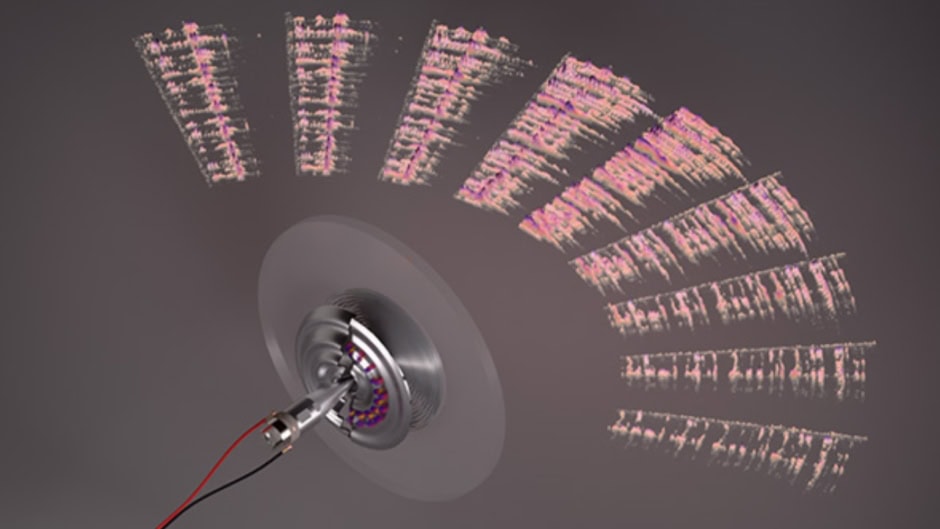
A team at Pohang University of Science and Technology (POSTECH) designed the low-cost, single-element speaker called MiPAL, which uses acoustic and elastic metamaterials to focus audio while blocking side leakage.
The technology promises to personalize public audio experiences without generating noise pollution. Imagine watching an explosive action movie on a crowded subway train with zero headphones, while the passenger pressed against your shoulder hears nothing at all. Because the system prevents tinny audio bleed, it eliminates both sound leakage and the annoyed glances that typically follow.
Traditional approaches struggled with cost and complexity. Conventional parametric array loudspeakers use expensive arrays of hundreds of emitters to focus sound, while simpler single-element designs often fail because unwanted vibrations leak audio sideways. To overcome these limitations, MiPAL uses a parametric array loudspeaker system that modulates ultrasound waves with audible content. This harnesses the nonlinear behavior of sound in air, beaming audio straight to a listener like a ray of light.
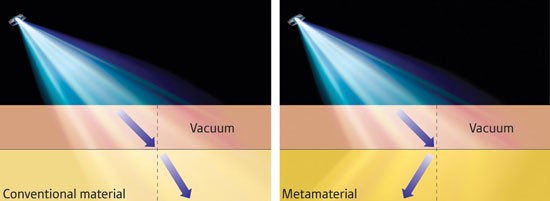
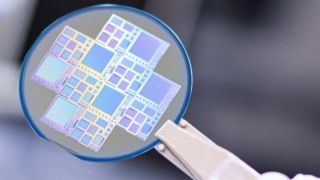
The breakthrough lies in integrating two metamaterials into a single transducer. An acoustic metasurface at the front acts as a lens, shaping ultrasonic waves into a narrow beam. Meanwhile, rear elastic meta-units suppress parasitic vibrations to block lateral sound leakage entirely.

To those unaware, a metasurface is an ultrathin, flat material engineered at the nanoscale to control and manipulate light and other electromagnetic waves.
“By co-designing the metamaterials and the ultrasonic device as a single system, we overcame the limitations of cost, complexity and design flexibility at the same time,” said Professor Junsuk Rho, professor at Dept. of Mechanical Engineering, POSTECH, and lead researcher. “Research on acoustic and elastic metamaterials has largely remained at the stage of validating principles and demonstrating concepts. This study is the first to integrate metamaterials into functional device and demonstrate their potential for practical use.”
The device delivers audio across a broad range from 500 Hz to 10 kHz. Asa result, it covers more than four octaves of the audible spectrum. In simulated aircraft seating tests using real broadcast and music signals, adding the elastic meta-units dramatically improved directional control. It proves that the system could isolate sound for individual passengers.
Additionally, the device suits easy manufacturing and rapid customization. Because its modular metamaterial structures are fabricated using 3D printing, engineers can quickly adapt the design for different seat spacings, beam angles, or operating conditions.
Rho emphasized this study is the first to integrate metamaterials into a functional device, demonstrating their potential beyond mere concept validation. Eventually, commuters, museum visitors, and travelers could enjoy individualized audio headphone-free.