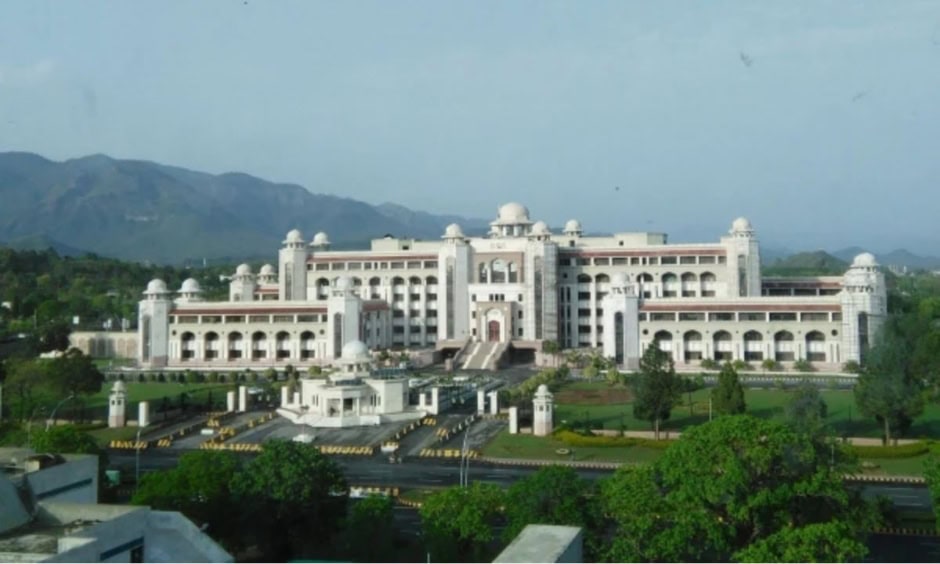
A surprise fire and rescue drill at the Prime Minister’s House in Islamabad has exposed significant shortcomings in the building’s emergency infrastructure, including a malfunctioning alarm system and a gate that failed to open during a simulated power outage.
The drill, carried out by the Capital Development Authority’s Capital Emergency Service (CES), was designed to test how quickly emergency responders could reach the premises and how well the building’s own safety systems would perform under crisis conditions. While response times from external teams were deemed satisfactory, the internal safety checks turned up several red flags.
Investigators found that the siren and fire alarm inside the Prime Minister’s House produced sound at a volume far below acceptable standards, raising concerns about whether occupants would be adequately alerted in a real emergency.
A more serious issue emerged when a simulated power cut caused the building’s electrical gate to jam shut, effectively trapping those inside with no way to exit through the main entrance.
In response, authorities have recommended installing a manual or backup mechanism that would allow the gate to be opened without electricity, ensuring occupants are not left stranded during future outages.
On the response side, the drill showed that emergency crews performed within acceptable timeframes. A G-5 fire tender reached the premises within four minutes of the alert being raised, while a rescue van and a Bronto Skylift, used for high-rise rescues, arrived within nine minutes.
The CDA has since described the external emergency response as prompt and satisfactory but stressed that the internal safety deficiencies must be corrected immediately, given the high-security nature of the premises.