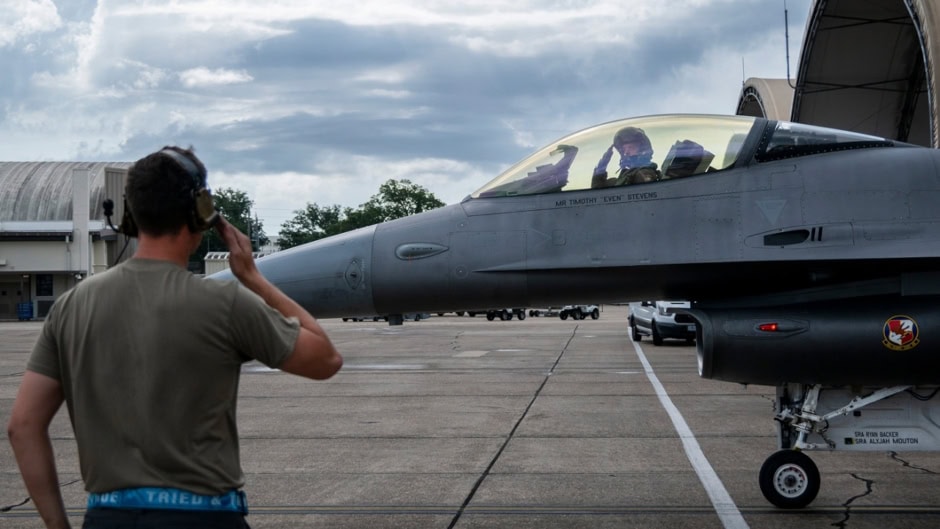
Artificial intelligence has taken the controls of a real F-16 fighter jet. The US Defense Advanced Research Projects Agency, DARPA, confirmed the milestone alongside the US Air Force. An AI software system successfully piloted the combat aircraft during live flight testing.
The AI system is called the VENOM Autonomy Kit, or VAK. It flew the jet during tests at Eglin Air Force Base in Florida. Importantly, a human pilot remained seated in the cockpit throughout. However, the AI performed the actual flying with notable skill and precision.
The human onboard served purely as a safety monitor. Engineers designed the system so the pilot can switch control instantly. Specifically, they can toggle between human and AI control with a switch flip. This preserves crucial human oversight during the experimental testing phase.
The engineering approach behind VENOM proves particularly clever. The team automated the F-16’s flight controls and sensors carefully. Remarkably, they did this without changing the jet’s core software. Consequently, a standard front-line fighter became an AI testbed efficiently.
“The emerging threat environment, especially as it relates to aerial combat, is growing increasingly complex,” said Brig. Gen. James “Fangs” Valpiani, Ph.D., DARPA program manager. “AI has tremendous potential to help humans manage this complexity in beyond-visual-range combat, but many hard questions remain concerning the performance and trustworthiness of combat AI in the extreme fog and friction of modern warfare. The AIR program aims to apply cutting-edge combat agents to operationally relevant scenarios to address these questions and field war-deterring, war-winning capabilities to our warfighters.”
This distinction matters enormously for future development. Previously, DARPA tested AI flight using the specialized X-62A VISTA aircraft. That experimental jet even flew the first AI-versus-human dogfight in 2023. However, VENOM marks the first time an ordinary operational F-16 was used.
The tests followed years of careful preparation. Engineers began simulations back in 2024 with one-on-one engagements. They later expanded to two-versus-two combat scenarios. The modified jets then started airworthiness flights in June before autonomous control in July.
DARPA has ambitious plans for the technology ahead. The VENOM fleet now anchors its Artificial Intelligence Reinforcements program. This effort will test multiple AI agents in live-flight scenarios simultaneously. Ultimately, it aims to let human pilots command teams of uncrewed aircraft.
The military rationale centers on protecting human lives. DARPA envisions AI pilots handling dangerous beyond-visual-range combat missions. Additionally, autonomous jets could fly risky foreign operations without endangering pilots. This would keep human aviators safely away from the most hazardous engagements.
However, officials acknowledge significant questions still remain unresolved. They stress that combat AI must prove trustworthy under extreme pressure. For now, the robots are not replacing human pilots entirely just yet.