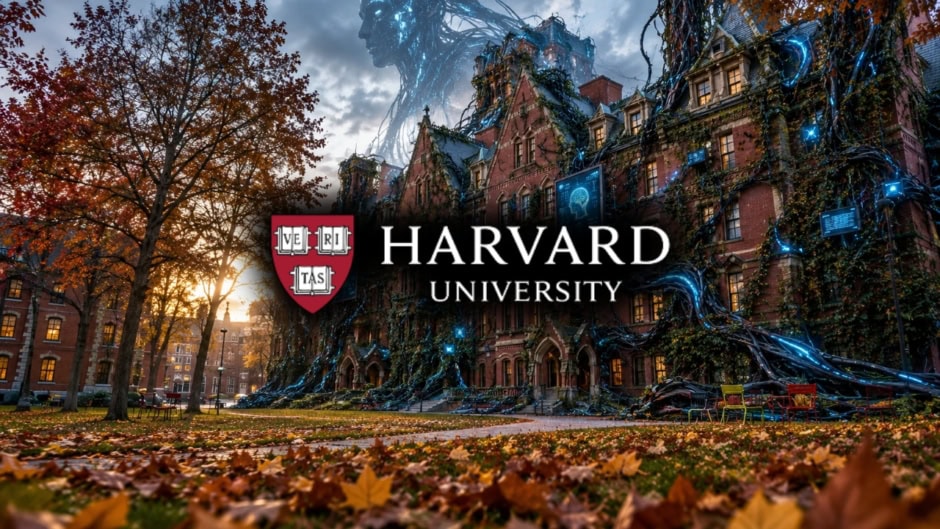
A Harvard physics study demonstrating that AI tutors outperformed active-learning classrooms has reignited debate about the future of university education and artificial intelligence’s role in learning.
Researchers led by Gregory Kestin and Kelly Miller tested 194 undergraduates in Harvard’s Physical Sciences 2 course during Fall 2023. Students experienced both a traditional active-learning classroom and a custom AI tutor called “PS2 Pal” through a crossover design. The active-learning classroom involved instructor-led group work and one-to-one support, representing current best practices in physics education. The AI tutor was engineered using similar pedagogical principles: guided questioning, adaptive feedback, and structured problem-solving rather than direct answer provision.
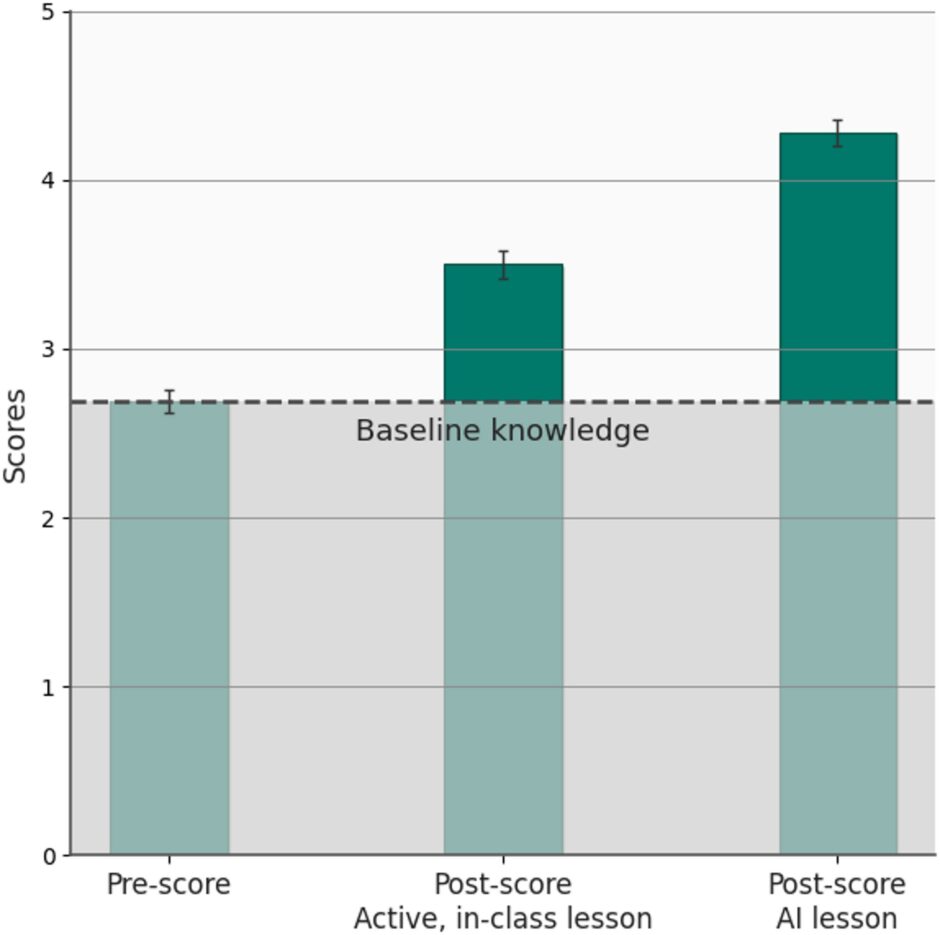
Results published in Scientific Reports in June 2025 showed students using the AI tutor achieved a median post-test score of 4.5 compared to 3.5 for the classroom group. Learning gains in the AI group more than doubled those of the active-learning group. Students completed work faster, using approximately 49 minutes instead of 60 minutes, and reported higher engagement.
The findings sparked viral discussion suggesting universities face existential challenges. Some posts claimed the experiment demonstrates AI tutoring renders traditional higher education obsolete. Others noted the study tested only two specific physics topics: surface tension and fluid flow. The AI system was purpose-built by Harvard faculty with embedded pedagogical design, not a general-purpose language model. The comparison measured performance against active learning, not one-on-one human tutoring or full-course instruction.
The study raises legitimate questions about how universities optimize teaching and learning. Some educators argue the results demonstrate AI’s capacity for effective pedagogy on focused content. Others emphasize that universities provide functions beyond classroom instruction: research mentorship, laboratory experience, peer collaboration, credential evaluation, and institutional networks.
The study measures learning outcomes on specific assessments within a controlled environment. Broader questions about university value, career preparation, and research contribution remain beyond its scope.
The findings may accelerate discussion about hybrid educational models combining AI tutoring for content delivery with in-person instruction for mentorship and advanced work. Whether universities adopt such models depends on institutional priorities, student demand, and continuing research on long-term outcomes.