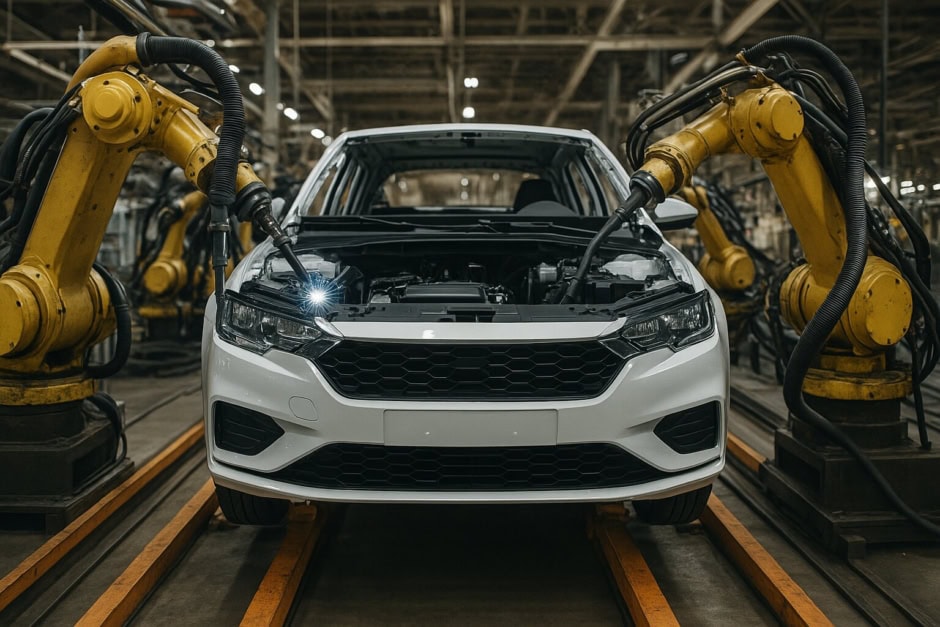
Pakistan’s auto parts manufacturers have challenged the government’s assessment of local production. They have asked Prime Minister Shehbaz Sharif to send an inspection team to Karachi. The Pakistan Association of Automotive Parts and Accessories Manufacturers (PAAPAM) says local factories produce components worth up to 65% of a vehicle’s value. These parts are supplied to international automobile brands assembling vehicles in Pakistan.
In a letter to the prime minister, PAAPAM disputed claims that the industry has made little progress in replacing imported components. The association says local manufacturers have developed significant production capabilities over the years.
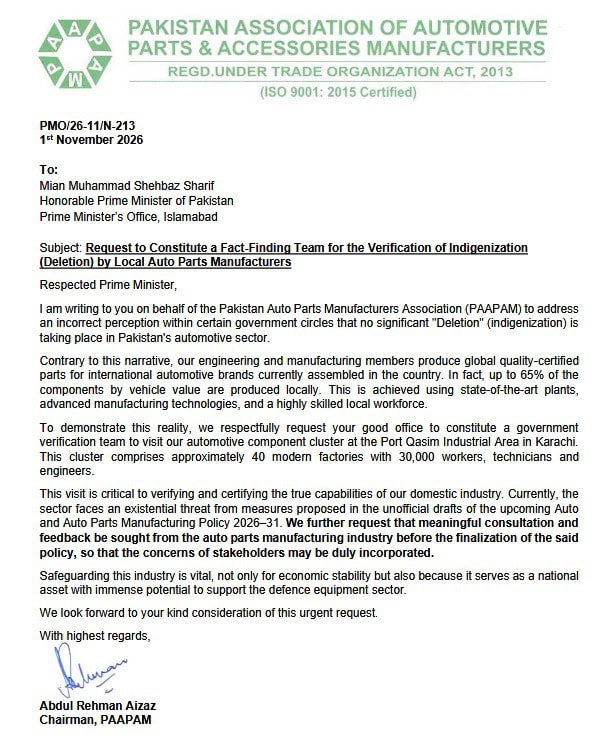
PAAPAM Chairman Abdul Rehman Aijaz has requested an official visit to the Port Qasim Industrial Area in Karachi. The area houses around 40 factories that employ approximately 30,000 workers, technicians, and engineers.
According to the association, these factories use modern machinery and manufacturing technology. They also produce internationally certified automotive components. PAAPAM wants government officials to inspect these facilities and verify the industry’s localization claims.
New Auto Policy Raises Concerns Among Local Manufacturers
The request comes as the government works on the Auto and Auto Parts Manufacturing Policy 2026-31. However, local manufacturers have raised concerns over some proposals being considered for the new policy.
PAAPAM has warned that certain measures could threaten domestic auto parts manufacturers. It has urged the government to consult industry representatives before finalizing the policy. The association also wants policymakers to consider existing investments in local manufacturing. These facilities support thousands of jobs and have helped develop technical skills across the industry.
Moreover, PAAPAM has highlighted the sector’s potential role in defense manufacturing. It believes automotive engineering capabilities could support other strategic industries. Therefore, protecting the existing manufacturing base could benefit the wider economy.
Meanwhile, senior auto industry representative Aamir A. Allawala told The News that discussions with the government were ongoing. He said manufacturers were working to ensure the proposed policy benefits both industry and consumers.
“We are holding talks with the government and trying to work towards a policy that is beneficial for industrialists as well as the general public,” Aamir A. Allawala said.
He added that the industry wants a balanced policy that addresses manufacturers’ concerns. At the same time, it should protect consumer interests and support broader economic needs.
PAAPAM’s latest appeal follows earlier objections to proposals under consideration for the five-year automotive policy. However, its demand for an official factory inspection has brought the localisation debate back into focus.
The association believes the government should assess actual production facilities before making policy decisions. It has urged the prime minister to arrange the proposed visit and include manufacturers’ concerns in the final policy.