NVIDIA board chair Harvey Jones opened Tuesday’s earnings call with a firm message: Jensen Huang will not return as CEO. Jones refused to take questions about Huang’s departure. Then the company posted record revenue of $115.8 billion, up 103% from a year ago.
The board hired executive search firm Heidrick & Struggles to find a permanent CEO.
“We won’t expedite before finding exactly the right person,” Jones said.
Interim CEO Colette Kress led the financial presentation alongside Jones and engineer Ian Buck. The earnings call lasted under an hour, notably shorter than previous quarters. Despite that, the numbers crushed expectations. Third-quarter revenue reached $115.84 billion against Wall Street’s $109.11 billion estimate. Data center revenue hit $107.6 billion, crossing $100 billion for the first time. Adjusted earnings per share landed at $2.68 versus a $2.48 consensus. As a result, NVIDIA has now beaten revenue estimates for 17 consecutive quarters.
Forward guidance carried equal weight. NVIDIA expects Q4 revenue of $130 billion, above analysts’ $125.25 billion average estimate. However, gross margins will dip to 71-72% as new product costs rise. Additionally, the company assumes zero data center compute revenue from China.
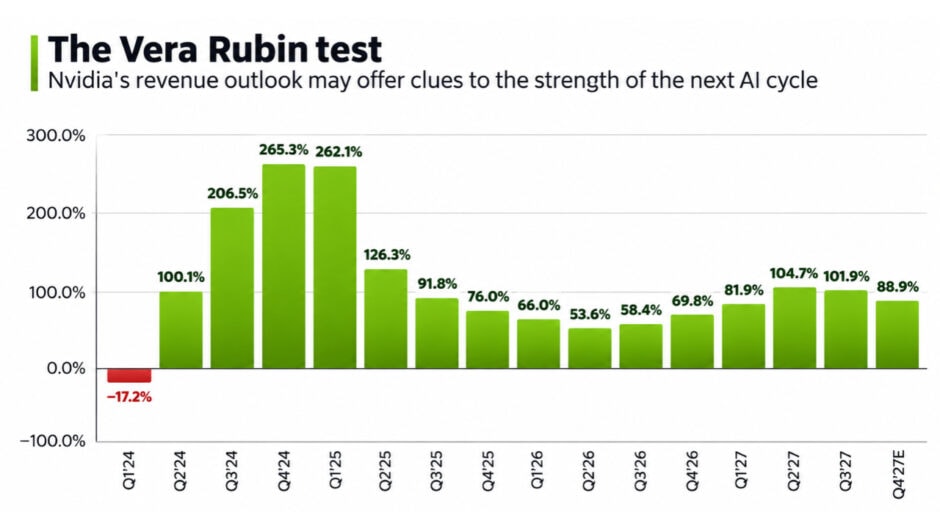
Vera Rubin, NVIDIA’s newest AI processor, delivered an explosive debut. The chip accounted for roughly a fifth of data center revenue.
Kress described it as the fastest product ramp in company history. “Our momentum is real,” she said. “We’ve got this.”
However, complications extend beyond the balance sheet. The SEC opened a probe into NVIDIA following Huang’s resignation. US intelligence agencies are investigating Alice Huang’s potential ties to China’s Ministry of State Security. Meanwhile, Washington tightened chip export licensing for Southeast Asian data centers. In response, NVIDIA’s board created a new national security committee.
The CEO search remains open. Prediction market Kalshi gives Arm CEO Rene Haas 25% odds, Ian Buck 17%, and Huang himself 9%. Amazon’s Jeff Bezos advised the board to look internally. “NVIDIA is too complicated” for an outsider, he said. Huang responded by saying he would be “honored” to return.
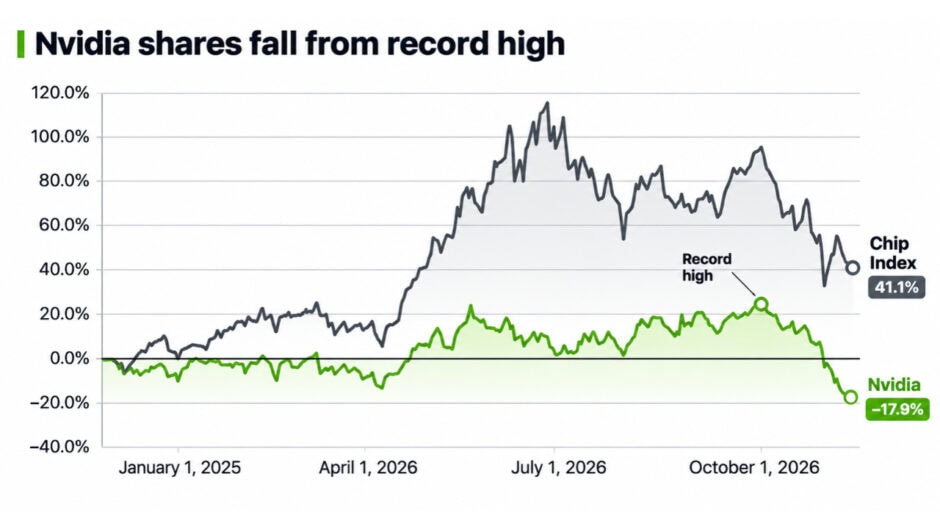
Shares rose 4% in after-hours trading. Still, NVIDIA’s $3.8 trillion valuation sits roughly $2 trillion below its early October peak. The numbers buy time, but whether this leadership team can sustain NVIDIA’s trajectory without its founder remains the central question heading into 2027.