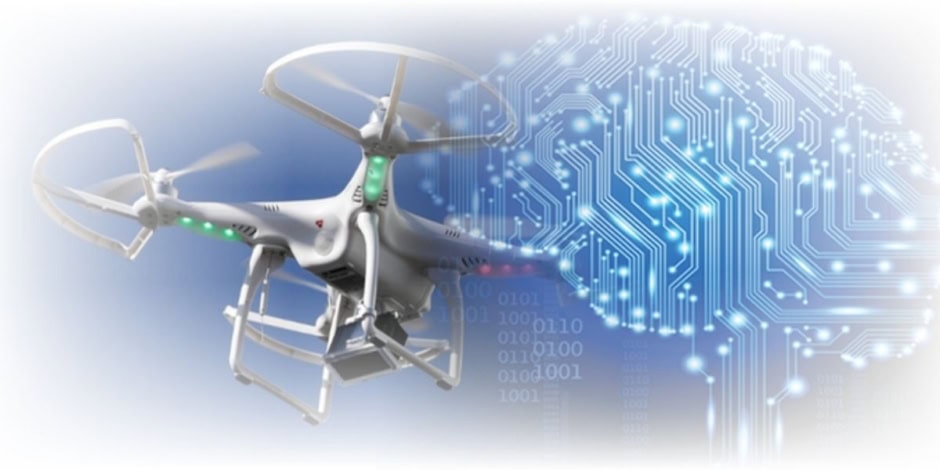
In a groundbreaking development, researchers at UC Irvine have demonstrated that generative AI can write an entire drone command stack without any human-authored code.
This fully autonomous system was deployed on both a simulated environment and a physical drone, complete with mission planning, safety logic, telemetry display, and mapping interface, all generated by AI.
How the AI-Built Command Stack Came to Life
The research team used staged prompt sessions with LLMs such as Claude, Gemini, and ChatGPT. Each sprint requested specific functionalities: sending MAVLink commands, planning takeoff and landing, constructing a Python-based web interface for ground control, and auto-setup scripts.
Within hours, the AI generated a fully functional WebGCS (Ground Control Station) running on a Raspberry Pi Zero 2 W. The drone hosted its own command stack interface via Flask, enabling real-time control, telemetry feedback, and autonomous flight without any external code.
Performance Evaluation of the AI Command Stack
Compared to traditional codebases like Cloudstation, the AI-generated command stack delivered working software at dramatically accelerated development speed. Developers could go from concept to flight in a fraction of the time, though the system did show limitations. As code size expanded, accuracy declined due to model context window constraints.
Why the AI-Built Stack Matters
- Zero human-written code: The system was conceived, written, and deployed entirely by AI.
- Autonomous architecture: Every function (from mapping to safety logic) originated from AI prompts.
- New paradigm for robotics engineering: AI can now co-design or fully generate command stacks, lowering barriers to drone software development.
The Broader AI-Drone Landscape
This demonstration aligns with other generative AI drone experiments:
- FlockGPT allows natural-language orchestration of drone swarms into formations.
- GSCE and FLUC frameworks enable LLMs to generate flight commands and manage swarm behavior under safety constraints.
While those systems enable AI-guided drones, only the UC Irvine experiment built an entire command stack authored end-to-end by AI.
As LLM context windows grow and architecture designs improve, AI-generated command stacks may shift from novelty to norm. The pace of development is speeding, and control may soon pass from coder to prompt.