Cryptocurrency traders spend months waiting for altcoin season when alternative cryptocurrencies outperform Bitcoin by significant margins. Technical indicators, on-chain metrics and market structure signals provide real-time evidence of incoming rotations that help traders position ahead of the crowd.
What Defines Altcoin Season
Altcoin season represents a specific market regime where capital rotates from Bitcoin into alternative cryptocurrencies. The Altcoin Season Index quantifies this rotation.
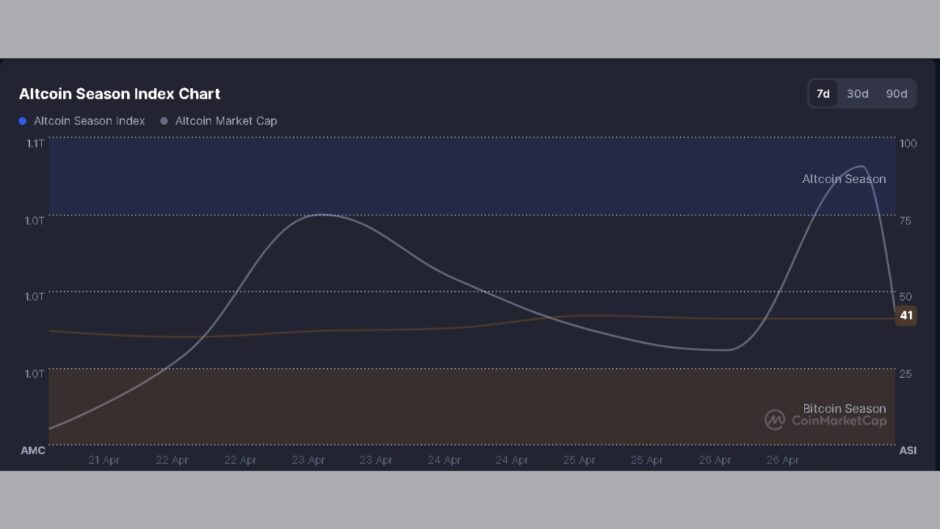
When 75% of the top 50 coins perform better than Bitcoin over the last 90 days, the index registers above 75 and confirms altcoin season. As of April 2026, the index hovers around 27-35, firmly in Bitcoin season territory.
Key Indicators to Watch
The most widely watched indicator is Bitcoin dominance. This metric measures Bitcoin’s share of total cryptocurrency market capitalization. As of April 2026, Bitcoin dominance sits at 57-60%, well above the sub-50% levels that historically trigger altseasons. The key threshold is when dominance falls below 45%.
The ETH/BTC ratio measures Ethereum’s performance relative to Bitcoin. As of April 2026, the ratio stands at 0.03126, significantly below the 0.07 threshold that signals altcoin season. When Ethereum begins outperforming Bitcoin, rotation is underway.
The Crypto Fear and Greed Index crashed to 23 out of 100 as of April 2026, indicating extreme fear. For altcoin season to begin, the index typically needs to rise above 65, indicating optimistic market sentiment that encourages risk-taking in alternative cryptocurrencies.
Current Market Status
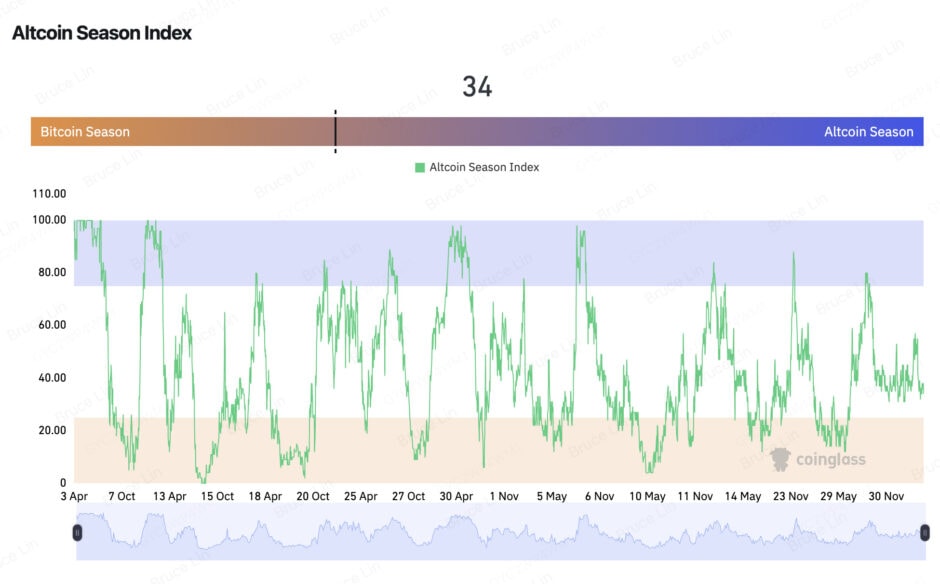
Multiple indicators confirm markets remain firmly in Bitcoin season. The 2025-2026 cycle differs fundamentally from previous cycles due to institutional participation. With over $80 billion in spot Bitcoin ETFs, capital flows primarily into Bitcoin, maintaining elevated dominance levels.
A sector-specific mini-season remains more likely than a broad altseason in the near term. Sectors like RWA tokenization, next-generation DeFi and AI infrastructure are attracting the most concentrated capital inflows in 2026 while markets wait for rotation signals to materialize.