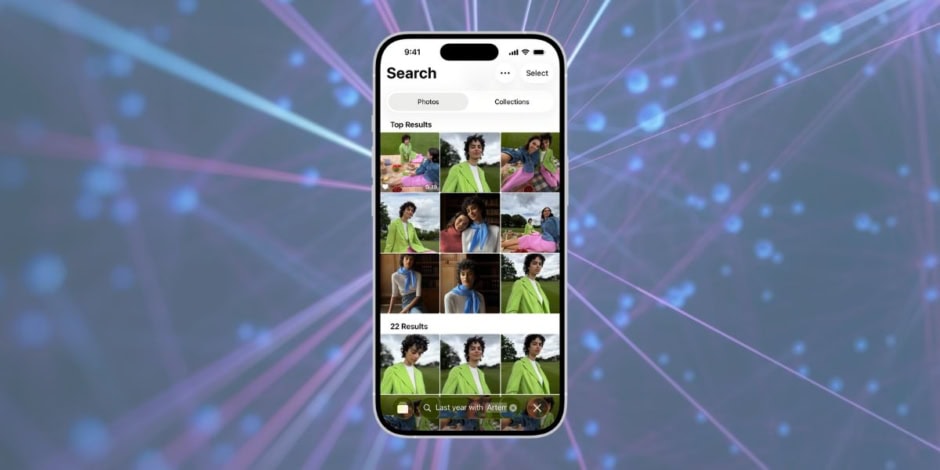
Apple Inc. has published groundbreaking research that brings generative-AI photo editing closer to human creativity. Titled “Pico-Banana-400K: A Large-Scale Dataset for Text-Guided Image Editing,” the study reveals how Apple trained its models using approximately 400,000 high-quality image pairs and built a multi-stage pipeline where one model generates edit instructions, another executes them, and a third judges the output.
How the System Works
Apple’s pipeline involves three distinct models:
- A generation stage where the model, built around the Nano‑Banana architecture, translates text prompts into edited images.
- A reasoning model (based on Gemini‑2.5‑Flash) that deciphers user instructions like “add a lamp” or “change lighting to golden hour.”
- A “judger” model (built on Gemini‑2.5‑Pro) that assesses the quality of edits against human retoucher benchmarks.
The dataset covers 35 distinct editing types, such as changing color palettes, rearranging object positions, modifying styles, and inserting new elements into scenes. While style changes performed strongly, object movement and text overlay still posed challenges in the study.
Apple’s Ambitious Image-Editing Leap
Apple’s work underscores a major shift in how photo tools will evolve. Traditionally, editing apps and platforms required manual brushing, layer control, or complex mask creation. Apple’s model instead learns from how professional retouchers do the work, and aims to replicate that on-device or in-cloud with minimal user effort. Some Korean analysts believe this could transform everything from mobile and desktop editing suites to how users interact with visual content on social platforms.
For example, the company could soon allow users to tell Siri things like “make the sky look stormy” or “turn this room into a cozy evening scene,” and get a high-quality edit in seconds, all powered by its dataset-driven model.
How Apple Compares with Industry
While other players like Google LLC and Meta Platforms have also advanced image-editing AI, Apple’s approach stands out for its emphasis on human-like editing workflows and its massive real-world-image dataset.
Prior research in the field, for example in academics such as Imagic: Text-Based Real Image Editing with Diffusion Models, focused on synthetic examples or required extensive user input.
What’s Next & Risks
Apple has not yet announced when or how these tools will debut in consumer products. While the research shows promise, practical rollout takes time. There are still challenges: object movement edits performed less reliably, and questions remain about computational cost, privacy, and image authenticity.
Key elements to watch:
- Device performance: Will these advanced models run on iPhones, iPads, or Macs without drain or lag?
- Privacy and ethics: AI-driven edits raise new questions around consent, authenticity and manipulation.
- Commercial rollout: Will Apple integrate this first into Photo and Snap apps, or release it as an API for third-party developers?
These research initiatives are in line with features that Apple has already integrated into its software, like the “Clean Up” tool found in Apple Intelligence on iOS 18.1. This tool leverages AI to spot and eliminate distractions in photos, taking a more subtle approach compared to its competitors. Instead of adding “fantasy” elements, it focuses on making small, thoughtful corrections.