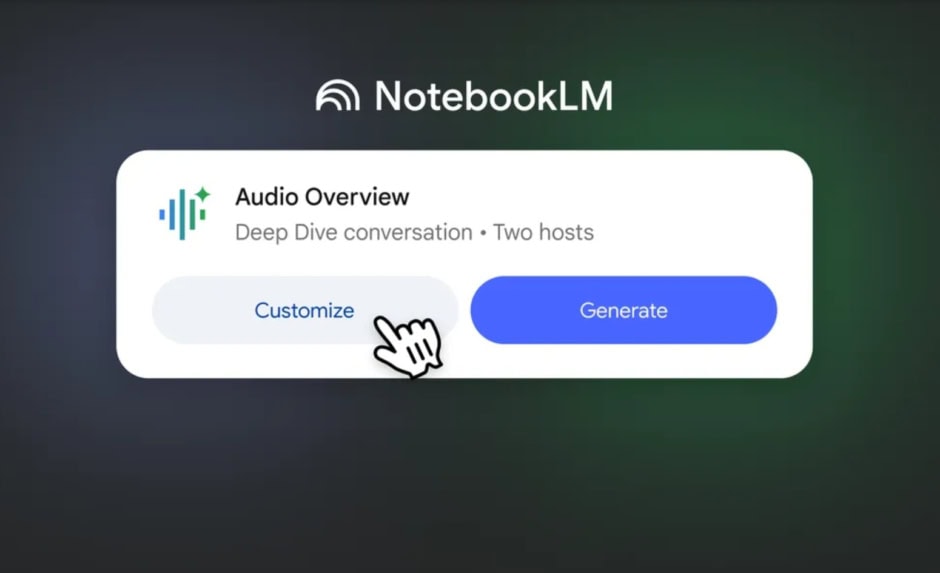
Google is currently testing an innovative feature called “Audio Overviews” within its mobile search results, effectively turning search queries into AI-generated podcast-style discussions. This experiment, accessible through Google Labs in US for English language currently, aims to offer users a new and convenient way to consume information.
For certain search queries, such as “how do noise cancellation headphones work?”, users may see a “Generate Audio Overview” button beneath the “People also ask” module. Once activated, Google’s Gemini AI model generates a short, conversational audio clip. This audio mimics a dialogue between two AI hosts, who summarize the topic and discuss it in an engaging tone.
The completed Audio Overview appears in a small, embedded player directly within the search results, complete with playback controls like play, pause, mute, and speed adjustment. Importantly, Google also provides source links beneath the playback bar, indicating the web pages from which the AI drew its information, allowing users to delve deeper into the content if they wish.
Currently, this feature is limited to English-language searches in the US and can be enabled by opting into the experiment in Google Labs. This initiative builds upon similar audio features already available in Google’s NotebookLM and Gemini platforms, where AI can generate discussions from user notes and documents. Google’s goal is to provide a multimodal learning experience, catering to users who prefer to absorb information through audio, especially when multitasking or seeking a quick “lay of the land” on an unfamiliar topic.
While this feature offers a hands-free way to get information, it also raises questions, particularly regarding its potential impact on traffic to traditional news sites. There’s also a strong possibility of misinformation, as the AI’s accuracy is dependent on the vast and sometimes biased nature of its source material.