
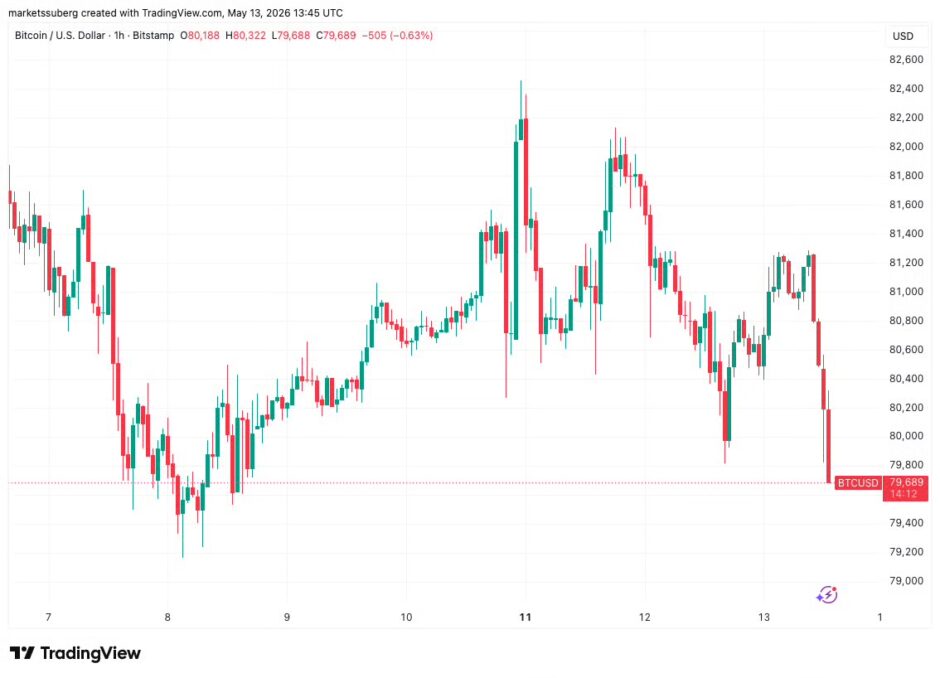
Bitcoin slipped below the $80,000 mark on Wednesday as stronger-than-expected US inflation data added fresh pressure on global financial markets and increased concerns over potential Federal Reserve tightening.
The world’s largest cryptocurrency dropped to around $79,500 during the latest trading session after the release of the US Producer Price Index (PPI), which showed its sharpest increase since 2022.
The data from the US Bureau of Labor Statistics revealed that the index for final demand rose significantly on both monthly and yearly bases, signaling persistent inflationary pressures in the economy.
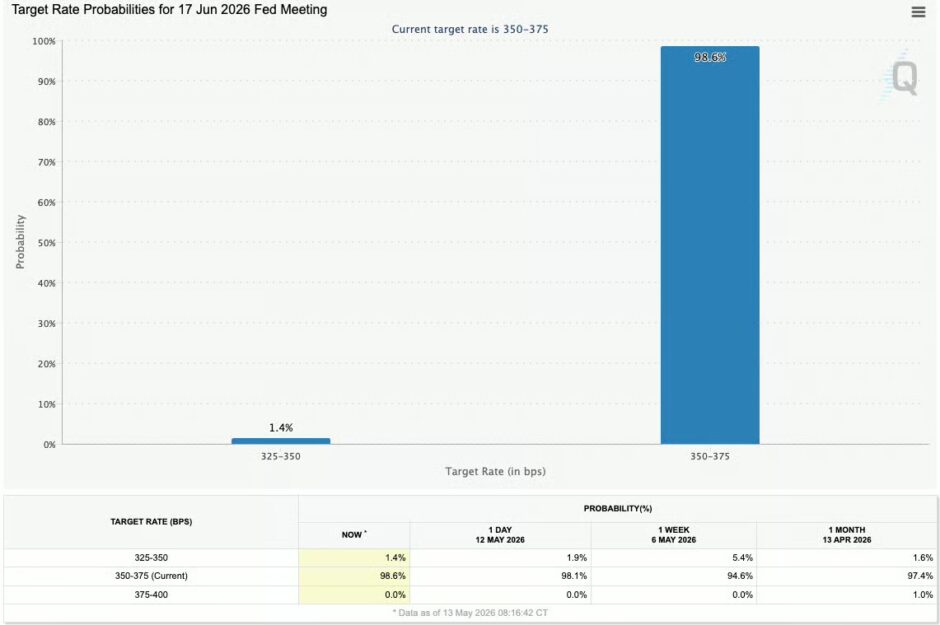
Market analysts said the latest inflation reading has reinforced expectations that the Federal Reserve may maintain a hawkish stance for longer, reducing the likelihood of near-term interest rate cuts.
Higher inflation, combined with ongoing geopolitical tensions and elevated oil prices, has continued to weigh on risk assets, including cryptocurrencies.
Traders noted that Bitcoin’s break below the key $80,000 level could open the door for further downside pressure in the short term, especially as markets react to macroeconomic uncertainty.
According to market watchers, Bitcoin is now closely tracking broader risk sentiment, with inflation data and Federal Reserve policy expectations playing a key role in price direction.
Some analysts also pointed to technical resistance levels around $82,000–$84,000, suggesting that Bitcoin may face difficulty recovering unless it reclaims those zones in the near term.
Despite the decline, traders remain divided on the outlook, with some expecting continued consolidation while others warn of deeper corrections if macroeconomic conditions deteriorate further.