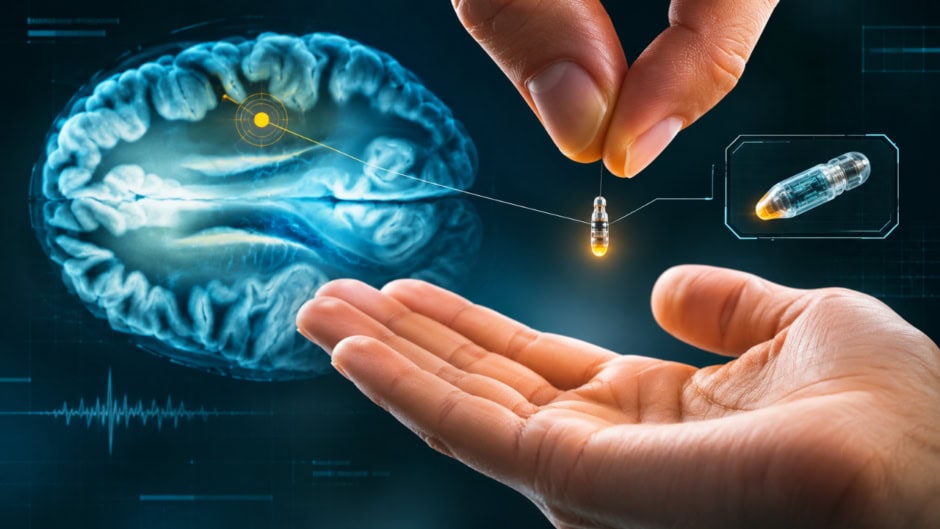
Researchers at the California Institute of Technology have built tiny biodegradable robots that can carry drugs across the blood-brain barrier. The team published its findings on November 25 in Science Robotics.
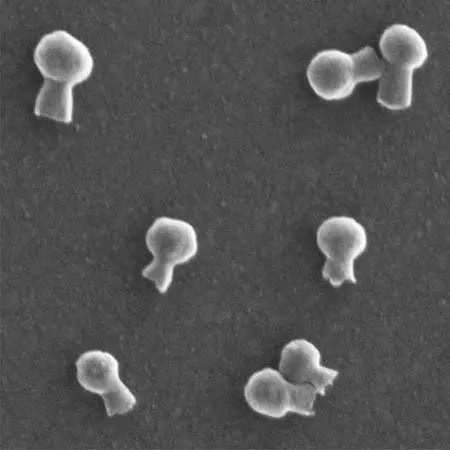
The nanorobots, called BrainBots, measure roughly 250 nanometers in size. Each capsule holds ammonium bicarbonate, a gas-generating compound, inside a chamber sealed by a temperature-sensitive gate. The structure also carries a drug payload and DNA molecules called aptamers. These aptamers bind to cells lining the blood-brain barrier, helping the robots latch on and cross through.
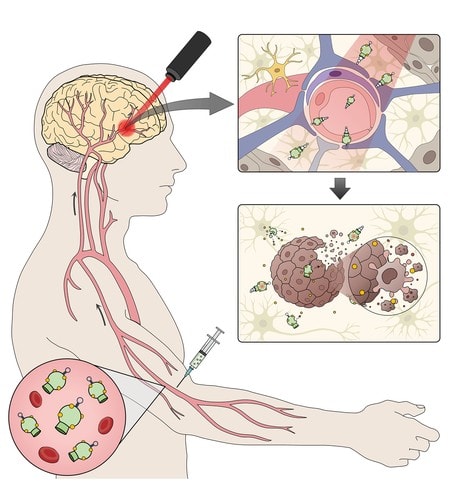
The activation process starts with near-infrared light directed through the skull. That light creates localized heat, which melts the temperature-sensitive gate. Once the gate opens, gas production begins and propels the nanorobots toward the barrier. After crossing into the brain, the capsules degrade and release their medication. This active propulsion system matters because passive injection of drug-carrying nanoparticles does not guarantee enough payload reaches brain tissue.
“Because the BrainBots are so small and the blood circulation is so fast, we initially were not sure how much a method based on nanoscale propulsion would increase the passage of drugs through the BBB,” Gao says. “We are thrilled to see it worked so well.”
In mouse trials targeting glioblastoma, an aggressive brain cancer, the results stood out. Activated BrainBots delivered about five times more of the chemotherapy drug doxorubicin to the brain than nonactivated ones. The treatment slowed tumor growth and extended survival in mice. Additionally, the approach reduced systemic toxicity compared with conventional doxorubicin delivery alone. No detectable disruption to the blood-brain barrier occurred during treatment.
The blood-brain barrier is a protective layer that blocks most drugs from entering the brain. This barrier keeps harmful substances out but also prevents many medications from reaching their target. As a result, treating conditions like brain tumors and Parkinson’s disease remains extremely difficult with conventional drug delivery methods.
Wei Gao, professor of medical engineering at Caltech, led the research team. The BrainBots are made entirely from biocompatible and biodegradable materials. Any capsules that do not reach the brain degrade naturally after uptake by organs like the liver and spleen.
“Our new nanorobot is not limited to brain delivery, but we are trying to address one of the biggest problems in medicine—crossing the blood–brain barrier—as a starting point,” Gao explains. “We targeted cancer, but there are a lot of neurological diseases, such as Parkinson’s, for example, that we hope could benefit from this technology.”
However, these results come only from mouse studies so far. The team is now working to optimize near-infrared light delivery and evaluate long-term safety. No timeline for human trials has been announced.
You can read the findings here. A full list of co-authors can be found in the paper. The research was supported by the Heritage Medical Research Institute, the Korea Health Technology R&D Project through the Korea Health Industry Development Institute, the National Research Foundation of Korea, and the Korea Basic Science Institute.