Satellite imagery analyzed by naval defense experts suggests China is constructing a purpose-built mothership specifically designed to support its fleet of giant uncrewed submarine vehicles. The vessel, under construction at Hudong-Zhonghua shipyard in Shanghai, measures approximately 205 meters long and 27 meters wide. Naval News first reported the discovery on September 15, with subsequent analysis from defense intelligence company Vantor corroborating the findings.
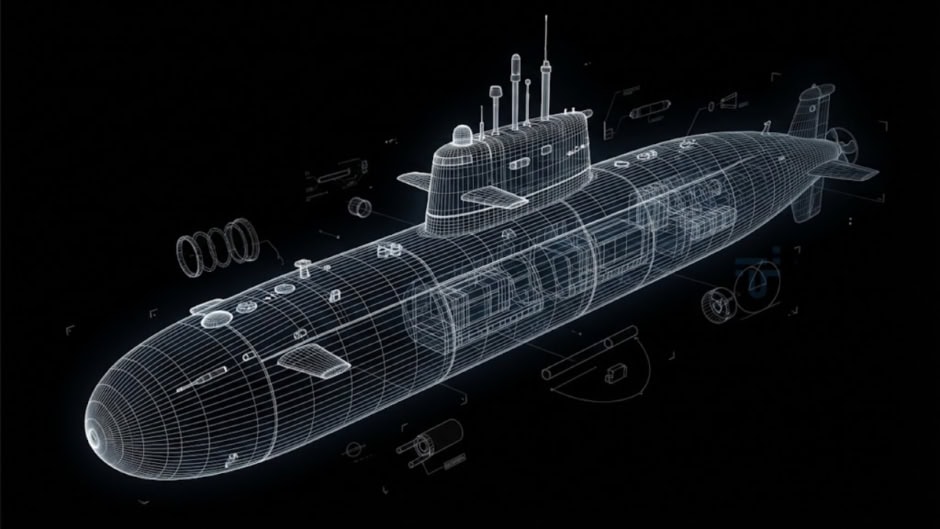
The ship’s unusual design features specialized equipment tailored for managing exceptionally large underwater drones. A wet well-deck at the stern includes a large cradle deployable using 12 vertical jack-up arms. This cradle can be lowered into the water for launching and recovering underwater vehicles. An enclosed hangar forward of the well-deck reportedly provides space to house up to four of China’s largest submarine drones while at sea or in port.
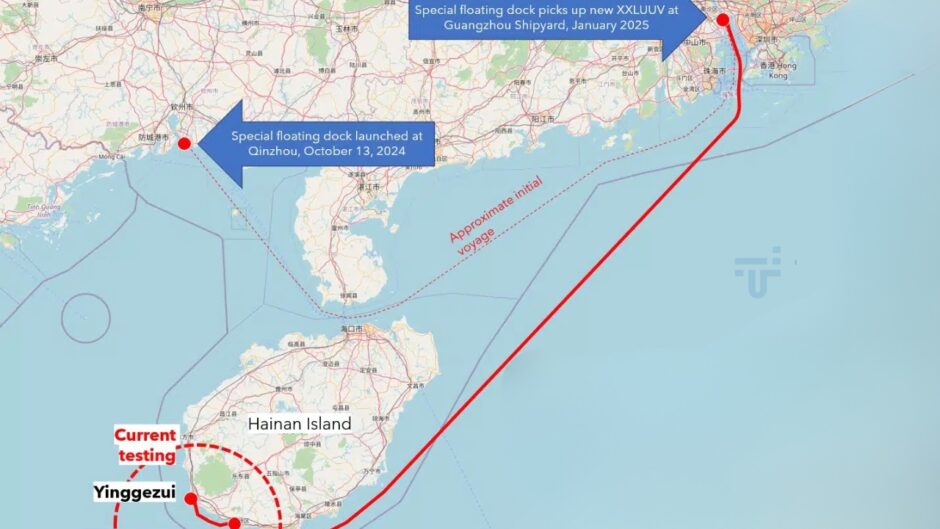
China has already tested extra-extra-large uncrewed underwater vehicles substantially larger than Western counterparts. Two observed XXLUUV designs near Hainan measured approximately 35 and 45 meters in length. These significantly exceed the United States Navy’s Boeing Orca XLUUV, which measures roughly 26 meters overall. The larger Chinese vehicles have previously relied on specialized floating docks for launch and recovery operations.
A dedicated mobile mothership would provide considerably more flexibility than stationary coastal facilities. The vessel could accompany XXLUUVs throughout extended underwater missions lasting days or weeks. Upon completion of deployment objectives, underwater vehicles could be recovered aboard the mothership, serviced, and prepared for subsequent operations without requiring return to fixed infrastructure. This capability becomes particularly valuable for missions designed to keep underwater drones submerged for extended periods.
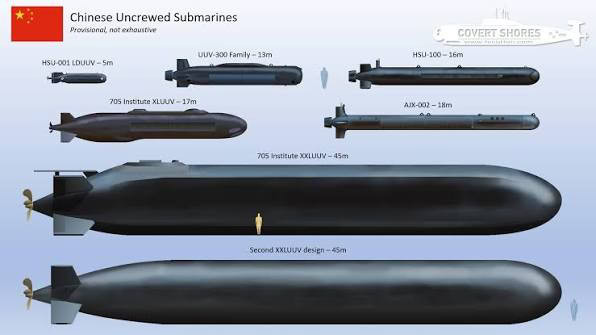
The suspected mothership may also include aviation facilities near the bow, according to satellite imagery assessments. The vessel appears to have a helicopter hangar, potentially providing another means of supporting broader maritime operations. Whether helicopters would serve search and rescue, supply transport, or other roles remains unspecified in available imagery analysis.
The exact operational purpose of China’s XXLUUVs remains undisclosed. Analysts have suggested possible roles including intelligence, surveillance and reconnaissance, seabed monitoring, mine warfare, and long-range underwater missions.
The vehicles’ large size could accommodate substantial sensor arrays, extended energy storage systems, modular payloads, or specialized equipment. However, neither China nor the People’s Liberation Army Navy has publicly confirmed operational specifications, weapons systems, or intended combat applications.