Most AI companies promise to change the world, then quietly optimise for quarterly revenue. DeepSeek’s founder says his lab is doing the opposite. Liang Wenfeng told investors that the Chinese startup is prioritising the long-term development of artificial general intelligence over maximising profit, according to a leaked transcript of a four-hour meeting reported by Yicai. He argued that money is simply fuel for the deeper mission.
The most consequential commitment is on openness. Liang said DeepSeek is likely to keep its most advanced models open-source, insisting that open development and commercial monetisation are not mutually exclusive. That stance cuts hard against the Western grain, since OpenAI, Anthropic, and others have locked their best models behind paid APIs. For DeepSeek, open weights are a moat rather than a giveaway, building the developer gravity that turns a model into an ecosystem.
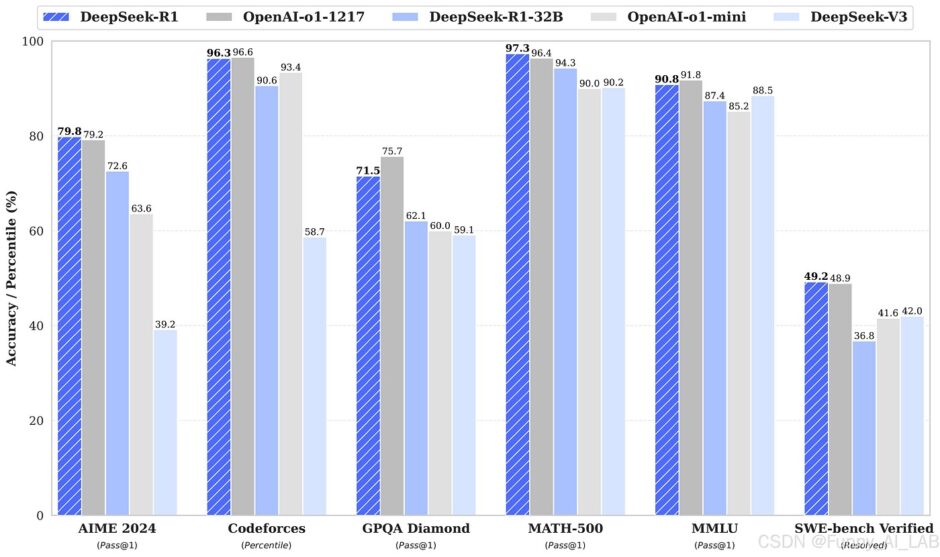
The strategy has credibility because DeepSeek already proved it. The lab stunned Silicon Valley early last year when its low-cost V3 and R1 models matched far pricier US systems, despite Washington’s curbs on advanced-chip exports. So this is not a startup promising future relevance, since it has already reshaped assumptions about what Chinese AI can do on a fraction of the budget.
The honesty about constraints is refreshing, though. Liang described computing power as his single biggest limitation, arguing the real gap with the US is access to resources rather than technical know-how. He was blunt about chips, saying he would rather buy them at a reasonable price than build his own.
“I hope to be able to buy chips at a reasonable price so that I don’t have to make chips myself,” he said, though he confirmed plans to build large computing clusters eventually.
The money finally arrived on DeepSeek’s own terms. The lab recently completed its first fundraising round at roughly a $52 billion valuation, reversing years of refusing outside capital. The pressure came from home as much as abroad, since domestic rivals like ByteDance, Moonshot, and Z.ai are now racing hard in the same open-model space.
Liang’s vision reaches well past today’s chatbots. He sees a path from chain-of-thought reasoning to AI agents, then continual learning, and eventually embodied intelligence in the physical world. Notably, he plans to leave areas like video generation and world models to others, keeping DeepSeek narrowly focused on the road to AGI. For developers everywhere, including in Pakistan, that focus means the frontier’s most capable open models may keep arriving free to download.