Google Gemini now lets users see exactly what it remembers about them. A new feature called Memory Summary organizes stored personal details into browsable categories. Users can view, edit, and delete any piece of information directly from the interface. The feature is currently rolling out on the web for Google AI subscribers in the US.
The summary lives under Settings, then Personal Intelligence on the Gemini web app.
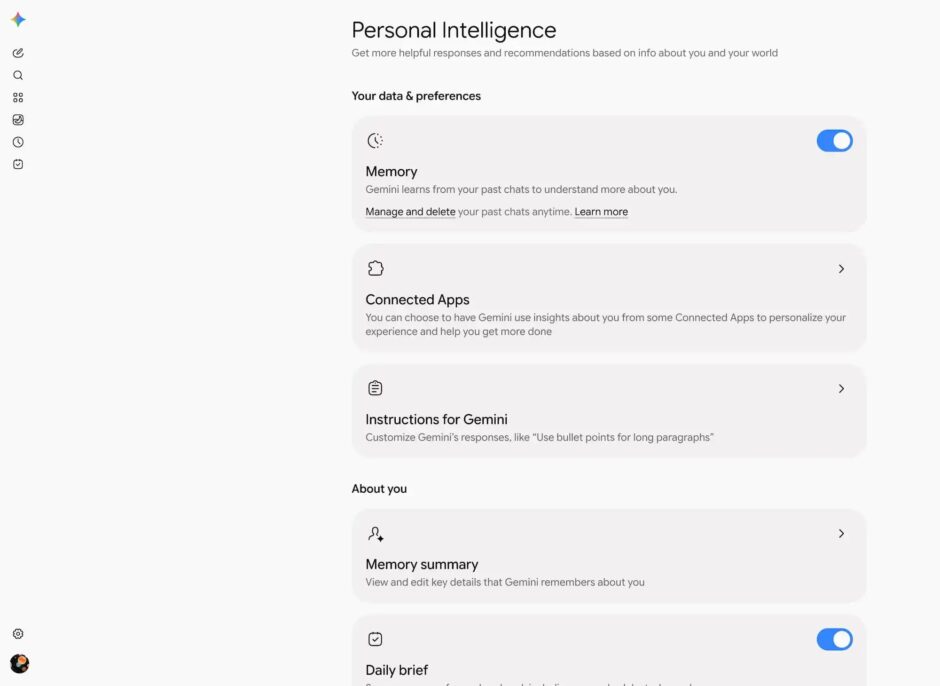
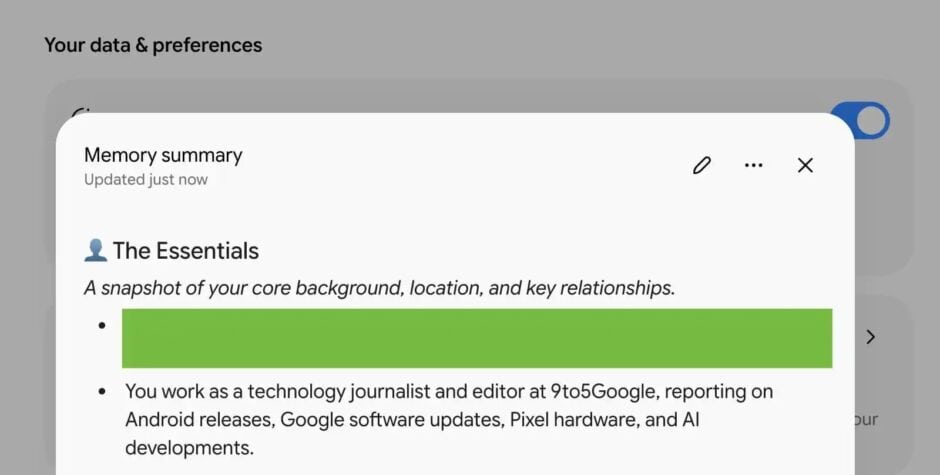
Once opened, it displays a categorized list of everything Gemini has learned from past conversations. Categories include “The Essentials,” which covers core background, location, and key relationships. Other sections cover Career and Professional Projects, Travel and Daily Gear, Media and Entertainment, and Fitness and Lifestyle. Each category contains specific bullet points with individual details that Gemini has picked up over time.
Users can modify their stored data in two ways. A text field at the bottom accepts natural language commands. For example, typing “Add to my memory that I speak Japanese” saves that detail. Typing “Remove my old phone number from your memory” deletes it. If a request is unclear, Gemini may ask follow-up questions to keep the summary accurate. Additionally, a pencil icon in the top-right corner opens a broader editing view. A three-dot menu provides access to Memory History, which shows when specific information entered or changed in the system.
The feature represents Google’s answer to similar memory management tools from competitors. Both ChatGPT and Claude offer memory features that store user preferences across conversations. However, those platforms handle memory differently. ChatGPT stores discrete facts as individual entries. Claude organizes memory into files with structured categories. Gemini’s Memory Summary falls somewhere between the two. It presents stored data in grouped categories while allowing natural language edits.
For privacy, users retain full control. Memory depends on Keep Activity being enabled. Turning that off disables memory entirely. Users can also delete individual memories, wipe all stored data, or switch to Temporary Chat mode for conversations that leave no trace in personalization or training data.
The feature currently requires a Google AI subscription and works only in US English. It has not appeared on Android or iOS apps yet, though Google is expected to bring the same experience to mobile eventually. The rollout follows Google’s recent launch of Gemini 4 Carbon, its latest model with gains in coding and agentic tasks.