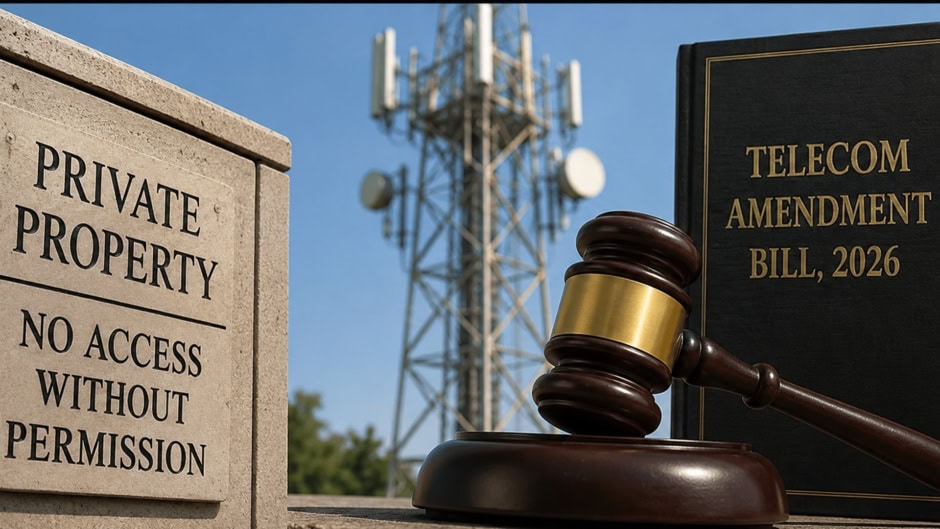
The federal government has moved to calm rising concerns over the Pakistan Telecommunication (Reorganisation) (Amendment) Bill, 2026, as a parliamentary review committee continues examining disputed clauses linked to right-of-way rules and property access for telecom infrastructure.
A parliamentary committee formed by the Prime Minister held an in-camera meeting at Parliament House today, Monday, to review the bill in detail. The meeting comes amid ongoing political and public debate over whether the proposed amendments could expand telecom operators’ access to private land.
During the session, Federal Law Minister Azam Nazeer Tarar assured lawmakers and stakeholders that the government does not intend to take over private property. He also rejected any suggestion of privacy violations. He said no telecom infrastructure, including towers, would be installed on private buildings without the owner’s consent.
He further stressed that the government’s position is based on protecting property rights while supporting digital expansion. According to him, telecom-related activity will only proceed after clear permission from property owners. He added that the committee is actively reviewing objections raised by the Senate Standing Committee on IT and Telecommunication.
The Law Minister also said consultations are ongoing to address concerns raised during earlier parliamentary discussions. He noted that further clarifications will be added to the draft legislation to remove ambiguity. These changes, he said, aim to balance infrastructure development with legal safeguards for citizens.
The committee is expected to hold its final meeting tomorrow, where remaining issues will be reviewed before concluding recommendations.
The bill has triggered wider debate in recent weeks across Pakistan’s policy and telecom circles. Lawmakers have raised concerns about clauses related to “right of way” permissions for fibre deployment and telecom towers.
According to earlier parliamentary discussions, the amendments aim to streamline telecom infrastructure rollout, improve fibre penetration, and support national digital connectivity goals.
However, critics argue that some provisions could give broad administrative discretion over access to private property. They have demanded stronger safeguards, clearer consent rules, and tighter dispute resolution mechanisms.
In response, the Ministry of IT and Telecommunication has repeatedly stated that the bill does not allow forced acquisition or occupation of private land. Officials maintain that deployment will remain subject to legal procedures, mutual agreements, and compensation frameworks