Health Minister Mustafa Kamal has made hepatitis C testing mandatory for all Health Department employees, warning that staff who fail to get tested will not be paid from next month.
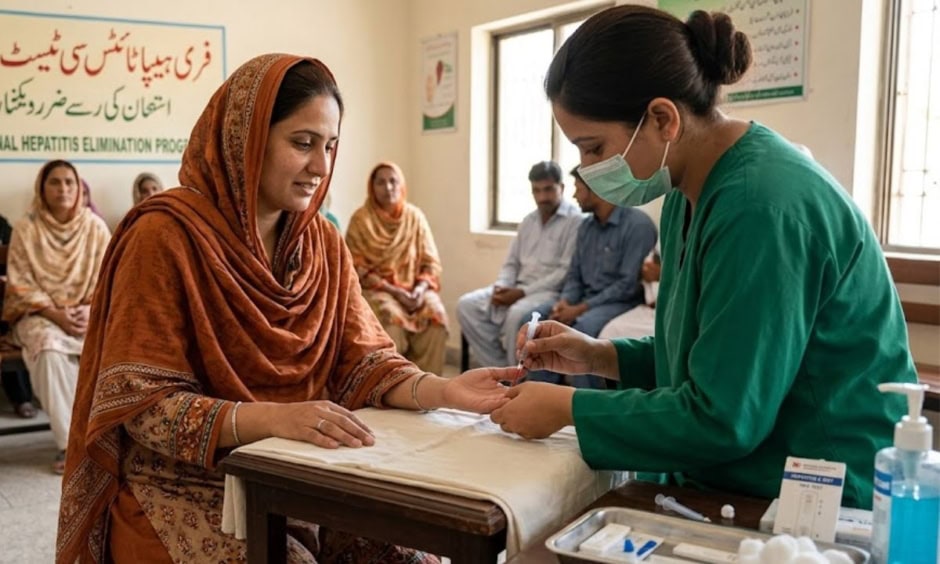
The announcement was made during the inauguration ceremony of a nationwide hepatitis C screening drive launched under the Prime Ministers Programme for the Prevention of disease.
Kamal said the government was working to extend mandatory screening to employees across all federal ministries, and letters were being issued to ministries in this regard. He said employees in the health department who did not undergo testing would have their salaries stopped.
According to the minister, 17 screening points have been set up in Islamabad, and private hospitals will be equipped with screening kits and digital devices to support the drive.
He said the programme would be expanded across the rest of the country in subsequent phases, with screening also planned for Gilgit-Baltistan and Islamabad, and would eventually cover every citizen, with priority given to those above the age of 12.
Kamal said nearly 11 million people in Pakistan currently have hepatitis C, calling the disease especially dangerous because it often goes undetected until serious complications arise. He warned that if left undiagnosed and untreated, the disease can progress to liver cancer, and underlined the need for early detection.
The minister said medicines worth around Rs68,000 would be provided free of cost to patients under the Prime Ministers programme, and urged citizens to take advantage of the free screening and treatment facilities on offer.
Kamal added that individuals deported and returning to Pakistan would also be required to undergo testing, and that all incoming flights would be subject to screening for the next three months.
He said the government was using devices supplied by the Bureau of Statistics along with census software, and that the system had been linked with Nadra records to help identify and track individuals.
The government is also considering linking hepatitis C screening with the Computerised National Identity Card, Kamal said, adding that testing could eventually be made mandatory before citizens travel abroad.
He noted that the disease spreads mainly through infected blood, making timely screening critical to controlling its transmission and easing the overall disease burden.
He concluded by appealing to citizens to get tested and make full use of the free facilities being offered under the programme.