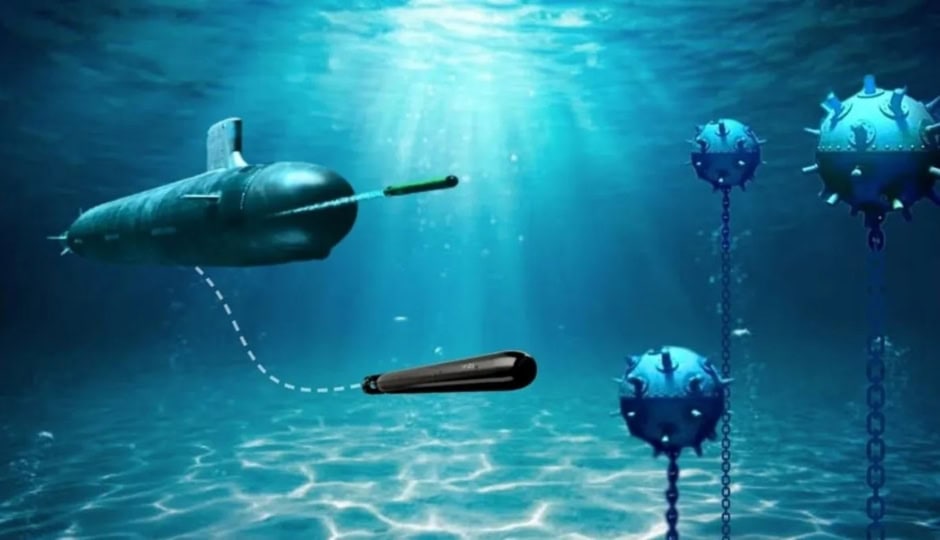
India and Australia have launched a joint three-year research initiative focused on enhancing undersea surveillance capabilities.

This collaborative effort will leverage the scientific expertise of both nations to develop more reliable and advanced technologies for detecting submarines and autonomous underwater vehicles.
The initiative stems from a formal agreement between Australia’s Defence Science and Technology Group (DSTG), specifically its Information Sciences Division, and India’s Defence Research and Development Organisation (DRDO), through its Naval Physical and Oceanographic Laboratory.
The research will concentrate on refining the use of “Towed Array Target Motion Analysis,” a powerful method aimed at boosting the effectiveness and compatibility of underwater surveillance tools.
Amanda Bessell, Discipline Leader at DSTG’s Information Sciences Division, described Target Motion Analysis as “a collective term for target tracking algorithms, developed to estimate the state of a moving target.” She emphasized its importance in maintaining situational awareness during passive operations.
Enhancing Detection with Advanced Signal Processing
At the heart of this research lies the integration of Target Motion Analysis with towed array systems. A towed array, as explained by DSTG Senior Researcher Sanjeev Arulampalam, is “a long linear array of hydrophones, towed behind a submarine or surface ship on a flexible cable.” These hydrophones detect underwater acoustic signals from multiple directions, which are then processed to extract actionable information.
Arulampalam noted, “The sound signal is passed through a signal processor, which analyses, filters and detects underwater acoustic signals emitted from maritime targets.”
This combination aims to overcome challenges like noise interference while pushing the boundaries of surveillance performance.
Shared Knowledge and Mutual Gains
The project promises a rich exchange of expertise, as both nations will collaborate on trials, share algorithmic insights, and conduct joint performance evaluations. By putting novel algorithms to real-world tests, the partners seek to explore new directions in underwater tracking and situational awareness.
Chief of the Information Sciences Division, Suneel Randhawa, highlighted the broader impact of the effort:
“The output of this research program has the potential to guide the development of future algorithmic directions for our undersea combat system surveillance technologies.”
Strategic Partnership with Global Vision
This joint initiative not only strengthens bilateral defense ties but also reflects a broader strategic vision.
Randhawa stressed the value of such international cooperation:
“We need to harness the best minds in innovation, science and technology to build new capabilities, to innovate at greater pace, and to strengthen our strategic partnerships.”
By pooling their resources and scientific acumen, India and Australia aim to stay ahead in a rapidly evolving undersea battlespace. This project marks a critical milestone in their shared commitment to enhancing maritime domain awareness and technological superiority in underwater defense.