Indian security officials say they have dismantled an alleged espionage network that used Chinese-made surveillance cameras to transmit live footage from locations near Indian military installations. Delhi Police’s Special Cell conducted two coordinated operations, arresting a total of 11 individuals. Six were arrested in the first phase from Punjab and Delhi, and five more were picked up in a second phase based on inputs from military intelligence.
According to senior Delhi Police officials talking to Indian media, the network allegedly operated for nearly three months, giving handlers claimed to be based in Pakistan visual access to key defense sites and Central Armed Police Forces installations across Punjab, Haryana, Rajasthan, and Jammu and Kashmir.
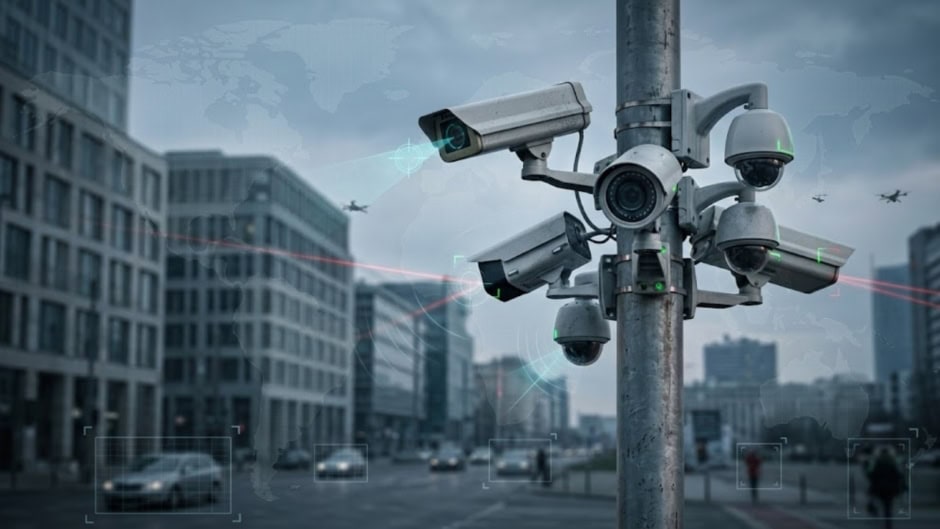
Police say the operation used nine solar-powered, SIM-enabled CCTV devices connected to EseeCloud, a widely used Chinese software platform for surveillance systems. Live footage was allegedly routed through data centers in China before being relayed to handlers in Pakistan.
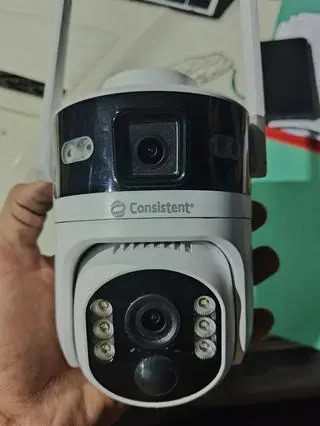
According to police, the cameras were positioned near army cantonments, border roads, and troop movement routes. Specific locations cited include Kapurthala, Jalandhar, Pathankot, Patiala, and Moga in Punjab, Ambala in Haryana, Kathua in Jammu and Kashmir, and Bikaner and Alwar in Rajasthan. The devices reportedly used SIM cards procured under fake identities and transmitted footage via mobile apps.
Additional Commissioner of Police Pramod Singh Kushwah said the alleged operation went beyond passive surveillance.
“The intention was not just passive surveillance but strategic monitoring of defence movement patterns over a period of time,” he told reporters, adding that such intelligence “could have been used for planning terror strikes or facilitating cross-border operations.”
Police allege the network was supervised by an ISI handler operating under the codename “Captain Rana,” while a Dubai-based Indian national ran the ground-level installation effort. Investigators also claim links between the accused and Babbar Khalsa International, a banned organization. The accused were allegedly funded through UPI transactions, partly sourced from proceeds of smuggled weapons. The entire hardware setup reportedly cost around Rs 15,000 per unit.
Indian investigators drew comparisons between the alleged operation and reported intelligence tactics used by Israel to bomb Gaza, which involves hacked surveillance networks, where live camera feeds were allegedly used to track military movements in conflict settings. Indian officials said the disclosed intent of the network was to enable precision targeting of defense infrastructure in the event of a future conflict.
The arrests prompted Indian authorities to call for a security audit of CCTV systems near strategic assets. A new framework tightening oversight of CCTV usage came into effect in India in April 2026. Delhi’s government also separately announced plans to replace approximately 1.4 lakh Chinese CCTV cameras installed across the capital.
Pakistan and China have yet to comment on the allegations.