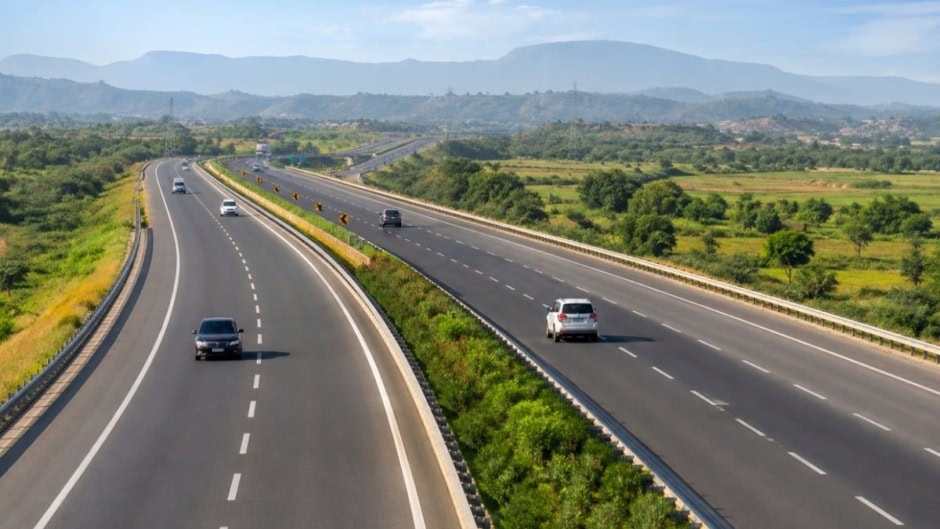
The Special Investment Facilitation Council (SIFC) has played a key role in moving forward with Pakistan’s long-delayed Eastern Motorway Corridor. Its support has helped speed up work on the strategically important M-13 Motorway. As a result, the country’s second major northeastern motorway route is now closer to completion.
SIFC helped remove several administrative hurdles through coordinated policy decisions and institutional support. Because of these efforts, work on the project regained momentum. The corridor will provide smooth motorway connectivity between Lahore, Sialkot, Kharian, and Rawalpindi.
The Critical M-13 Kharian-Rawalpindi Link
The Eastern Motorway Corridor includes three connected motorway sections. These are the M-11 Lahore-Sialkot, M-12 Sialkot-Kharian, and M-13 Kharian-Rawalpindi. Once completed, the corridor will offer an alternative high-speed route between Lahore and the federal capital. The expected travel distance is projected to be reduced by more than 100 kilometres. This improvement will also decrease travel time, facilitating faster connectivity between Lahore, Pakistan’s second-largest city, and the federal capital, Islamabad. Additionally, it will enhance freight movement, strengthen industrial connections, and boost regional trade.
The project began in 2007 as an initiative by the Punjab government. Its initial goal was to connect Lahore with Sialkot’s export-focused industrial region. Later, the National Highway Authority (NHA) expanded the plan into a national transport corridor that reaches Rawalpindi.
The first phase of the project, the 103-kilometre M-11 Motorway, was completed by the Frontier Works Organization (FWO) in 2020. The motorway significantly reduced travel time between Lahore and Sialkot. Meanwhile, construction of the 69-kilometre M-12 started in 2022. However, the project faced delays in 2024 before gaining pace again through efforts supported by SIFC.
The 117.2-kilometre M-13 is considered the most important section of the corridor. It will connect the new route with the existing motorway network, including the M-2, M-1, and Rawalpindi Ring Road. This link will create a modern transport route between Pakistan’s industrial hub and the federal capital.
Authorities first approved the M-13 project in 2022 as a four-lane motorway under a Public-Private Partnership (PPP) model. However, inflation, higher financing costs, and currency depreciation created financial challenges and slowed progress.
A breakthrough came in March 2025. At that time, the SIFC Executive Committee directed the NHA to redesign the project as a six-lane motorway. It also asked the authority to revise the financial model for long-term sustainability. In addition, SIFC instructed officials to process technical and financial approvals at the same time. This decision reduced procedural delays. Later, ECNEC and P3A also approved the project.
Officials believe the project reflects SIFC’s growing role in speeding up strategic infrastructure development. Its coordinated approach has improved decision-making and investment facilitation. In the long run, the corridor is expected to strengthen connectivity, support exports, and contribute to Pakistan’s economic growth.