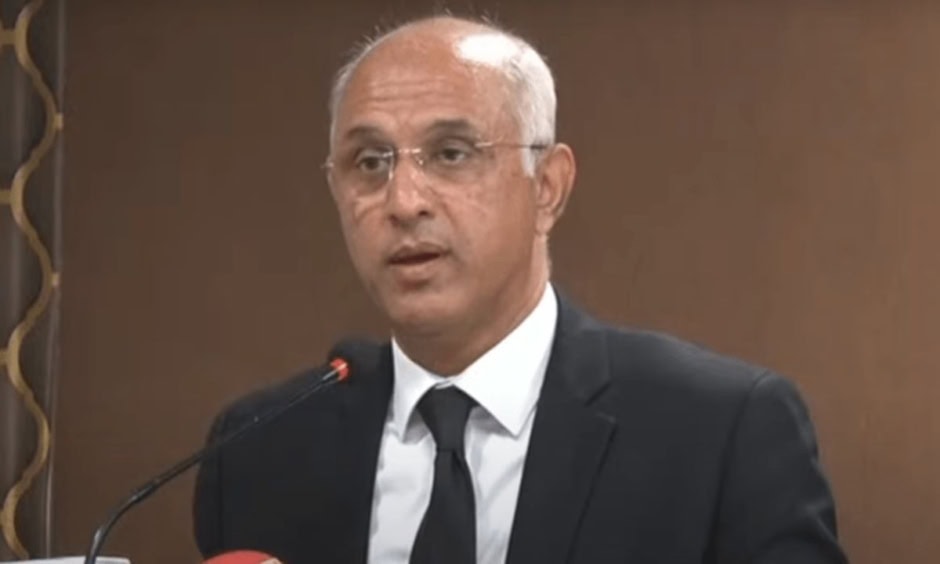
Lahore High Court (LHC) Justice Mohsin Akhtar Kayani resigned on Wednesday, citing health reasons following a recent surgery and “reasons of conscience.” His retirement was not due until February 10, 2032.
In his resignation letter to the president of Pakistan, Justice Kayani said the 26th and 27th Constitutional Amendments had compromised the independence and institutional integrity of the high courts. He said the growing control of the executive over judicial institutions, including the appointment and transfer of judges, had seriously eroded public confidence in the judiciary and the fairness of the judicial process.
He said the ordinary litigant, the principal stakeholder in the justice system, continues to suffer, while other actors have become beneficiaries of a system meant to serve the public. “My conscience does not permit me to continue on the bench,” he wrote, adding that judicial office must remain inseparable from independence, fidelity to the Constitution and the protection of human dignity.
Justice Kayani said he would return to legal practice to continue serving the public, protecting their rights and promoting legal awareness. He thanked his teachers, fellow judges and family for their support, including during the deliberations that led to his decision. He also said he had disposed of more than 23,000 cases during his judicial service at the Islamabad High Court (IHC) and the LHC.
Transfer and seniority dispute
Justice Kayani was the senior puisne judge of the IHC and was expected to be elevated as its chief justice. However, the transfer of Chief Justice Sardar Muhammad Sarfraz Dogar from the LHC, along with two judges from the Sindh and Balochistan high courts, led him to challenge the inter-high court transfers. The Supreme Court’s constitutional bench upheld the transfers, including that of Justice Dogar.
Justice Kayani and other senior IHC judges later approached the Supreme Court against the administrative powers exercised by Chief Justice Dogar. They alleged that the office had been turned into a “monocracy” and that judges could be excluded from the roster at will.
He was transferred to the LHC on April 29 and assigned to its principal seat in Lahore, where he lost his seniority and was placed 12th on the seniority list. He was not assigned to any division bench. Days before his resignation, he returned to the twin cities to preside over a single bench at the Rawalpindi registry under a new duty roster.
Education and career
Justice Kayani hails from Islamabad. He completed his early education at FG Boys High School and graduated from FG College for Men in 1989.
He earned an LLB from the University of the Punjab in 1994, an MA in Political Science in 1996, an LLM from Karachi University in 2003 and an MSc in Pakistan Studies in 2005. He also holds a postgraduate diploma in human rights from the University of Peshawar, in collaboration with the Norwegian Institute of Human Rights at the University of Oslo.
He was enrolled as an advocate of the district courts in 1995, of the high court in 1997 and of the Supreme Court in 2009. He was appointed an IHC judge on December 23, 2015.
Before joining the bench, he served as joint secretary of the Islamabad District Bar Association from 1998 to 1999 and as its general secretary from 2002 to 2003. He was president of the Islamabad High Court Bar Association from 2013 to 2014.
According to the LHC website, he presided over significant cases, particularly those related to enforced disappearances, and advocated legislative reforms, including strict penalties for enforced disappearances.