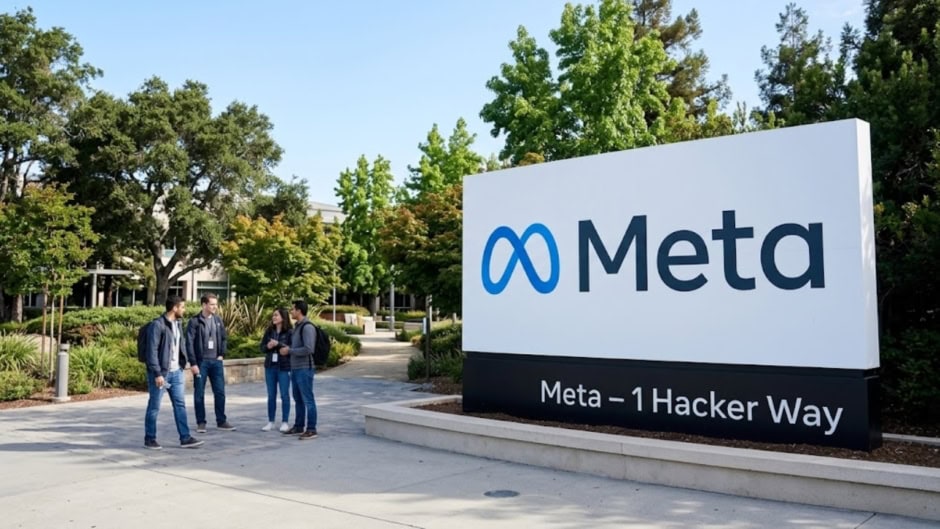
Meta is planning sweeping layoffs that could affect 20% or more of its nearly 79,000-person workforce, according to three people familiar with the matter. The cuts, which have no confirmed date and whose final scale has not been set, would represent the company’s most significant restructuring since late 2022 and early 2023, when Meta eliminated roughly 21,000 positions in what CEO Mark Zuckerberg called the “year of efficiency.”
Top executives have recently signaled the plans to other senior leaders at the company and told them to begin planning how to pare back. Meta spokesperson Andy Stone responded by calling it “speculative reporting about theoretical approaches.”
The layoffs are being driven by two converging pressures. Meta has committed to investing $600 billion in data centre construction by 2028 CNBC, a figure that reflects the enormous cost of building the infrastructure required to train and run frontier AI models. At the same time, the company is betting that advances in AI will allow it to operate with far fewer people. Zuckerberg said in January that he was starting to see projects that used to require large teams now being completed by a single talented individual.
The spending has not slowed Meta’s appetite for acquisitions. Earlier this week, the company acquired Moltbook, a social networking platform built for AI agents. Meta is also spending at least $2 billion to acquire Manus, a Chinese AI startup.
However, the investments have not all paid off. Meta’s internal superintelligence team has been working to reassert the company’s standing by building a new model called Avocado, but the model’s performance has also lagged expectations. A separate report indicated that Meta’s in-house AI models are falling behind and the company is considering licensing Google’s Gemini.
Meta’s plans reflect a broader pattern among major US technology companies this year. In January, Amazon confirmed it would cut roughly 16,000 jobs, amounting to nearly 10% of its workforce. Last month, Block cut nearly half its staff, with CEO Jack Dorsey explicitly pointing to AI tools and their growing capability to help companies operate with smaller teams.
Some observers, including OpenAI’s Sam Altman, have suggested that many of these cuts amount to “AI-washing,” where executives use AI as justification for layoffs driven by other factors such as pandemic-era over-hiring.
If Meta proceeds with cuts at the 20% level, approximately 15,800 positions would be eliminated, making it one of the largest single rounds of tech layoffs in recent years and a stark illustration of how the companies spending the most on AI are simultaneously shrinking the human workforces they expect AI to replace.