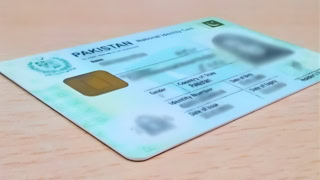
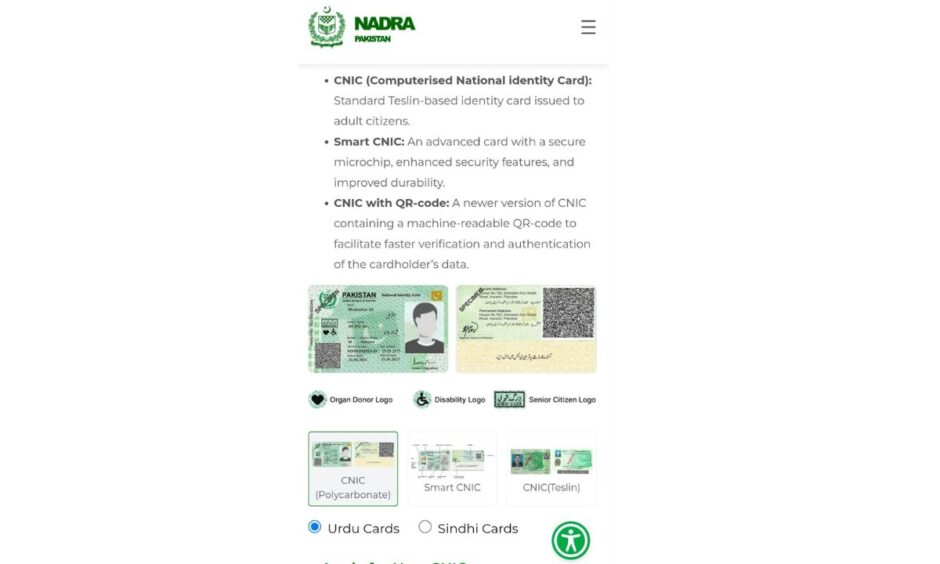
The National Database and Registration Authority (NADRA) has begun issuing Computerised National Identity Cards (CNICs) embedded with machine-readable QR codes, ending reliance on the traditional microchip reader for identity verification.
The two-dimensional barcodes enable instant, tamper-proof identity checks, both online and offline, through official platforms such as the NADRA Pak ID system.
According to a NADRA handout, the change stems from amendments notified by the federal government on February 24, 2026, to the National Identity Card Rules, 2002 and the Pakistan Origin Card Rules, 2002.
The amendments legally define the QR code as a secure, machine-readable barcode capable of storing encoded information and converting it into usable verification data when scanned, and authorise its use, or that of any future technological feature, in place of the microchip.
This allows NADRA to adopt new verification technologies without amending the rules each time.
The reform also means all citizens will eventually carry a single, standardised card, replacing the current system under which some CNICs carry a microchip and others do not.
The QR-enabled cards are expected to strengthen Digital ID ecosystem and support interoperability through the National Data Exchange Layer.
Officials said the credentials will allow rapid front-end verification of identity attributes at service points, while back-end systems confirm authenticity through trusted data exchanges, improving speed, transparency and consistency of identity checks across government departments and regulated sectors, while reducing manual processing and the risk of fraud.
The amended rules also tighten enforcement around suspended cards, stating that all verification, authentication and related services linked to a suspended card shall stand suspended immediately, closing a gap that previously allowed suspended cards to still be used in digital verification channels.
Biometric recognition has also been expanded, with the rules now explicitly recognising fingerprints and iris scans as part of a broader, multi-modal biometric identity framework.
For senior citizens, the amendments introduce a dedicated card carrying a distinct senior citizen logo with lifetime validity for residents and non-residents aged sixty and above, reducing the need for periodic renewal.