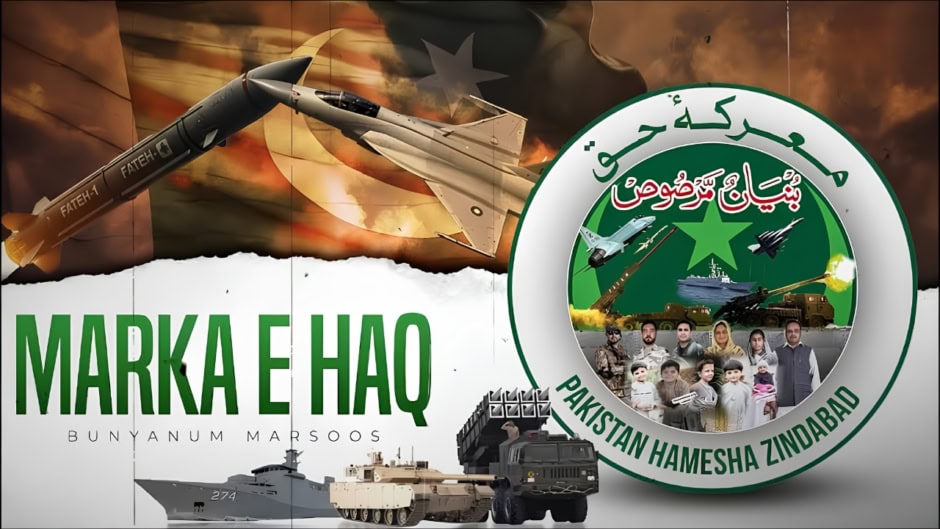
Exactly one year ago, the South Asian skies witnessed a historic and violent transformation. The brief but intense military confrontation between Pakistan and India fundamentally altered modern air combat doctrines. Pakistan proudly commemorates this victory as “Marka-e-Haq” (The Battle of Truth). Meanwhile, India termed its initial offensive as “Operation Sindoor”.
This 96-hour clash tested next-generation military technology in a highly contested, real-world scenario. During recent anniversary ceremonies, the Inter-Services Public Relations (ISPR) highlighted the Pakistan Air Force (PAF) as a fully modernized, future-ready air power. Let us break down exactly how the PAF achieved absolute air superiority against the numerically larger Indian Air Force (IAF). We will carefully compare the technology, the ground-breaking tactics, and the ultimate strategic results.
Marka-e-Haq: The Catalyst & The Aerial Clash
The conflict ignited in early May 2025. Following a tragic attack in Pahalgam on April 22, India launched pre-emptive airstrikes and cruise missiles across the border on May 7. They aimed to dismantle alleged terror infrastructure using a new, aggressive military doctrine. Pakistan swiftly responded with “Operation Bunyan-um-Marsoos”.
This retaliation triggered a massive, high-stakes aerial engagement. Over 110 fighter jets from both nations clashed violently in the heavily jammed airspace. Defense analysts describe it as the largest aerial dogfight in modern history. The IAF relied heavily on its French-made Dassault Rafales, Russian Su-30MKIs, and upgraded MiG-29s. Conversely, the PAF fielded its newly inducted Chinese Chengdu J-10C “Vigorous Dragon” jets alongside the reliable JF-17 Thunder Block III.
J-10C Vigorous Dragon vs. Dassault Rafale
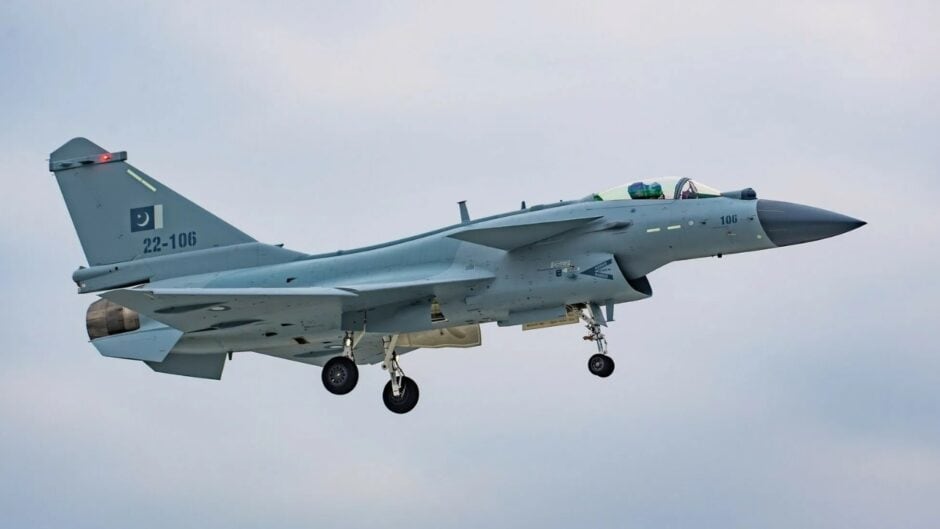
The ultimate technological showdown featured the Chinese J-10C against the European Rafale. The J-10C showcased the advanced KLJ-7A Active Electronically Scanned Array (AESA) radar. This highly capable radar gave Pakistani pilots a massive advantage in long-range target detection. Furthermore, the J-10C utilized a highly sensitive Infrared Search and Track (IRST) system. Therefore, Pakistani pilots detected the thermal signatures of Indian fighters completely passively. They successfully bypassed Indian electronic jamming suites altogether.
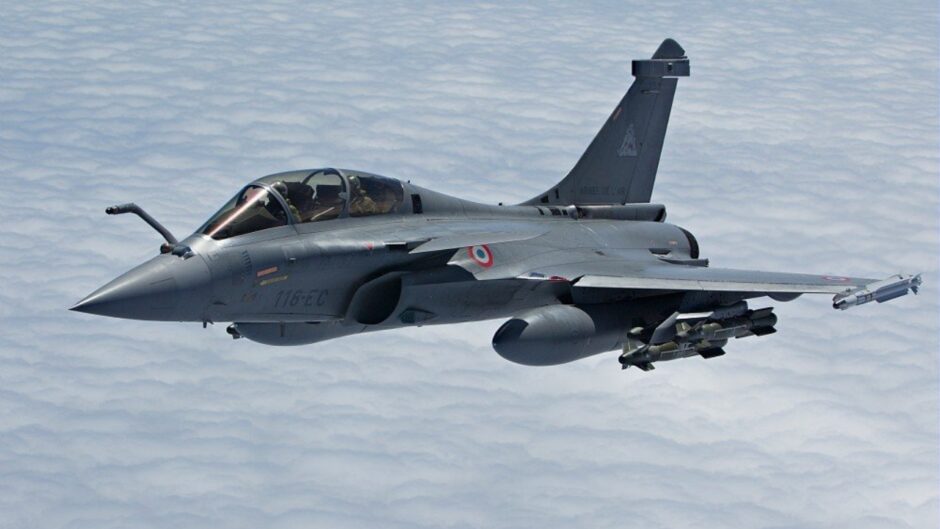
Meanwhile, the Rafale struggled to maintain its edge. Despite possessing the highly touted SPECTRA electronic warfare suite, the French jet faced a unified and highly integrated sensor network. The sheer processing power and interoperability of the Pakistani network proved overwhelming. Furthermore, reports indicated that the IAF faced significant readiness issues due to the lack of Russian spare parts for their Su-30MKI fleet. As a result, the IAF operated with a fragmented platform architecture.
The Beyond Visual Range Duel: PL-15 vs. Meteor
Modern aerial combat happens Beyond Visual Range (BVR). Consequently, this conflict provided the very first real-world test between two premier BVR missiles. Pakistan aggressively deployed the Chinese-made PL-15 missile. In contrast, India used the European MBDA Meteor and French MICA RF missiles. The PL-15 fundamentally outclassed its European rivals.
Why did the PL-15 win? First, the PL-15 uses a highly innovative dual-pulse solid rocket motor. Consequently, it saves a second burst of fuel for the final terminal phase. It radically speeds up right before hitting the target, leaving the enemy with no time to react. Second, the PL-15 features an active radar seeker utilizing Gallium Nitride (GaN) modules. This advanced material makes the missile exceptionally resistant to electronic countermeasures and towed decoys.
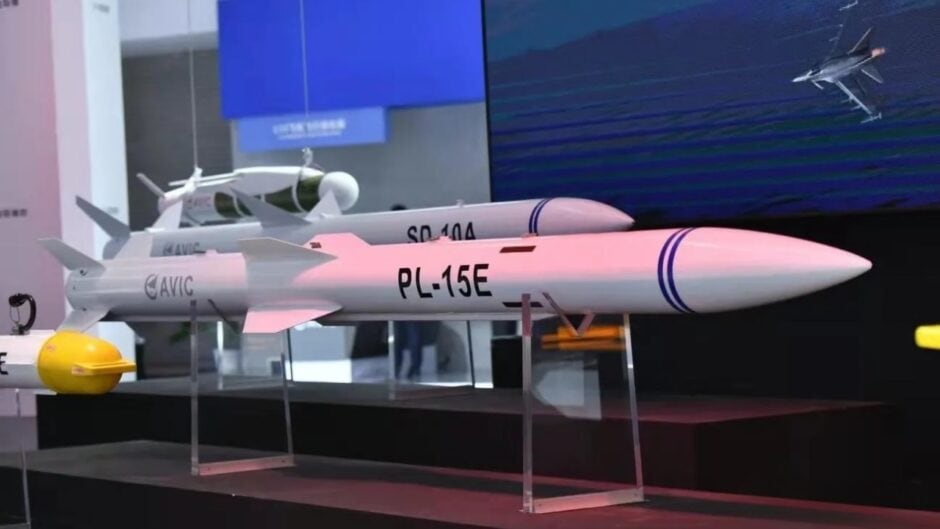
On the other hand, the Meteor relies on a throttleable ramjet motor. It sustains thrust beautifully but lacks that final, unavoidable kinetic punch of the PL-15. Ultimately, the PL-15 delivered a devastating blow to Indian jet formations. Economically, Pakistan achieved a massive asymmetric victory here too. Each PL-15 costs roughly $1.2 million. Meanwhile, a single Meteor missile costs around $3 million.
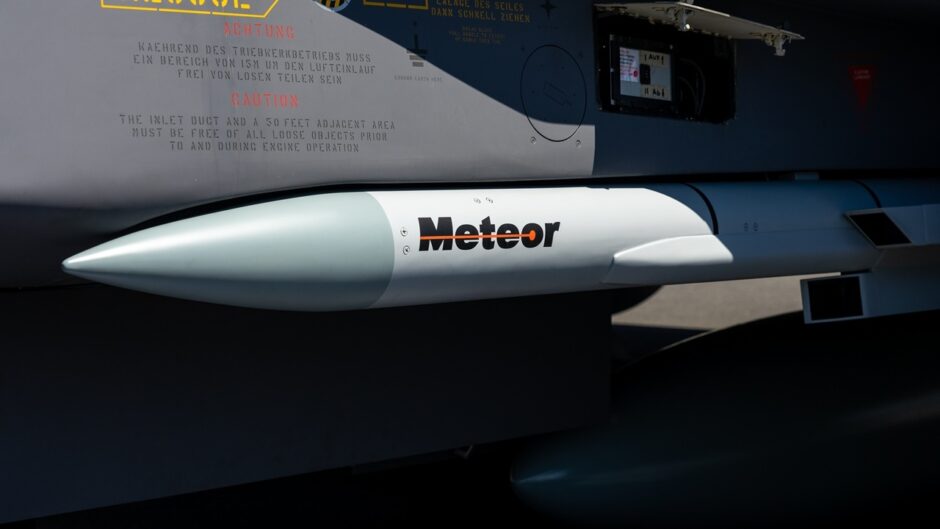
| Specification | PL-15 (Pakistan/China) | Meteor (India/Europe) |
| Estimated Range | 200+ km | 150 km |
| Propulsion System | Dual-Pulse Solid Rocket | Ramjet Sustainer |
| Seeker Technology | Active Radar (GaN modules) | Active Radar |
| Electronic Resistance | Exceptionally High | Very High |
| Estimated Unit Cost | ~$1.2 Million | ~$3.0 Million |
Network-Centric Kill Chain & Radar-Silent Tactics
The PAF implemented a flawless, network-centric kill chain. They heavily utilized the Swedish-designed Saab 2000 Erieye and Chinese Karakoram Eagle ZDK-03 Airborne Early Warning and Control (AWACS) aircraft. These flying radar stations mapped the entire battlefield from a safe, standoff distance. They generated continuous, real-time tracks of Indian jets deep inside Indian territory.
Because the AWACS handled target acquisition, J-10C pilots flew with their own onboard radars completely turned off. This ingenious radar-silent tactic made them virtually invisible to Indian Radar Warning Receivers (RWR). The AWACS platforms injected precise target coordinates directly into the PL-15 missiles mid-flight via a secure two-way data link. Consequently, the targeted Indian pilots only received a threat alarm seconds before impact. By then, executing evasion maneuvers was physically impossible.
Ground Defense & Verified “Marka-e-Haq” Outcomes
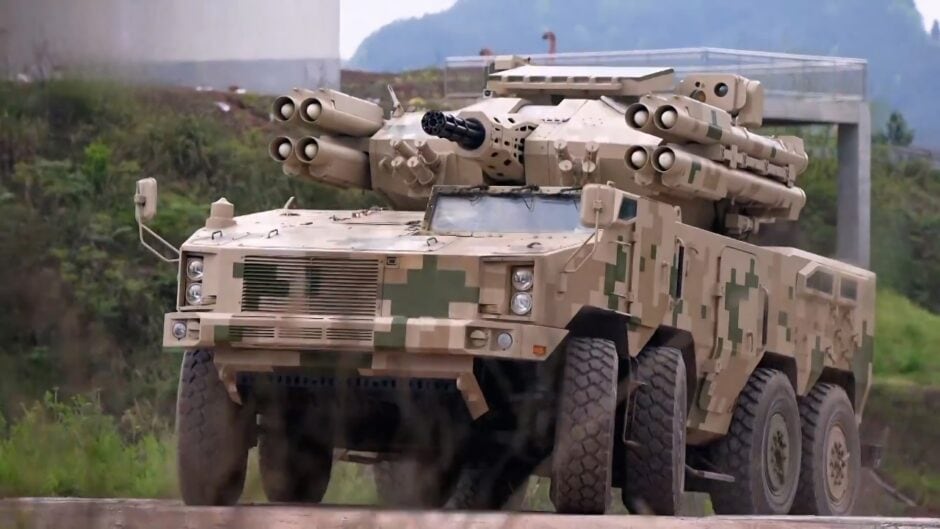
While the skies roared, ground defenses also played a crucial role. India deployed its newly acquired Russian S-400 Triumf system at the Adampur Air Force Station. It successfully intercepted multiple incoming threats. However, Pakistan countered by rapidly deploying China’s Type 625E SHORAD “Drone Killer” system to protect its own critical assets. This advanced system effectively closed the low-altitude vulnerability gap across the front lines.
Regarding aerial losses, Pakistan claims a historic and undisputed triumph. Pakistani authorities reported that their integrated J-10C and PL-15 combat system successfully shot down multiple Indian jets. Specifically, they claimed the destruction of three Rafales, one Su-30MKI, and one Mirage-2000 during the intense dogfights. While the Indian military establishment swiftly denied these specific fighter losses, the overarching strategic outcome remains undeniable. The Pakistani airspace remained totally impenetrable. The Indian Air Force failed entirely to achieve its primary objective of air superiority.
Looking Ahead: The Future of Aerial Warfare
Today, the global defense community continues to study this historic battle. The May 2025 conflict unequivocally proved that integrated, network-centric warfare easily defeats isolated, superior platforms. Chinese military technology proved its supreme mettle against established Western systems. Pakistan’s highly intelligent integration of J-10Cs and AWACS created an unbreakable defensive and offensive architecture. Ultimately, “Marka-e-Haq” cemented the Pakistan Air Force’s reputation as a lethal, highly disciplined, and future-ready combat force.