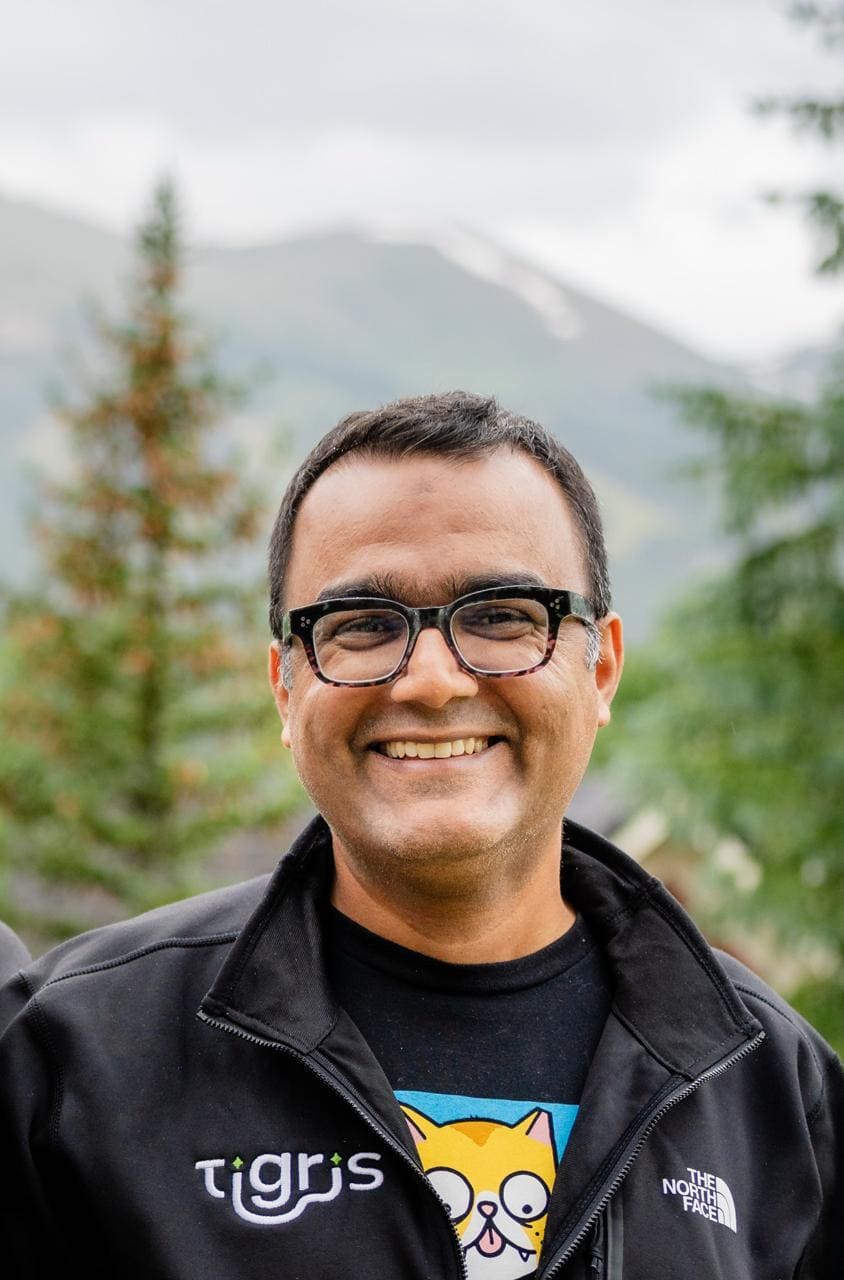
In a market dominated by the giants AWS, Microsoft Azure, Google Cloud, a rising startup called Tigris is trying to offer an alternative. Its CEO and cofounder, Ovais Tariq, originally from Pakistan, is pushing a vision of distributed data storage that “moves with compute,” challenging the old model of centralized cloud and high egress fees.
“We’re building a fundamentally different type of storage system,” he says, positioning Tigris as the storage layer designed for the next wave of AI and distributed workloads.
Tigris is a globally distributed, multi-cloud object storage service with built-in support for the S3 API. It uses Dynamic Data Placement and Access-Based Rebalancing to deliver low-latency access worldwide — without the need to manage replication or caching.
From Code to Cloud Disruption
“I’m Pakistani American,” Tariq defines his roots.
Born and raised in Karachi, Ovais came from modest means. His passion for technology led him to pursue computer science at University of Karachi, where he first started exploring distributed systems and data storage.
He began his career as a software engineer at a local IT firm in Karachi, honing his skills in database systems. His talent quickly took him beyond borders, he soon started working remotely for a database company in US, and then culminating at Uber where he built their global storage infrastructure.
His formative years, cultural background, and technical ambition converge in his current mission: giving AI workloads a storage layer as agile as they need for modern demands. Tigris was founded by engineers who built Uber’s internal storage platform, and its premise is simple but bold: data should replicate automatically where compute runs, instead of data being forever tied to a single cloud region.
Tariq says that legacy cloud providers built storage for proximity to their compute infrastructure, not for the workloads of today, which span multiple clouds and geographies.
“When we started Tigris, we realized storage had not really evolved with the compute revolution,” he explains. “The architecture of most storage systems today is still bound to where they were created — a single region.”
When you combine the weight of large datasets, the cost of data exits (“egress fees”), and latency sensitivities, centralized storage becomes a bottleneck.
“You shouldn’t be penalized for moving your data closer to your compute,” Tariq adds, underscoring one of the biggest pain points Tigris aims to solve.
How Tigris Operates
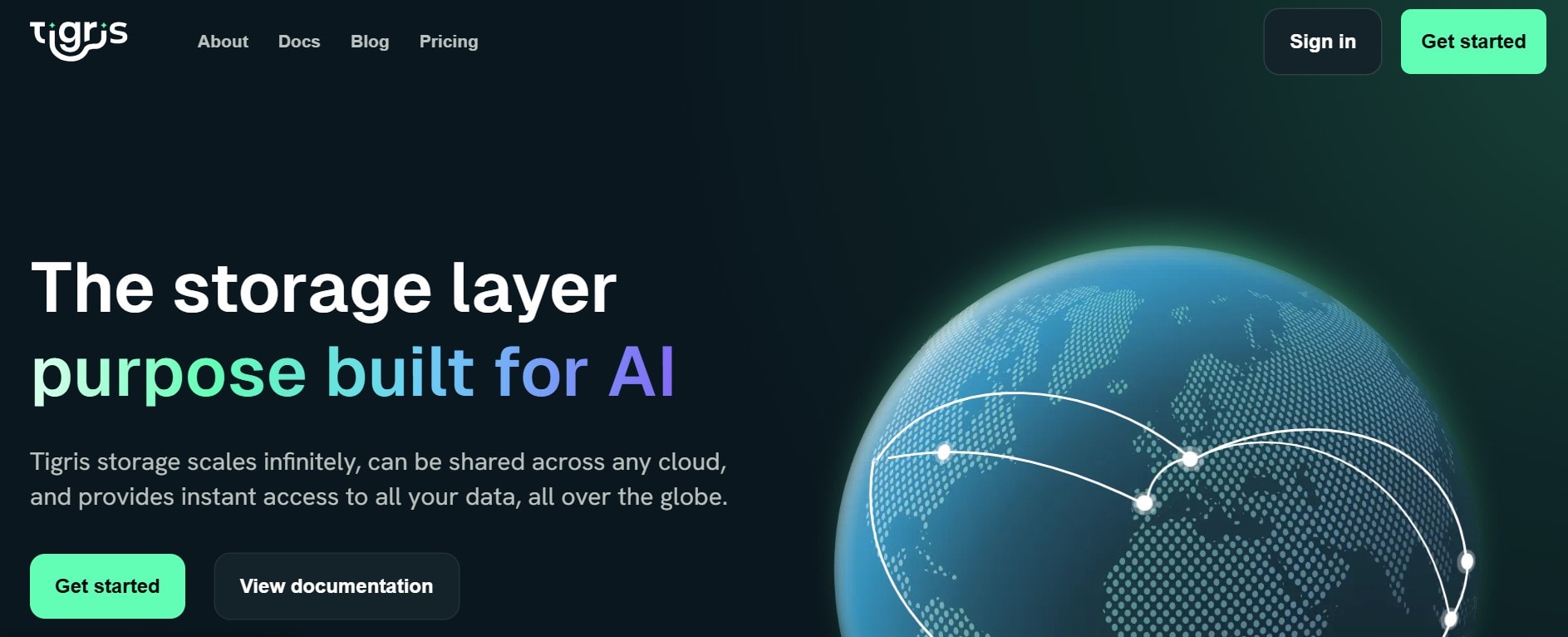
Tigris’ architecture focuses on localized data centers and smart replication. When a model trains or runs inference close to certain GPUs, the data layer follows it, ensuring minimal latency and avoiding constant traffic across distant cloud regions. The system is designed to support billions of small files, low latency access, and seamless region synchronization without penalizing users with steep fees for moving data between clouds.
In effect, Tariq says, “compute without storage is meaningless.” Tigris raised $25 million in a Series A round led by Spark Capital, with participation from Andreessen Horowitz (a16z) and existing investors.
“We’ve proven that our architecture works,” Tariq says. “Now the goal is to scale it globally.”
Their website cites the following:
Benchmarks comparing Tigris with AWS S3 and Cloudflare R2 demonstrate that Tigris consistently delivers higher throughput and lower latency for small object workloads. This efficiency allows you to use a single, unified object store for a wide range of object sizes, from very small payloads to large multi-gigabyte blobs, without performance trade-offs.
Big Challenges, Big Stakes
Tariq sees three main problems with today’s cloud incumbents: overpriced data movement, centralization induced latency, and vendor lock in. They charge for egress, making it costly to shift workloads or adopt mixed cloud strategies.
“Egress fees are like a tax that holds companies hostage,” Tariq says. “If you make it cheaper to move data, customers will do what’s best for their workloads.”
Tigris already operates data centers in Virginia, Chicago, and San Jose. It plans to extend into Europe and Asia, regions where latency matters and regulatory pressures demand local control. The company has grown eightfold annually since launching in late 2021.
“We want to be in places where customers need us, not where it’s convenient for us,” Tariq emphasizes.
But obstacles are steep. Building and powering data centers is expensive. Maintaining consistency across globally replicated storage is nontrivial. Convincing enterprises to trust a startup’s storage layer for mission critical data is a high bar.
Why Tariq’s Story Matters
Ovais Tariq’s Pakistani roots add a compelling dimension. As someone who bridged cultures, his leadership shows how diaspora engineers are shaping core infrastructure globally. His journey from humble beginnings in Karachi to leading a global cloud startup reflects a shift in where innovation can come from.
“I didn’t grow up thinking I’d build infrastructure for the world,” he said. “But the problems we’re solving are global, and so is the team we’re building.”
If Tigris succeeds, it won’t just be a new storage option, it could shift how AI systems and cloud architectures are designed.
“The future is distributed,” Tariq concludes. “We’re just making sure storage doesn’t hold it back.”