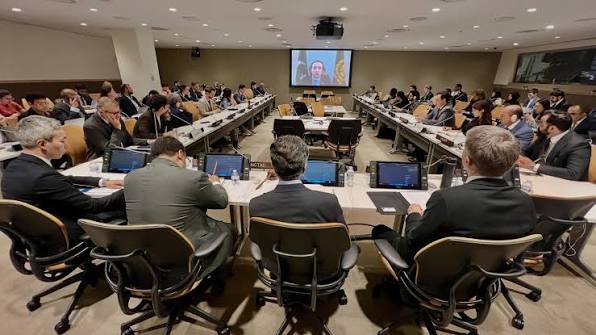
Pakistan has called for more inclusive rules around digital financial innovation, saying developing countries should have a role in shaping the emerging system. The call came during a briefing at the United Nations Headquarters on the opportunities and policy challenges linked to digital assets, blockchain, tokenisation, and distributed ledger technologies (DLTs).
The Permanent Mission of Pakistan to the UN hosted the session with the United Nations Development Programme (UNDP), UNCTAD, and the Office of the Secretary-General’s Envoy on Technology (ODET).
The briefing brought together Member States, UN bodies, and experts from the public and private sectors. Discussions focused on how emerging technologies could support financial inclusion and development.
Pakistan Calls for a Bigger Role in Digital Finance
Pakistan’s Permanent Representative to the UN, Ambassador Asim Iftikhar Ahmad, said digital assets and blockchain are becoming part of mainstream financial discussions. He noted that these technologies are increasingly linked to payments, investment, finance, and wider digital transformation.
However, Ahmad said developing countries face major gaps in digital infrastructure and technical expertise. They also face challenges related to institutional capacity and access to finance.
He argued that developing countries should not remain “merely consumers of emerging technologies.” Instead, they should understand, shape, and benefit from these systems.
Ahmad also called for greater international cooperation and knowledge sharing. He said capacity-building and technical assistance would be important as digital technologies continue to evolve.
According to him, the United Nations can help countries understand the changing digital landscape. It can also support cooperation between governments and other stakeholders.
#PakistanAtUN
Speakers at Pakistan-Hosted Event Call for Inclusive, Responsible Digital Finance, Highlight Regulatory Experience and Role of Technology in Sustainable Development
Minister Bilal Bin Saqib Highlights Pakistan’s Regulatory Framework for Responsible Digital Asset Innovation
Ambassador Asim Iftikhar Ahmad Calls for Developing Countries to Shape, Benefit from Digital Financial Innovation
— Permanent Mission of Pakistan to the UN (@PakistanUN_NY) September 11, 2026
Pakistan Highlights Digital Asset Regulation
The keynote address was delivered by Minister of State and PVARA Chairman Bilal Bin Saqib. He discussed Pakistan’s work on building a regulatory framework for digital assets. Saqib said digital financial innovation could make cross-border remittances faster and cheaper. It could also expand financial inclusion and help mobilise capital for development.
Remittances remain an important source of income for millions of families across developing countries. However, sending small amounts across borders can still carry high costs. Saqib said digital assets need to be brought under effective regulatory frameworks. He also stressed that regulation and innovation should not be treated as competing goals.
“Clear and effective rules can help build confidence, protect users and create an environment in which digital financial technologies can develop responsibly,” he said.
Saqib also outlined Pakistan’s recent regulatory efforts. These include the creation of PVARA, legislative and licensing measures, and a regulatory sandbox for digital asset innovation.
Three Areas Where Digital Finance Could Help
Saqib identified three major areas where digital financial infrastructure could support development.
- The first is faster and more affordable remittances. Digital systems could reduce costs and speed up cross-border transfers for workers and their families.
- The second is investment and capital mobilization through tokenisation. This could create new ways to connect investors with development opportunities.
- The third area is greater transparency and traceability of financial flows. Blockchain-based systems could help track transactions across several development-related activities.
Saqib also pointed to possible blockchain applications in development finance, subsidies, aid, and climate finance. At the same time, he stressed the need for safeguards against illicit finance and financial losses. Other risks linked to digital financial systems must also be addressed.
He warned that differences in technology and regulatory capacity could create “a new form of financial divide.”
Saqib offered to share Pakistan’s experience with other developing countries. This includes its legislation, licensing framework, and regulatory sandbox model.
UN Could Help Shape Global Digital Finance
Saqib also called on the United Nations to provide a platform for emerging economies. Such a platform could help countries jointly contribute to new rules and standards.
Senior UN officials also shared their views during the briefing. Robert Opp, Chief Digital Officer at UNDP, discussed the organisation’s work on digital technologies and development. He also highlighted efforts to strengthen institutional capacity.
Juan José Martinez Badillo, Chief of UNCTAD’s New York Office, discussed the financial and development impact of digital assets. Quintin Chou-Lambert, Deputy to the Secretary-General’s Envoy on Technology, addressed digital cooperation and technology governance. He also discussed the need for capacity-building.
The speakers stressed that governments need a stronger understanding of emerging technologies. They also need suitable policy and regulatory frameworks.
Panel Examines Blockchain Use Cases
A panel discussion examined practical applications and policy challenges linked to digital technologies. Muhammad Faheem from the Permanent Mission of Pakistan moderated the discussion. Participants shared lessons from different countries and institutions.
The panel explored blockchain and DLT applications in digital finance and digital identity. Public services, traceability, and other development areas were also discussed.
However, participants also highlighted several challenges. These included regulation, interoperability, cybersecurity, institutional capacity, and equal access to technology.
The discussion also referenced UNDP initiatives focused on blockchain education and development. These include the Government Blockchain Academy and the SDG Blockchain Accelerator. Both initiatives help governments build knowledge and explore practical blockchain applications.
Pakistan Says Technology Alone Is Not Enough
In his closing remarks, Ambassador Ahmad said digital assets and blockchain could shape digital finance and public-service delivery. However, he stressed that technology alone cannot produce development outcomes. Governments also need strong policies, institutional capacity, and secure infrastructure.
Interoperable systems will also be important as countries adopt new digital financial technologies. Governments must also identify solutions that match their national needs. Ahmad repeated Pakistan’s call for developing countries to do more than adopt emerging technologies. They should also understand and help shape the rules governing them.
He highlighted the UN’s potential role in this process. The organization could support experience sharing, capacity-building, and technical cooperation.
The briefing ended with a call for continued dialogue among member states, UN organizations, technology experts, and other stakeholders. The participants backed approaches that make digital financial innovation more responsible, inclusive, and focused on development. Ambassador Ahmad thanked Saqib, UNDP, UNCTAD, ODET, the panellists, participating Member States, and other stakeholders for their contributions.