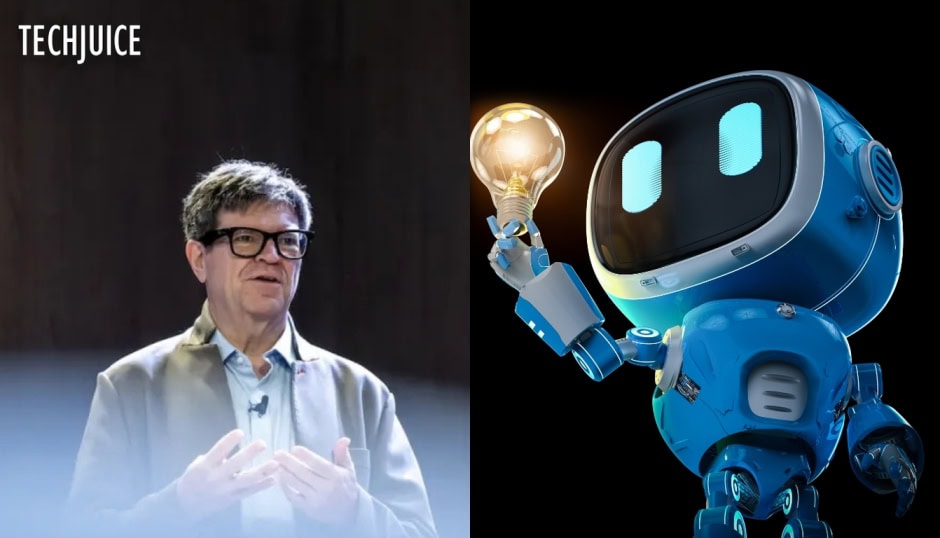
Renowned AI researcher Yann LeCun shared his vision for the future of artificial intelligence during a session titled “Debating Technology” at Davos 2025. LeCun critiqued the current state of AI, including generative AI and large language models (LLMs), noting that while they offer utility, they fall short of achieving the sophistication required for more advanced applications.
“I think the shelf life of the current [LLM] paradigm is fairly short, probably three to five years,” LeCun said. “I think within five years, nobody in their right mind would use them anymore, at least not as the central component of an AI system. I think [….] we’re going to see the emergence of a new paradigm for AI architectures, which may not have the limitations of current AI systems.”
According to LeCun, these “limitations” hinder the emergence of genuinely intelligent behavior in machines. This can be attributed to four primary factors: an insufficient comprehension of the physical world; an absence of enduring memory; a deficiency in reasoning abilities; and a lack of advanced planning capabilities.
“LLMs really are not capable of any of this,” LeCun said. “So there’s going to be another revolution of AI over the next few years. We may have to change the name of it, because it’s probably not going to be generative in the sense that we understand it today.”
Progress Toward Advanced “World Models”
Yann LeCun supports the utilization of “world models” as a means to enhance algorithms’ comprehension of real-world scenarios. These models would enhance foundational pattern recognition technology by integrating memory with common sense and reasoning, while also incorporating intuitive capabilities. Previously, LeCun thought these advancements would require a decade to materialize. Recent forecasts suggest that they may materialize sooner; however, their capabilities still require assessment.
“LLMs are good at manipulating language, but not at thinking,” LeCun said. “So that’s what we’re working on — having systems build mental models of the world. If the plan that we’re working on succeeds, with the timetable that we hope, within three to five years we’ll have systems that are a completely different paradigm. They may have some level of common sense. They may be able to learn how the world works from observing the world and maybe interacting with it.”
Robotics in AI Innovation
Yann LeCun predicts that robotics will assume a pivotal role in the forthcoming surge of artificial intelligence applications, thereby broadening the influence of generative AI to encompass practical domains such as law and medicine. While Meta is engaged in robotics research, OpenAI has concurrently established a new robotics team dedicated to the development of adaptive and versatile robots possessing human-like intelligence for practical applications in the real world.
“We don’t have robots that can do what a cat can do — understanding the physical world of a cat is way superior to everything we can do with AI,” he said. “Maybe the coming decade will be the decade of robotics, maybe we’ll have AI systems that are sufficiently smart to understand how the real world works.”