Science Corporation received European regulatory approval to begin selling PRIMA, a retinal implant that restores functional central vision to patients who have lost it to age-related macular degeneration. The July 22 CE mark clears the path for commercial procedures across the European Union and European Economic Area, with the first treatments expected to launch in Germany as early as September.
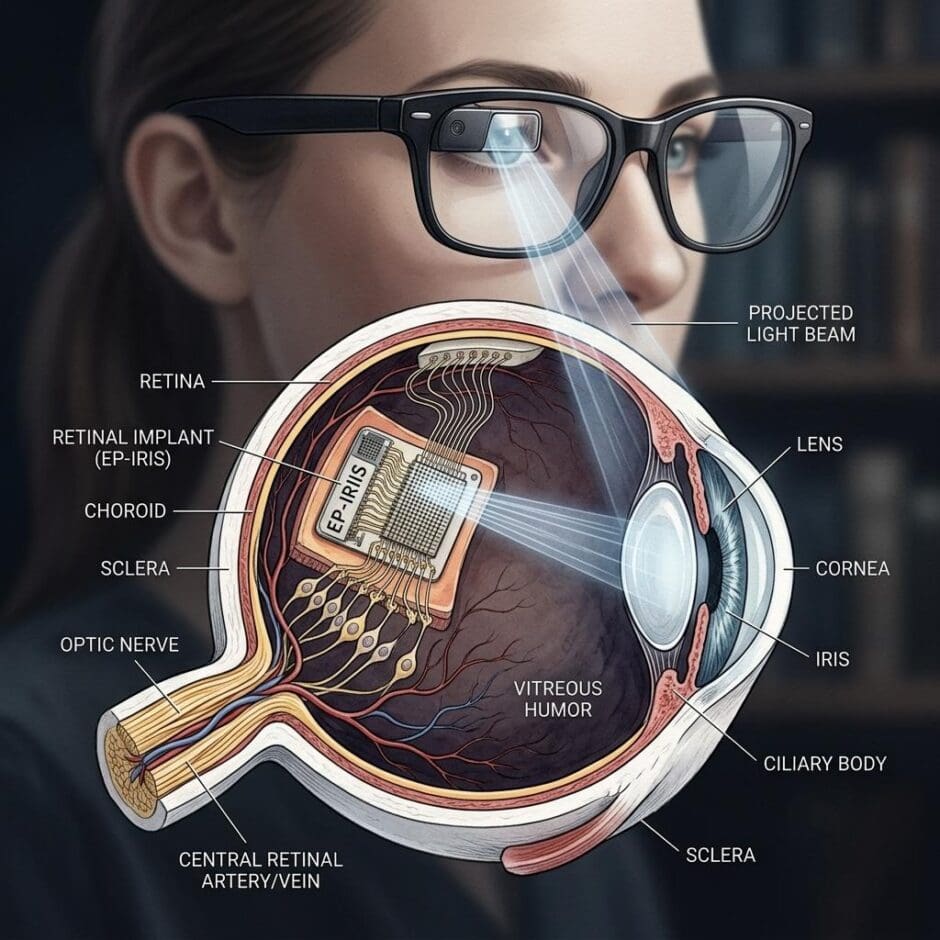
PRIMA combines a wireless chip smaller than a grain of rice, implanted beneath the retina, with a specialized pair of glasses. The glasses house a camera and projector that capture the world around the patient and transmit images to the implant, which converts them into electrical signals that stimulate the remaining retinal cells.
The implant contains 378 light-powered pixels that respond to precisely aimed photons from the glasses projector. In functional terms, the glasses are an augmented reality system where the display surface is the human retina itself.
The scale of the problem being solved makes the achievement tangible. Geographic atrophy, the dry form of age-related macular degeneration, affects more than 5 million people globally and is a leading cause of irreversible blindness.
PRIMA is the first and only treatment shown to restore functional central vision in advanced cases, meaning patients regain the ability to read, recognize faces, and navigate without assistance. During clinical trials, one patient finished a 300-page novel using the device. The results were published in the New England Journal of Medicine, not in press releases or trade blogs.
A surgeon plants the implant during a one-hour surgery. Patients then wear the glasses as they would any other pair. Science Corporation, founded by Max Hodak, who co-founded Neuralink before departing in 2021, has raised approximately $490 million to develop and commercialize PRIMA.

In the United States, the device has received both Breakthrough Device and Humanitarian Use Device designations from the FDA, which typically accelerate regulatory review timelines substantially. Initial US commercialization could follow EU approval within months.