
Rillet emerged from stealth two years ago, and since then has raised $200 million from top investors like Iconiq, Andreessen Horowitz, and Sequoia. On August 18, 2026, the AI accounting startup announced a $100 million Series C at a $1 billion valuation.
A few weeks earlier, Rillet held a board meeting where the founders shared their growth numbers. Doubled annualized revenue in the last quarter alone. Added customers including major public companies and signed a partnership with EY. The investors asked questions and a couple days of conversations later, the round was done.
The U.S. has a shortage of accountants right now, which is driving growth of his AI-native accounting platform so much he raised that cash without even trying. Finance teams are understaffed. CFOs work weekends closing their books. Accountants spend hours on manual data entry and reconciliation. Legacy systems like Oracle and NetSuite were designed as static databases as they require manual work. That’s expensive when nobody wants the job.
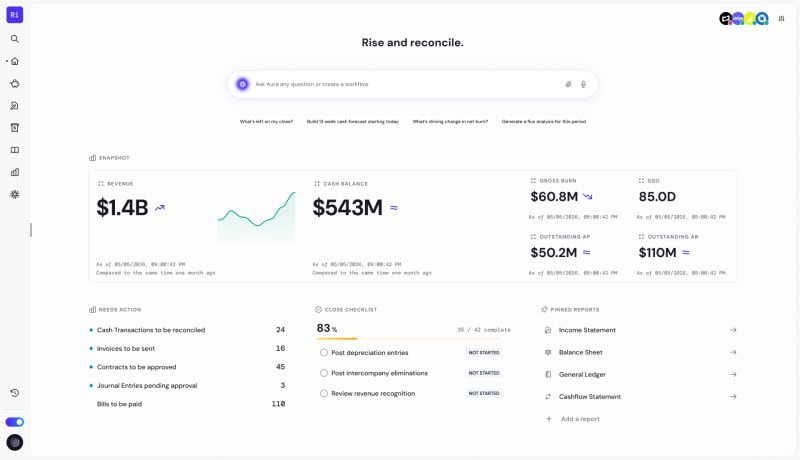
Rillet is built differently, as the startup uses AI to rebuild the general ledger from scratch rather than just adding automation to existing systems. This is a fundamental architectural choice. Most software companies layer AI on top of what already exists. Rillet designed the entire system for AI agents from the beginning. Its AI systems carry out hundreds of tasks simultaneously so that accountants can examine transactions rather than enter them by hand.
The customer migration is already happening. Rillet has amassed 600 customers, most of whom are looking to ditch legacy accounting systems like Oracle and NetSuite. The breakdown is telling. Some 50% of Rillet customers come from Intuit, 30% from NetSuite and Sage Intacct, and 20% from Oracle, SAP, Workday, and Microsoft products. These are the names that have dominated accounting software for 20 years. Now they’re losing their biggest customers to a startup that didn’t exist two years ago.
The partnerships matter. The company has established its position through partnerships in the accounting industry, including one with EY announced earlier this year, as well as collaborations with KPMG and RSM. These aren’t small relationships. These are relationships with the biggest accounting and auditing firms globally. They’re recommending Rillet to clients because they understand the direction the industry is moving.
Rillet’s customer list reads like a who’s who of forward-thinking companies. It includes Neuralink, Windsurf, Mercor, Skild AI, and Temporal. These aren’t traditional enterprise software companies. They’re AI-native companies that make infrastructure choices differently. They value speed. They value automation. They don’t care about sitting through training sessions on legacy systems.
CEO Nicolas Kopp’s stated mission is direct: he wants to give CFOs back their weekends. That’s the pitch. Finance teams spend Friday nights and weekends doing month-end close. That’s the moment when the books have to reconcile. Everything has to match. Nothing can be left outstanding. Rillet promises to handle it automatically. Accountants review the transactions instead of creating them.
The round came together in less than 48 hours, according to co-founder and CEO Nicolas Kopp. In a normal funding environment, this would be shocking. In the AI era, it’s becoming routine. Investors see traction, see market displacement, see large customer wins, and they move quickly. Hesitation means losing the deal to other investors who will move faster.
Rillet isn’t the only company going after legacy accounting software. Campfire, a San Francisco-based company established in 2023, has raised approximately $100 million and describes itself as a modern version of NetSuite for mid-market and enterprise businesses. But Rillet is focused on more complicated accounting scenarios like public companies and complex revenue models. It’s not trying to be the simple solution for startups. It’s trying to replace the software that dominates mid-market and enterprise finance.
The timing puts pressure on the incumbents. Rillet thinks there’s truth to the idea that AI is giving customers compelling alternatives. AI is coming hard at these legacy players because it is giving them options. Public software companies saw their valuations decline earlier this year as investors worried about AI disruption. Rillet’s success at recruiting from those companies shows those worries were justified.