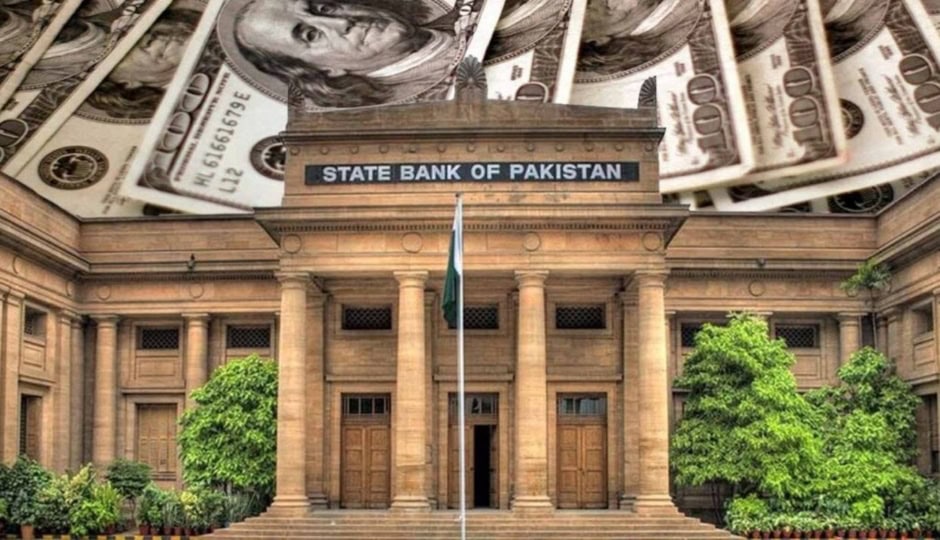
ISLAMABAD: As Pakistan’s rupee comes under renewed pressure, the State Bank of Pakistan (SBP) has proposed tying tax benefits to longer-term foreign investments in government securities and equities.
The central bank recommended that the 10% reduced income tax rate should only apply if foreign investments made through Special Convertible Rupee Accounts (SCRAs) are held for at least one year.
Dr. Mohammad Ali Malik, representing SBP at a National Assembly Standing Committee on Finance meeting chaired by Syed Naveed Qamar, argued this step would help stabilise dollar outflows and offer greater predictability. He also clarified that current inflows wouldn’t be impacted as there is no significant ongoing investment in SCRAs.
Federal Board of Revenue (FBR) Chairman Rashid Langrial added that short-term investors are exploiting tax breaks, especially through Roshan Digital Accounts. He proposed a six-month minimum holding period to qualify for incentives, aligning with the SBP’s broader aim of discouraging quick inflows and outflows.
The standing committee, however, expressed concern that overly strict measures could discourage foreign investment, which Pakistan can ill afford in its current economic climate.
SBP Seeks Action Against ‘Coupon Washing’
Another issue discussed was coupon washing, where investors avoid taxes by selling and rebuying government securities before maturity. The FBR had initially suggested taxing such income regardless of maturity, projecting Rs10 billion in additional revenue. The committee, however, adjusted the proposal, setting the required holding period at six months instead of a full year.
This issue had also been raised with the International Monetary Fund (IMF). However, the IMF remains unconvinced that investors in government securities are escaping tax obligations.
The SBP’s proposals come as the rupee slides to Rs284 against the US dollar in the interbank market, with open market rates even higher. A private bank executive noted that interbank settlements are occurring at nearly Rs3 above average rates, indicating deeper stress.
A report from Tola Associates warns of growing economic risks. These risks stem from tensions in the Middle East and Pakistan’s heavy reliance on imported oil. Crude oil prices jumped from $63.76 on June 2 to $76.31 by June 19. This surge has raised concerns about rising inflation and a widening current account deficit.
If oil prices reach $80 per barrel, the rupee may fall to Rs285.4 per dollar. At $100, it could weaken further to Rs292.1. Petrol prices may rise by Rs35 per litre. Inflation could increase by 1.8% at $80 and 8.7% at $100.
Government Forms Committee to Monitor Crisis
The government has formed a special committee led by Finance Minister Muhammad Aurangzeb. It will assess the economic impact of Israel’s actions against Iran, focusing on Pakistan’s oil supply and price stability.
The standing committee also agreed to raise the cash withdrawal threshold for non-filers, subject to 0.8% tax, from Rs50,000 to Rs75,000. However, it rejected the FBR’s request to increase the rate to 1%, which was previously set at 0.6%.